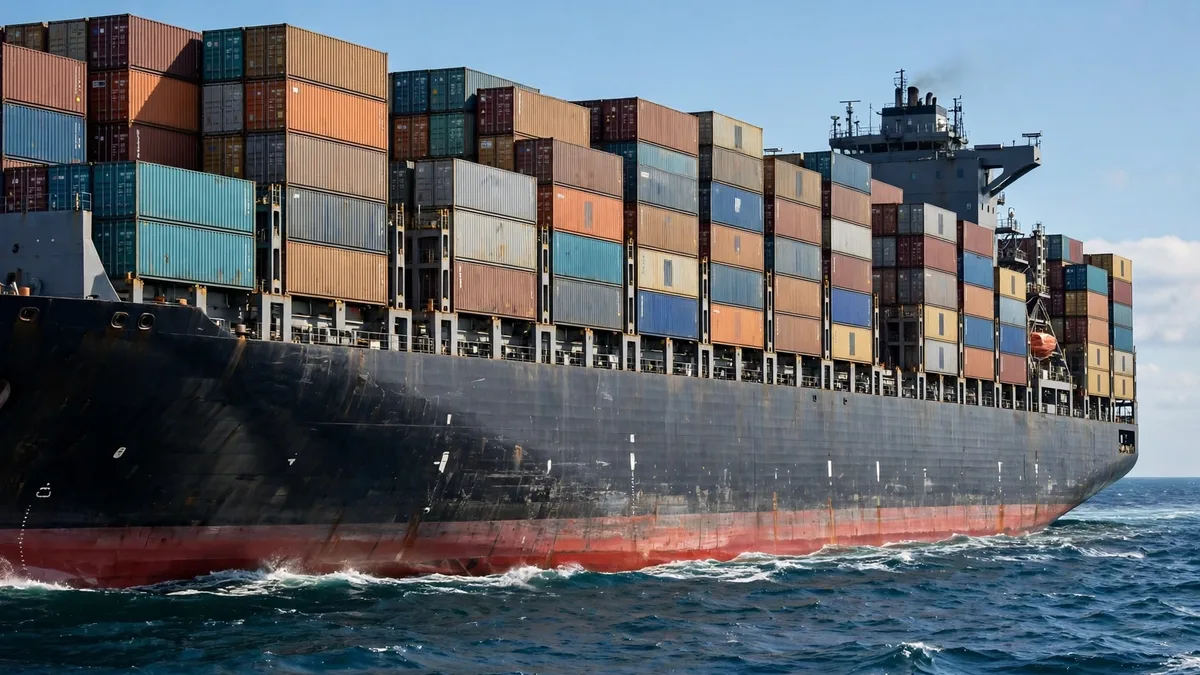
From the shore, a container ship looks like a floating city block: a wall of steel stacked high with brightly coloured boxes, moving slowly across the horizon. What you are really looking at is mostly hidden. Below the waterline, and behind the paint, sits the hull — a steel structure longer than four football pitches, carrying more weight than a small town, and built to cross oceans in weather that would sink almost anything else.
The hull is the ship itself. Everything else — the containers, the engines, the bridge, the crew — sits inside it or on top of it. If the hull fails, nothing else matters. Its specification sheet reads like the vital signs of a giant: length, beam, draught, deadweight, and the thickness of its steel plates. Each number answers a simple question: how big is it, how much can it carry, and how strong is it.
Here is what those numbers mean, in plain English.
How It Works
Step 1: Steel plates and framing
A container ship hull is made from welded steel plates, held in shape by a skeleton of frames, beams, and bulkheads inside. The plates on the outside, called the shell plating, are typically 12 to 25 millimetres thick, and thicker still around the bow and the bottom, where the loads are greatest. Inside, transverse frames run around the hull like ribs, and longitudinal beams run along its length, so the whole structure works as one stiff box. The steel is a special shipbuilding grade, chosen to stay tough in cold water rather than turning brittle.
Step 2: Length, beam, and draught
The three basic size numbers are length, beam, and draught. Length is measured from bow to stern: the biggest container ships today are around 400 metres long. Beam is the width at the widest point, around 60 metres on the largest ships, which is wide enough to stack 24 containers side by side. Draught is how deep the hull sits in the water when fully loaded, often around 16 metres. Together, these numbers decide which ports the ship can enter and which canals it can pass through, because a ship that is too long, too wide, or too deep simply cannot fit.
Step 3: Deadweight and container capacity
Deadweight is the total weight a ship can carry — cargo, fuel, water, and crew — and on the largest container ships it is more than 200,000 tonnes. Container capacity is measured in TEU, or twenty-foot equivalent units: one TEU is one standard 20-foot container. The biggest ships carry more than 24,000 TEU, which means over 24,000 standard containers, stacked up to 12 high on deck and many more below. But a ship rarely fills every slot with heavy cargo, because the deadweight limit is reached long before the slots run out. The engine that pushes all of this is covered in our guide to how a ship propeller works.

Step 4: The double hull and the bulbous bow
Modern container ships have a double bottom and double sides in key areas: two layers of steel with a space between them. If the outer layer is damaged, the inner layer can keep the sea out, and the space between them is used for ballast water, which the ship pumps in and out to stay stable and level as cargo is loaded and unloaded. At the front, below the waterline, sits the bulbous bow — a rounded bulb of steel sticking out ahead of the stem. It changes the way water flows around the hull and can cut fuel use by several per cent, which on a ship that burns hundreds of tonnes of fuel a day is worth a fortune.
Step 5: Coatings that fight the sea
Steel and seawater are natural enemies, so the hull is protected by layers of paint and by lumps of zinc or aluminium bolted to the steel below the waterline, called sacrificial anodes. The anodes corrode first, sparing the hull, and are replaced in dry dock. The paint below the waterline, called antifouling, also stops barnacles and weed from growing on the steel: a fouled hull is rougher, slower, and burns far more fuel. A clean hull matters so much that ships are regularly cleaned and repainted, even though each dry-docking costs a fortune in lost sailing time.
Step 6: Flexing, bending, and inspection
A hull is not rigid. In heavy seas it bends as waves pass under it, hogging when a wave crest lifts the middle and sagging when crests lift the bow and stern. The structure is designed to flex without cracking, and sensors on modern ships watch that bending in real time. Every few years the ship goes into dry dock for a full survey: inspectors check the plates, measure how much steel has thinned through corrosion, and replace any section that has worn too thin. The full build is described in our guide to how a container ship hull is made, and the part that steers it in our guide to ship rudder specs explained.
Container Ship Hull Specs
| Specification | Typical range |
|---|---|
| Length overall | About 300 to 400 metres on the largest ships |
| Beam | About 48 to 61 metres |
| Draught, loaded | About 14 to 16.5 metres |
| Deadweight | About 150,000 to 230,000 tonnes |
| Container capacity | About 15,000 to more than 24,000 TEU |
| Steel weight | About 40,000 to 60,000 tonnes of steel in the hull |
| Shell plate thickness | About 12 to 25 millimetres, thicker at bow and bottom |
| Service speed | About 16 to 22 knots in normal service |
What Does a Container Ship Hull Cost?
A whole large container ship is estimated to cost roughly $150 million to $200 million (estimate) to build new, and the hull steel and structure account for a large share of that, with the steel alone estimated at roughly $30 million to $50 million (estimate) at typical prices. A scheduled dry-docking, with hull inspection, cleaning, and repainting, is estimated to cost roughly $1 million to $3 million (estimate) each time. Prices are estimates only and vary with steel prices, shipyard, and ship size.
A Rare Fact
The hull of a very large container ship can flex by a metre or more between the crest and the trough of a big wave, bending like a long beam rather than breaking like a rigid bar. The ship is designed for that movement: the steel, the welds, and the internal framing all work together to let the hull bend and spring back, voyage after voyage, for twenty-five years or more.
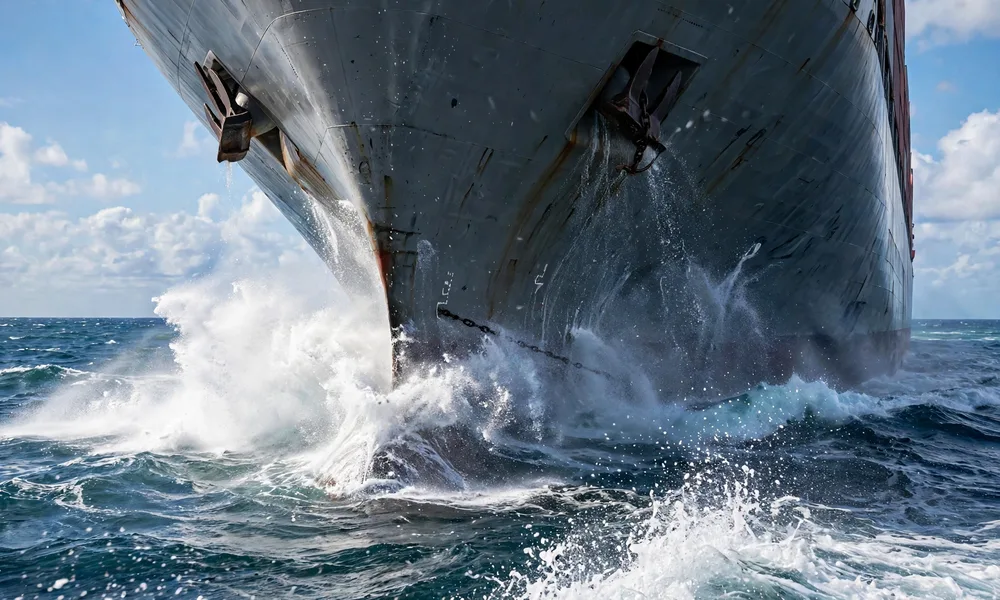
A container ship hull looks like a simple steel box, but it is one of the largest moving structures people have ever built. When you understand its length, its deadweight, and its plate thickness, you are reading the answer to a practical question: how does a steel shell carry a small town’s weight across an ocean and come back for more. The numbers are enormous, and so is the engineering behind them.