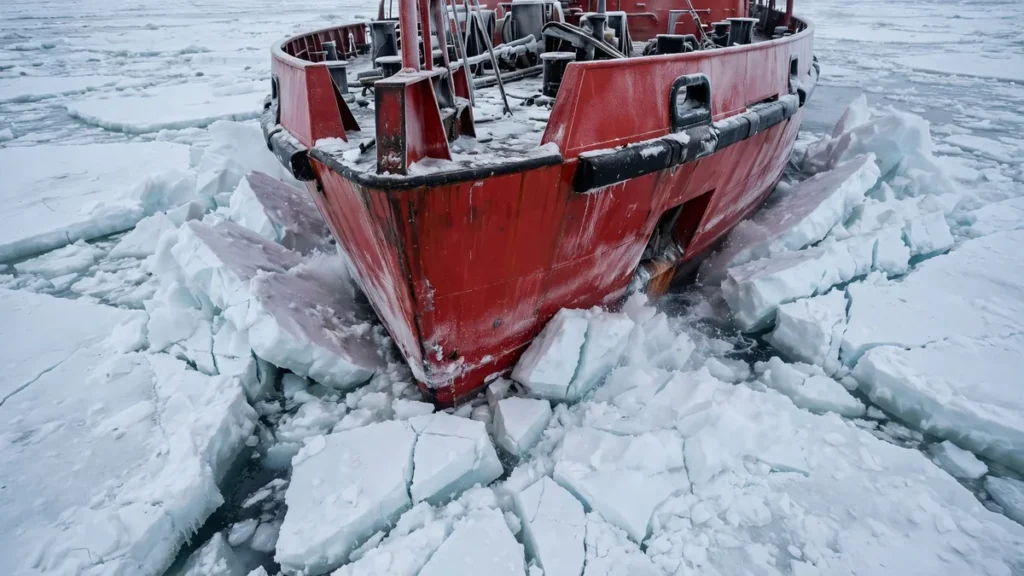
There are few sights at sea as improbable as a luxury icebreaker at work. The ship is a floating hotel, all warm light and polished wood behind the bridge windows, and in front of her the frozen ocean is cracking open like a pavement. She does not slow down for the ice. She rides up onto it, and her own weight does the rest, splitting slabs the size of cars and shoving them aside with a sound like a city falling down.
Then somebody mentions the price, and the room goes quiet. A luxury icebreaker costs hundreds of millions of dollars, more than most superyachts and more than some small cruise ships, and she costs a fortune to run as well. It is a fair question to ask why. This is where the money goes, and why, for the handful of owners who want to sail to the poles in comfort, there is no cheaper way to do it.
1. A hull built to be smashed into ice
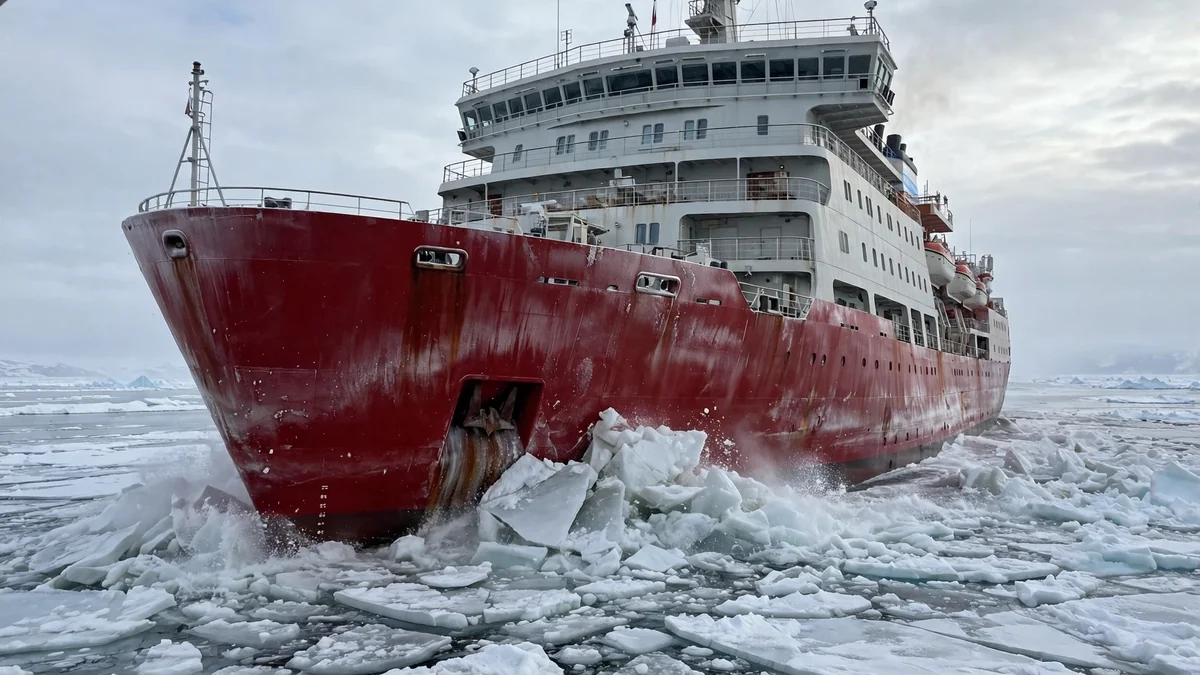
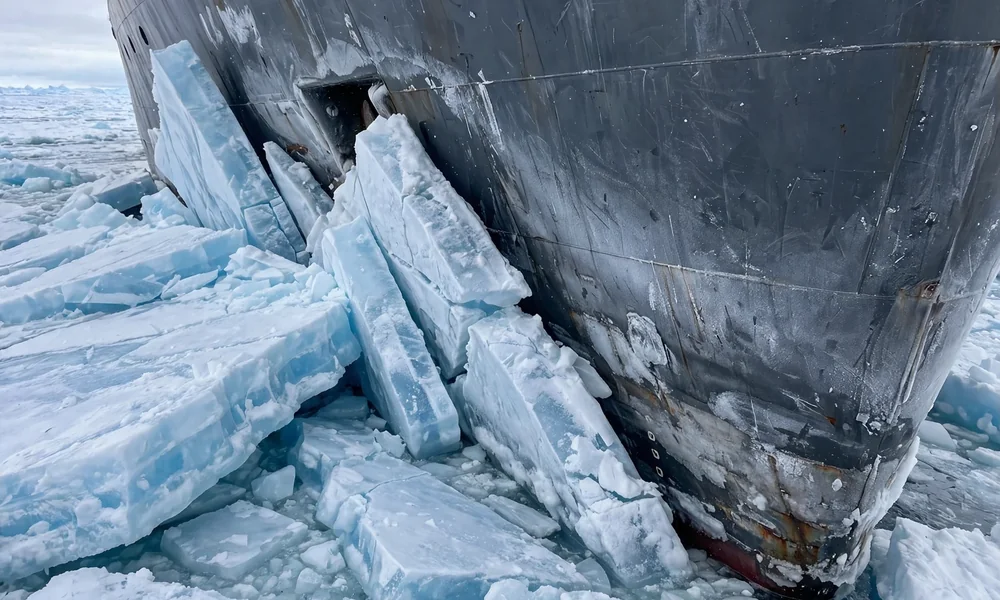
The first reason is the hull, and it is the most expensive piece of steel afloat. An icebreaker hull is not just thick, it is shaped like a spoon, so that the ship rides up onto the ice and crushes it with her own weight rather than ramming it head-on. The steel is a special high-strength grade that stays tough at minus forty degrees, when ordinary steel turns brittle, and the plating around the bow and the waterline can be twice as thick as on a normal ship.
The container ship hull spec sheet shows what an ordinary commercial hull looks like by comparison, and the gap in strength is startling.
2. Power on a scale nothing else needs
The second reason is power. Breaking ice takes brute force, and a luxury icebreaker carries engines that would be respectable on a small power station: 20,000 to 40,000 horsepower, driving propellers the size of houses through a gearbox built to survive shock loads that would wreck a normal drivetrain. When the ship is working in heavy ice, the whole propulsion system is being hammered, and it has to be built to take that hammering for decades.
3. Systems that survive the cold
The third reason is everything the cold tries to kill. At polar temperatures, ordinary pipes freeze, ordinary lubricants turn to glue, and ordinary electronics simply stop working. An icebreaker is heated everywhere: the decks, the stairways, the lifeboat stations, the fuel lines and the ballast tanks all have heating systems, and the ship carries de-icing equipment for the superstructure, because a coating of ice high up can make a stable ship dangerously top-heavy.
The navigation and safety systems are polar-rated too, from satellite communications that work at high latitudes, where ordinary coverage fails, to the redundant systems that keep the ship safe when the nearest help is a thousand miles away. It is a level of scrutiny that no warm-water yacht ever faces, and it is there because the consequences of failure in the ice are so much worse.
4. A luxury hotel inside a working ship
The fourth reason is the strangest one, and it is what makes a luxury icebreaker different from the working icebreakers that clear shipping lanes. Inside the armoured hull, the ship is a five-star hotel: suites with balconies, a spa, a swimming pool, restaurants, a library and an observation lounge with glass on three sides. Building that interior inside a hull that flexes and shudders as it breaks ice is a serious engineering problem, because everything has to be mounted on flexible fixings, every pipe has to survive the vibration, and every finish has to be maintained by a crew working in conditions that would close a normal hotel.
5. Almost nobody builds them
The fifth reason is scarcity. There are only a handful of shipyards in the world with the experience, the equipment and the certification to build a polar-class icebreaker, and most of them are busy with government contracts for research ships and coastguard vessels. A private buyer joins a very short queue, and the yard charges accordingly. The design alone, with its ice modelling, tank testing and classification work, can cost tens of millions before the first plate is cut.
Even the comparison with other specialised ships is humbling: the autonomous cargo ship spec sheet shows how much technology goes into a modern commercial vessel, and an icebreaker needs all of that plus the ice. There is simply no mass market to make any of it cheap.
6. The cost of staying safe, and the price tag
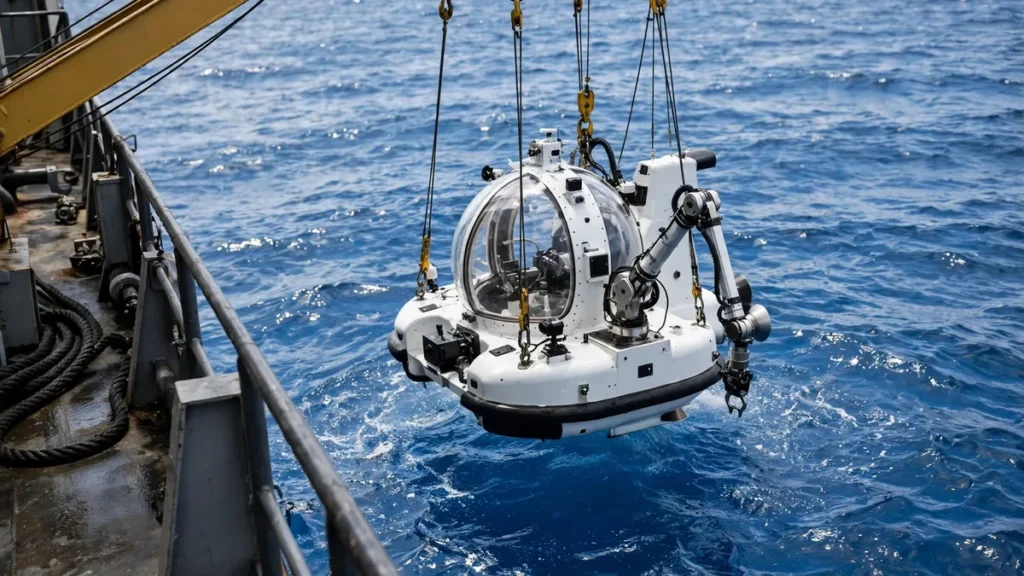
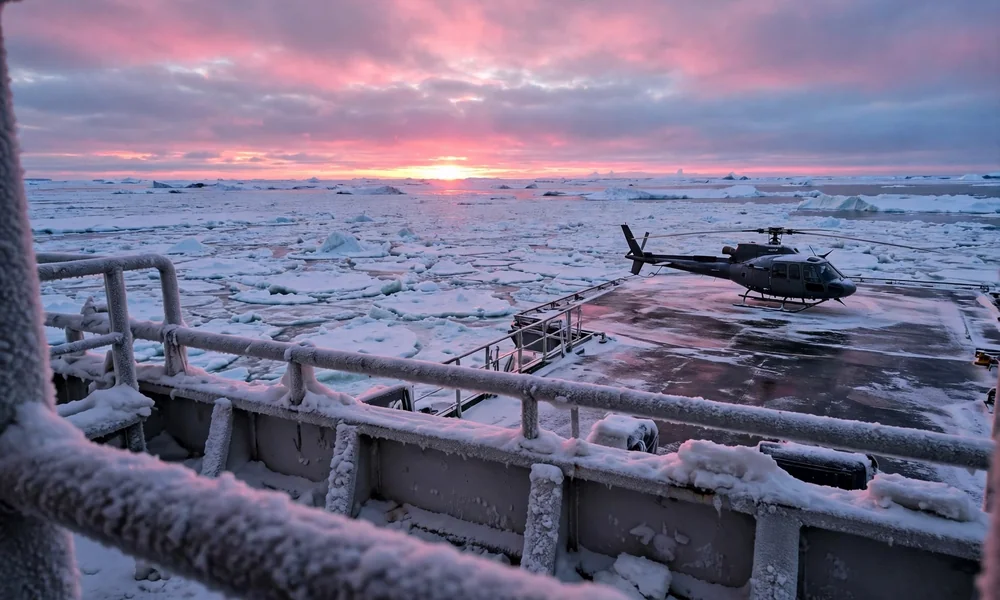
The sixth reason is safety and certification, and it is the one owners rarely argue with. A luxury icebreaker must carry two helicopters, sometimes a submarine, and enough lifeboats and survival equipment for everyone on board to survive for days in the polar wilderness if the ship is lost. The safety case is enormous, the drills are constant, and the insurance, which covers a ship operating where rescue is measured in days rather than hours, is priced accordingly. The why a titanium submarine hull is so expensive story covers another vessel where the safety case drives the price, and the same logic applies here, only with ice instead of depth.
The seventh reason is the simplest: running her. A luxury icebreaker burns tens of thousands of litres of fuel a day, needs a huge specialist crew, and spends a large part of every year in a yard being maintained, because ice is the most destructive environment a ship can work in. Annual running costs are estimated at $20 million to $40 million, and that is before a single passenger comes aboard.
| Specification | Typical luxury figure |
|---|---|
| Length overall | 100 to 150 metres |
| Beam | 20 to 25 metres |
| Displacement | 15,000 to 30,000 tonnes |
| Ice class | Polar Class 2 to 5 |
| Power output | 20,000 to 40,000 horsepower |
| Icebreaking ability | 1.5 to 2.5 metres of level ice |
| Top speed, open water | 16 to 18 knots |
| Speed in ice | 3 to 5 knots |
| Passengers | 100 to 200, plus crew of 100 to 150 |
| Hull steel | High-strength polar-grade steel, 40 to 60 mm at the bow |
| Fuel capacity | 3,000 to 6,000 tonnes |
| Range | Months at sea, up to 20,000 nautical miles |
The price, and a rare fact
A new luxury icebreaker costs an estimated $200 million to $500 million, depending on size and specification, and the most ambitious designs have been reported at far more. Those are estimates, because these ships are built to order and the final price is a negotiation between the owner, the yard and the classification society. It is, by any measure, one of the most expensive ways to travel on earth.
Here is the rare fact that makes it almost worth it. An icebreaker does not smash ice by ramming it. She climbs onto it, and lets her own weight bend the sheet until it snaps, which is why the bow is shaped like a spoon and why the ship seems to rise and fall as she works. The passengers in the lounge feel a gentle heave, like a slow elevator, and then hear the crack, and the sea opens in front of them.