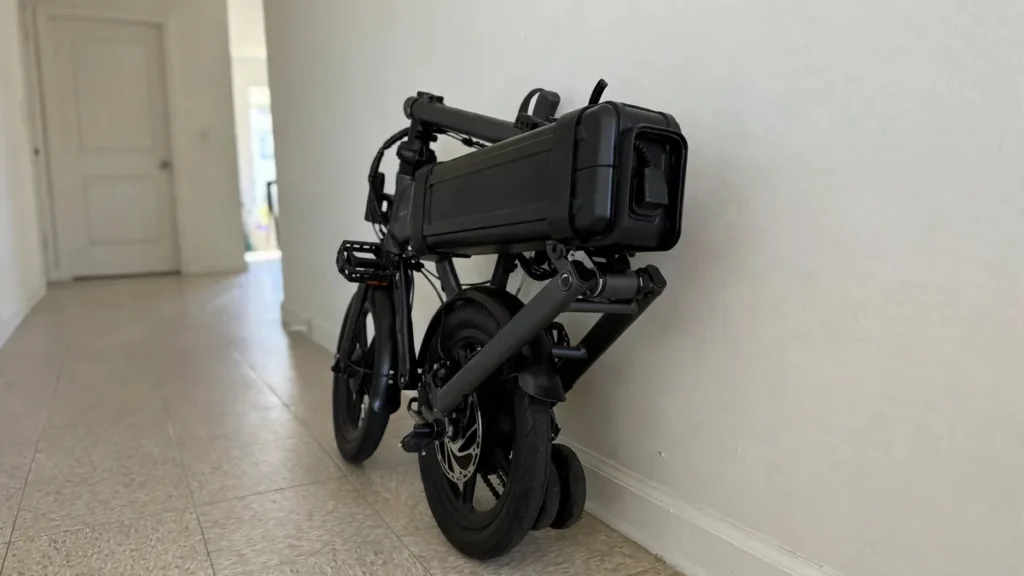
It was the third flight of stairs that did it. A rider in a city flat, late for work, tried to carry her electric bike up to her front door and discovered that the motor and battery she loved on the road turned into dead weight on the stairs. The bike was not badly made. It was simply built from thick aluminium tubes chosen for cheapness, not lightness, and every extra gram announced itself on step after step. That is the quiet power of a lightweight frame: it changes not only how a bike rides, but how it fits into a person’s life.
A lightweight e-bike frame is a balancing act. It must carry a motor that can push out 250 watts or more, a battery that weighs two or three kilograms on its own, and a rider, all while surviving potholes, kerbs and years of daily use. Leave too much and the bike becomes a burden to lift, carry and manoeuvre. Engineers solve this with a careful choice of alloys, tube shapes and manufacturing steps, and the result is a frame that can weigh under three kilograms yet outlast the bike around it.

The Materials Behind the Frame
Most lightweight e-bike frames are built from aluminium, and the grade matters enormously. The workhorse is 6061 aluminium, an alloy of aluminium, magnesium and silicon that is easy to weld, easy to shape and forgiving in production. The premium choice is 7005, an alloy with zinc that is stronger but harder to weld and more expensive to work with. A 7005 frame can use thinner tube walls for the same strength, which is where the weight saving comes from.
Carbon fibre is the other path, and it plays by different rules. A carbon frame is not welded at all. It is laid up from sheets of woven fibre soaked in epoxy resin, then baked until the layers become one rigid structure. Carbon lets engineers put strength exactly where the loads are, so the bottom bracket area around the motor can be massively stiff while the seat stays stay thin and springy. The trade-off is cost and repairability: a carbon e-bike frame is lighter than any aluminium equivalent, but a deep crack usually means replacement rather than repair. Magnesium alloys appear occasionally too, lighter than aluminium but more vulnerable to corrosion, so they need careful coatings and are usually reserved for small, protected parts rather than whole frames.
Tube shape is as important as the alloy. A round tube is strong in every direction, but a frame does not need strength in every direction equally. Hydroforming lets engineers blow an aluminium tube into a complex shape inside a mould, so the down tube can be wide and flat where the battery sits, then taper where it meets the head tube. Together, alloy choice and tube shaping are what turn a heavy frame into a light one without giving up safety.
Step 1: Choosing the alloy and the tube set
Engineers start with the loads. They model the forces from the motor, the battery, the rider and the road, then decide how much strength each tube needs. A frame built around a mid-drive motor needs a reinforced bottom bracket shell, while a hub-motor frame needs stronger rear dropouts. The tube set is specified with exact wall thicknesses, sometimes varying along a single tube.
Step 2: Cutting, mitring and hydroforming the tubes
The tubes are cut to length, then their ends are mitred, shaped so they fit tightly against the neighbouring tube before welding. For shaped tubes, the raw tube goes into a hydroforming press, where high-pressure fluid forces it against the inside of a mould, creating the wide, flat or tapered profiles that hold batteries and hide cables.
Step 3: Welding the frame in a jig
Aluminium frames are welded in a steel jig that holds every tube in perfect alignment while the welds are made. Aluminium welding uses tungsten inert gas welding, where an electric arc melts the joint under a shield of argon gas so the metal cannot oxidise. After welding, the whole frame is heat-treated, aged in an oven to restore the strength the welding heat took away, a step that separates a durable frame from one that cracks at the welds.

Step 4: Machining the motor and battery mounts
Once the frame cools, a computer-controlled mill machines the critical interfaces: the bottom bracket shell where the motor mounts, the battery cradle inside the down tube, and the headset and dropout faces. These surfaces are machined to tolerances of a fraction of a millimetre, because a motor that sits even slightly crooked will wear its bearings out and a battery that rattles will damage its own connections.
Step 5: Testing the finished frame
Before a frame design is approved, samples are ridden on test rigs that simulate years of abuse in days: the frame is flexed, twisted and loaded thousands of times while sensors watch for the first sign of a crack. Only when a frame survives the full test programme does it go into production, and production frames are still spot-checked, weighed and measured against the design.
Specifications
| Frame material | 6061 or 7005 aluminium alloy, or carbon fibre |
| Typical frame weight | Approximately 2 to 3 kg for aluminium, 1.5 to 2.5 kg for carbon |
| Tube shaping | Hydroformed, butted and tapered tubes |
| Welding | Tungsten inert gas welding, then heat-treated |
| Motor mount | Reinforced bottom bracket shell, machined to tight tolerance |
| Battery integration | Down tube cradle, typically 400 to 750 Wh |
| Finish | Powder coat, anodised or clear coat on carbon |
| Strength comparison | Carbon fibre about five times stronger than steel by weight |
Price
A lightweight frame is never the cheap option. Complete lightweight e-bikes typically cost from around $3,500 to over $10,000 (estimate), with the frame alone accounting for $1,500 to $4,000 of that price depending on material and finish. A lightweight e-bike drivetrain adds to the cost too, since the gearbox and motor must be matched to the frame. Aluminium frames with similar motors often cost half as much, so the lightweight premium buys carrying comfort and climbing speed rather than extra power. For a rider who lifts the bike daily, that premium pays for itself in the first week.

Rare Fact
The lightest production e-bike frames weigh less than the battery they carry. A top carbon frame can come in under two kilograms while the battery slung inside its down tube weighs two and a half, which means the energy store is literally heavier than the structure holding it. Engineers joke that the frame has become the lightest part of the bike, and the battery is now the part they most want to shrink.
The next time you lift an electric bike with one hand and wonder how it can feel so light while carrying a motor and a battery, remember what is in your hand: a structure shaped by hydroforming presses, welded in a jig, heat-treated in an oven and tested to destruction before it ever reached you. The carbon fibre weave in its tubes is doing more work than any metal could.