The hill starts gently and then stops pretending. It steepens until the road feels like a wall, the kind of climb where a normal bike would have you standing on the pedals, gasping, and walking the last stretch. On this bike, though, something changes the moment the gradient bites. A quiet whirr rises from low in the frame, the pedals grow light under your feet, and the hill gives way — not with a surge, but with a calm, steady push that feels like a strong hand on your back.
That push comes from the mid-drive motor, a compact unit bolted into the bottom bracket of the frame, right where the pedals meet the chain. It is the most popular motor layout on modern e-bikes, and it wins because of where it sits: at the centre of the bike, low down, driving the chain through the gears you already have.
Mid-drive motors are often compared with hub motors, the kind built into the wheel, and the spec sheet is where the difference shows. A hub motor is simpler and cheaper, but a mid-drive climbs better, balances better and uses the bike’s gears.
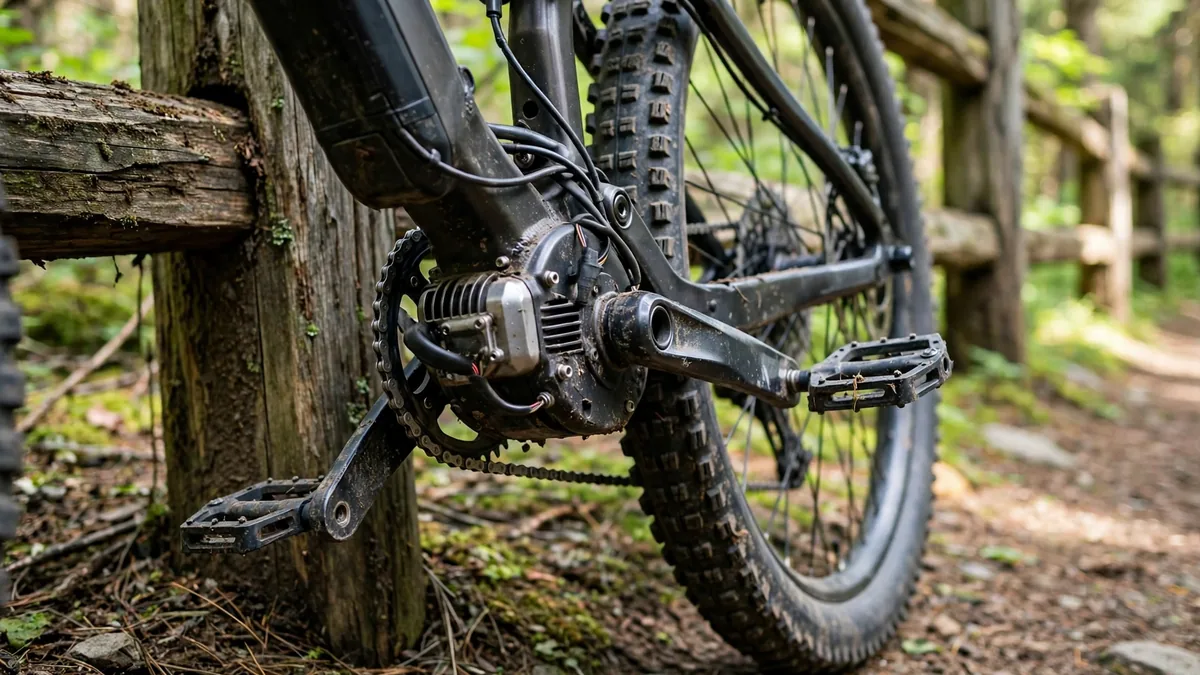
How a Mid-Drive Motor Works
Step 1: Torque
Torque is the number that decides how a mid-drive feels on a hill, and it is measured in Newton-metres at the crank. A typical mid-drive for a mountain bike produces 85 to 120 Newton-metres, while a lighter motor for a city bike makes 50 to 65. Torque matters more than raw power on an e-bike, because it is torque that gets a loaded bike moving from a standstill and keeps it turning over on a steep gradient. A motor with 85 Newton-metres will climb almost anything a fit rider can. How that torque reaches the wheel depends on the drivetrain, as our guide to how an e-bike gearbox is made explains.
Step 2: Power and the law
Power is measured in watts, and the number on the box is usually the motor’s continuous rated power — 250 watts in Europe and the UK, 750 watts in the United States. That is the power it can sustain without overheating, but peak power on a steep climb is often much higher: a 250-watt motor can briefly produce 500 to 600 watts. The legal limit matters because it decides where the bike can be ridden: in Europe a 250-watt bike with assistance up to 25 kilometres per hour is legally a bicycle, while anything stronger is classed as a moped and needs registration, insurance and a helmet.
Step 3: Cadence and the torque sensor
A mid-drive does not just push — it listens. A torque sensor in the bottom bracket measures how hard you are pedalling, hundreds of times a second, and the controller multiplies your effort: push gently and the motor adds a little, push hard and it adds a lot. That is why a good mid-drive feels natural, like your legs suddenly got stronger, instead of feeling like a moped with pedals attached. The sensor also watches your cadence, the speed you turn the pedals, and most motors deliver their best assistance between 70 and 100 revolutions per minute — the comfortable range of an average rider.

Step 4: Gears and efficiency
The mid-drive’s greatest advantage is that it drives through the bike’s gears. When you shift to a low gear for a climb, the motor benefits just as much as your legs do: its torque is multiplied by the gear ratio, so a motor that makes 85 Newton-metres at the crank can deliver far more than that at the rear wheel in first gear. A mid-drive typically converts 75 to 85 percent of the battery’s energy into motion. That efficiency is why mid-drive bikes go further on the same battery than hub-drive bikes of the same power, as our guide to e-bike battery specs shows.
Step 5: Weight and balance
A mid-drive motor weighs about 2.5 to 4 kilograms, and almost all of it sits at the bottom bracket — the lowest, most central point on the bike. That placement is the reason mid-drive bikes handle so well: the weight is where the rider’s own weight already is, so the bike stays balanced and nimble, and the wheels stay light enough to absorb bumps. A hub motor, by contrast, puts 3 to 5 kilograms in the rear wheel, which makes the back of the bike heavy and the suspension slower to react.
Step 6: Noise, heat and maintenance
A good mid-drive is quiet — a soft whirr under load that disappears at cruising speed — but noise is worth checking, because a cheap motor with straight-cut gears can whine loudly enough to be heard from metres away. Heat is the other hidden number: a motor working hard on a long climb warms up, and if it gets too hot the controller reduces power to protect it, a behaviour riders call thermal throttling. Maintenance is straightforward but real: the motor drives the chain hard, so chains and cassettes wear faster than on a normal bike, often lasting 2,000 to 3,000 kilometres instead of 5,000. The whole system, motor and gears together, is what makes a mid-drive bike feel alive, as explained in our guide to how an e-bike mid-drive motor works.
E-Bike Mid-Drive Motor Specs
| Specification | Typical range |
|---|---|
| Torque | About 50 to 120 Nm at the crank |
| Rated power | 250 W in Europe, 750 W in the US |
| Peak power | About 500 to 600 W for a 250 W motor |
| Weight | About 2.5 to 4 kg |
| Efficiency | About 75 to 85 percent |
| Best cadence | About 70 to 100 revolutions per minute |
| Water resistance | IPX5 or better on quality motors |
| Chain life | About 2,000 to 3,000 km |
What Does a Mid-Drive Motor Cost?
A mid-drive motor unit on its own is estimated to cost roughly $500 to $1,500, depending on torque, brand and features, and a conversion kit with motor, battery and display is estimated at $800 to $2,000. A complete e-bike with a quality mid-drive motor is estimated to cost from roughly $2,500, with premium mountain bikes reaching $6,000 to $12,000. Prices are estimates only and vary by brand, country and specification.
A Rare Fact
The mid-drive motor is older than the e-bike itself. In 1895, the American inventor Ogden Bolton Jr. patented an electric bicycle with a motor mounted at the rear hub, but the first mid-drive design came just two years later, in 1897, when Hosea W. Libbey patented a bicycle with an electric motor driving the crank — the same layout as a modern Bosch or Shimano motor. The idea waited almost a century for lithium-ion batteries good enough to make it work.
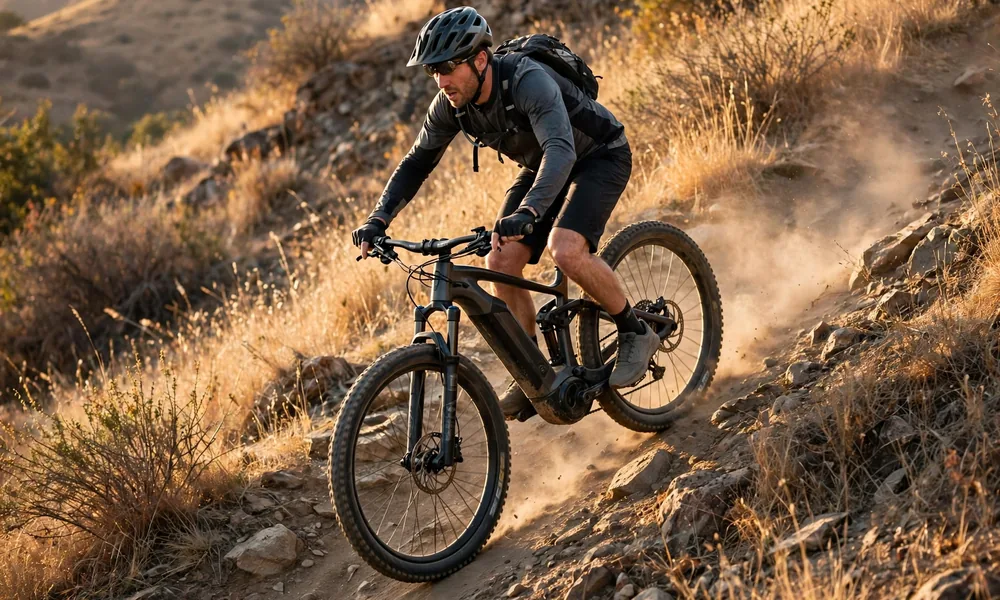
The spec sheet for a mid-drive motor looks technical, but it describes something simple: how hard the motor pushes, how long it can keep pushing, and how naturally it blends with your own legs. Torque for the hills, cadence for the feel, gears for the efficiency, and weight placed low and central so the bike still rides like a bike. Get those four numbers right and the motor disappears.


