The camera rolls, the director calls action, and an actor walks through a doorway from blazing sunlight into a dim room. On the cinema screen the shot looks effortless: the bright window keeps its detail, the shadows keep theirs, and the actor’s skin looks like skin. But inside the camera body, behind a lens that can cost as much as a car, sits a single silicon chip that can cost more than the rest of the camera combined. It is the sensor, and it is one of the most costly pieces of engineering in all of filmmaking.
A cinema sensor is not a bigger version of a phone sensor. It is a different animal altogether: a slab of silicon the size of a matchbox, covered in millions of light-sensitive wells, each one tuned to catch light the way film once did. It has to record fourteen stops of brightness, from a candle to the sun, without noise, without banding, without a single dead pixel showing up on a screen forty feet wide. Building one is less like making electronics and more like growing a perfect crystal.
Why It Costs So Much
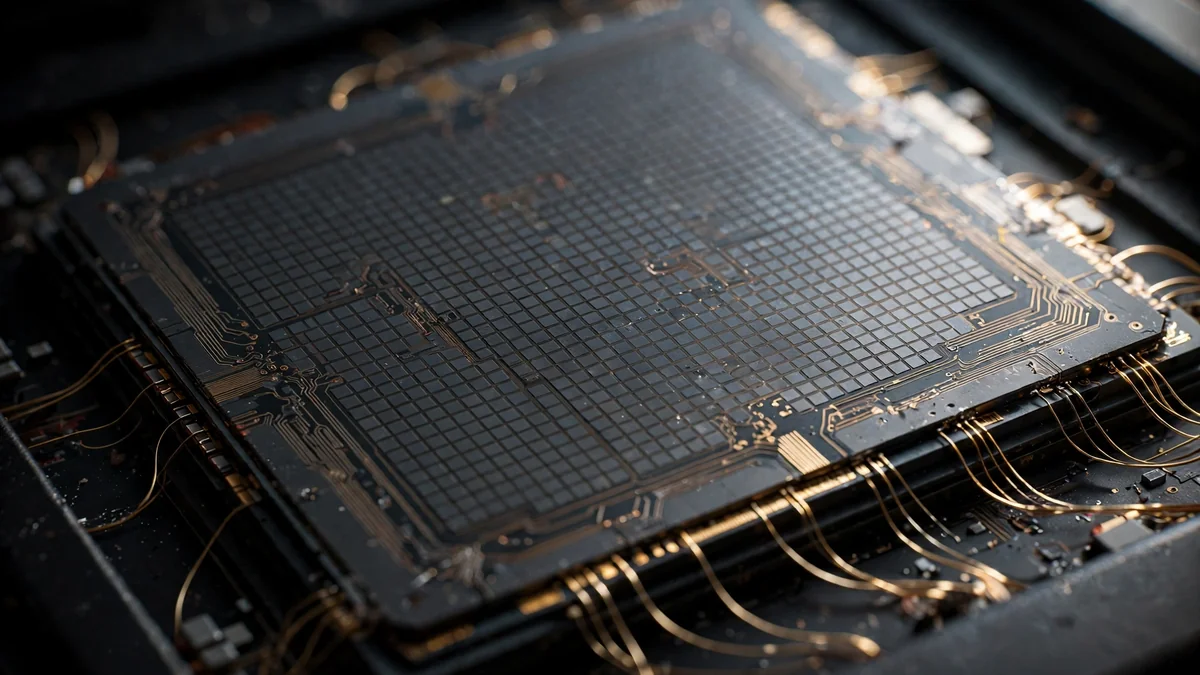
A cinema sensor looks like a dark, flat rectangle behind the lens mount. Under a microscope it is a city: millions of photodiodes, transistors and microscopic lenses, each one placed with nanometre precision. The cost comes from the size of the chip, the purity it demands, and the fact that most of the chips a factory makes are thrown away.
Reason 1: The chip is enormous, and silicon punishes size
A full-frame cinema sensor measures about 36 by 24 millimetres, roughly thirty times the area of a phone sensor. Silicon wafers are never perfect; every wafer has tiny defects scattered across it, and a defect landing anywhere on a chip ruins that chip. A small phone sensor dodges most defects. A cinema sensor cannot dodge any of them, so a large share of every wafer is scrap. The bigger the sensor, the worse the yield, and the cost of each good chip climbs steeply, a battle a gaming graphics processor fights too.
Reason 2: The pixels are huge on purpose
Cinema pixels are far larger than phone pixels, and that is deliberate. A bigger light well catches more photons, which means less noise in the shadows and smoother tones in the highlights. But large pixels mean the sensor needs more silicon per pixel, and each one must be identical to its neighbours to within a fraction of a percent, or the image shows banding on a cinema screen. The microlenses over each pixel are moulded to tolerances a human hair would dwarf, one lens per pixel, millions per chip.
Reason 3: It must read out fast without heating up
A cinema sensor reads its entire image dozens of times a second, and every readout generates heat. Heat creates noise, and noise is the enemy of a clean cinema image, so the sensor is designed to move enormous amounts of data while staying cool. That means stacked designs, where the light-sensitive layer sits on top of a second layer of readout circuitry, bonded together with thousands of microscopic connections. Stacking two wafers and aligning them to within nanometres is one of the hardest jobs in semiconductor manufacturing.
Reason 4: Colour science is baked into the silicon
A cinema sensor does not just record light; it records colour the way a film stock did, with skin tones that flatter actors and highlights that roll off gently instead of clipping to white. That behaviour is engineered into the sensor itself: the colour filter array over the pixels, the depth of the light wells, the way charge is read out. Each camera maker’s colour science is a closely guarded secret, tuned over years of testing, and it cannot be copied by buying the same silicon.
Reason 5: The cleanroom never sleeps
Sensors are made in cleanrooms cleaner than an operating theatre, where a single speck of dust can ruin a chip worth thousands of dollars. The lithography machines that print the circuitry cost hundreds of millions of dollars each, and they run around the clock, tended by engineers in full suits. A cinema sensor passes through hundreds of process steps over several months, and a mistake at step two hundred can scrap a wafer that has already consumed weeks of work.
Reason 6: Every sensor is tested like a cinema screen depends on it
Before a sensor ships it is tested far more harshly than a phone sensor. Each one is checked for dead pixels, hot pixels, uneven response and readout noise, because a flaw invisible on a phone screen is obvious on a forty-foot cinema screen. Many sensors fail the cinema grade, and the ones that pass carry the cost of those that did not. The display at the other end of the chain faces the same scrutiny, where OLED display panel specs show how much engineering hides behind a flat screen.
Reason 7: The market is tiny, so nobody shares the cost
Phone sensors sell by the billion, which spreads the cost of a fab across an enormous volume. Cinema sensors sell by the thousand. A sensor designed for one camera model may only ever be made in a run of a few thousand units, so the enormous cost of designing it, building the masks and tuning the process is divided among very few chips. That is why a cinema camera body can cost tens of thousands of dollars, and why the sensor inside it is the most expensive part. New display technologies face the same small-volume economics, as micro-LED display materials show in a market still finding its scale.

Specifications
| Specification | Detail |
|---|---|
| Sensor size | Full frame, about 36 x 24 mm, or larger Super 35 variants |
| Resolution | Typically 6K to 8K, around 24 to 45 megapixels |
| Pixel size | Several microns across, far larger than phone pixels |
| Dynamic range | Around 14 to 17 stops |
| Readout | Full sensor readout dozens of times per second |
| Construction | Often stacked, with readout circuitry bonded beneath |
| Colour | Proprietary colour filter array and colour science |
| Manufacturing | Hundreds of lithography steps over several months |
Price
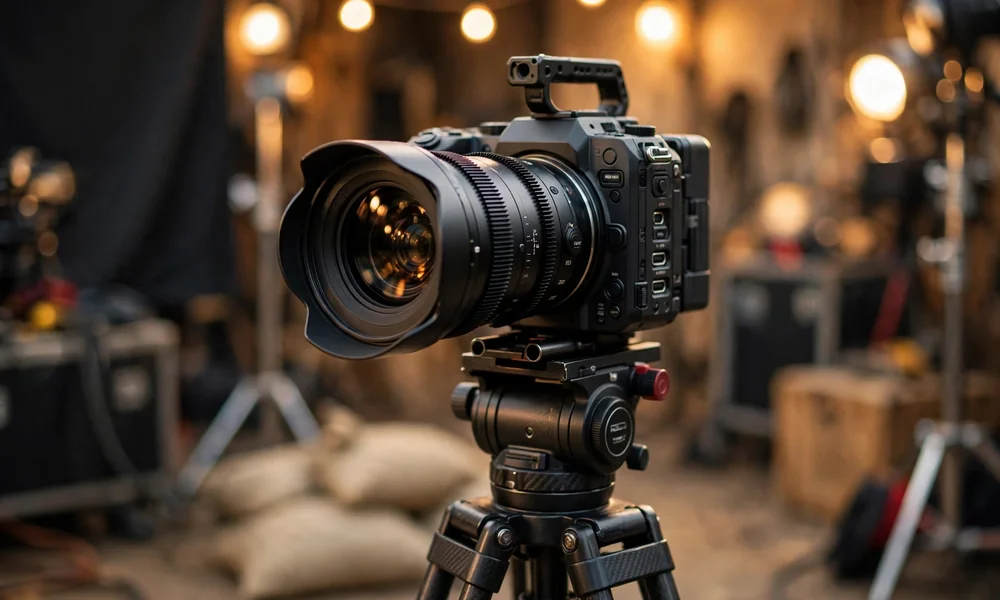
A cinema camera body typically costs from around $6,000 to more than $50,000 (estimate), and the sensor is the single most expensive component inside it. A replacement sensor assembly through the manufacturer can cost several thousand dollars (estimate), and that is before the labour of fitting and calibrating it. The silicon itself is cheap; the price is in the size, the yield losses, the stacked construction and the tiny market that has to carry the cost of the fab.
Rare Fact
The first digital cinema sensors were so noisy that cinematographers kept shooting on film for years, and the sensor in a modern cinema camera is tested to a standard where a single dead pixel in millions can send the whole chip back. Some cinema sensors are still made on the same production lines as scientific sensors for telescopes, because the purity and precision demanded by astronomy and by Hollywood turn out to be almost the same.
That is the quiet extravagance at the heart of every film you watch: a slab of silicon grown like a crystal, printed with millions of microscopic lenses, tested to a standard no phone could ever need. It costs so much because there is no cheap way to catch light perfectly across fourteen stops of brightness.


