Drop your phone on the pavement and pick it up with your heart in your mouth. The screen is unmarked. Drop a luxury watch against a doorframe and the crystal is unmarked too. The material saving both of them is sapphire glass, a sheet of grown crystal so hard that almost nothing in everyday life can scratch it. It looks like ordinary glass and costs like a precious stone, and the reason is simple: it is not really glass at all. It is a single crystal, grown atom by atom in a furnace hotter than lava, then sliced and polished for days.
Sapphire has guarded watch faces for a century, and now it guards phone cameras, fingerprint sensors and the occasional phone screen. It is the second hardest transparent material on Earth, beaten only by diamond. That hardness is exactly what makes it so expensive, because every step of making it, growing it, cutting it, polishing it, fights against the very property that makes it desirable.
Why It Costs So Much
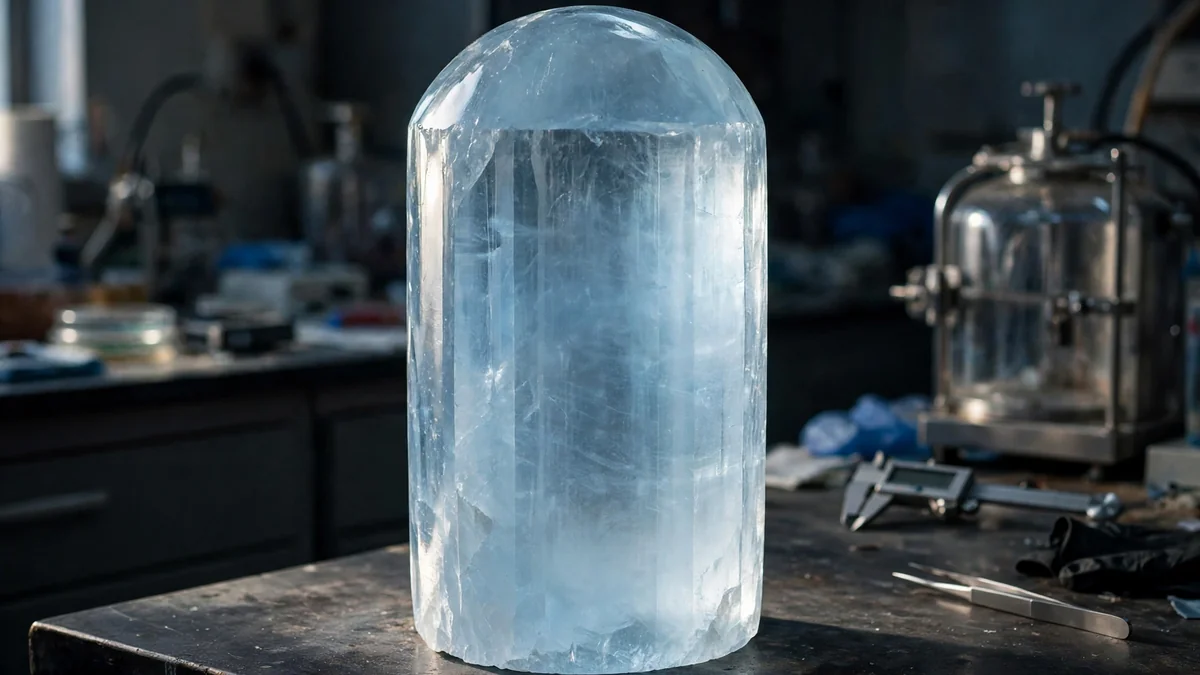
A sheet of sapphire glass looks unremarkable, a clear pane you could mistake for ordinary glass. Its price comes from how it is born. Ordinary glass is melted sand, poured and cooled in minutes. Sapphire is aluminium oxide, melted at more than 2,000 degrees Celsius and coaxed into a single crystal over days or weeks, and a single flaw anywhere in that crystal can ruin the whole piece.
Reason 1: Growing the crystal takes weeks in a furnace
Sapphire starts as pure aluminium oxide powder, melted in a crucible at over 2,000 degrees Celsius. A small seed crystal is dipped into the melt and pulled slowly upward, and the molten material freezes onto the seed in the same crystal pattern, growing into a long cylinder called a boule. The process runs for days or even weeks, and the temperature must be controlled to within a degree or two the whole time. A power cut, a vibration or a speck of contamination can introduce a flaw that makes the boule useless for optics.
Reason 2: Cutting sapphire is a battle with its own hardness
Once grown, the boule must be sliced into thin sheets, and sapphire’s hardness turns every cut into a slow fight. Ordinary saws cannot touch it. The sheets are cut with diamond-coated wire saws, and a single cut through a large boule can take many hours. The wire wears out, and the crystal can crack along hidden stress lines as it is sliced. Every sheet that survives is precious; every sheet that cracks is weeks of furnace time wasted. The same fight against hard materials shapes other parts of a phone, where a titanium phone frame demands tooling that wears out far faster than steel tooling does.
Reason 3: Polishing takes days and removes almost nothing
A sliced sapphire sheet is cloudy and rough, and it must be polished to optical clarity. Because sapphire is so hard, polishing removes material at a glacial pace, using diamond slurry on slowly turning laps. A watch crystal can take days of polishing, and a phone-sized sheet takes longer still. The surface must end up flat to within a fraction of a wavelength of light, or it will distort what you see through it.
Reason 4: The furnaces and the purity cost a fortune
Growing sapphire needs furnaces that hold more than 2,000 degrees for weeks, crucibles that do not contaminate the melt, and aluminium oxide powder purified to extraordinary levels. Any impurity in the powder can colour the crystal or weaken it, so the raw material is refined far beyond industrial grade. The energy bill alone for a single growth run is substantial, and the equipment is specialised, built in small numbers for a small industry.
Reason 5: Most of the crystal never becomes a product
A boule is a cylinder, but watch crystals are round and phone covers are rectangular, so much of the crystal is cut away as waste. Add the sheets lost to cracks, the pieces rejected for bubbles or colour, and the ones scratched in polishing, and the yield from raw crystal to finished product can be painfully low. Every finished sapphire screen carries the cost of the crystal that was thrown away around it. The same waste shapes other luxury materials, where the glass on a superyacht is cut from enormous panes with most of the sheet ending up as offcuts.
Reason 6: It cannot be bent or moulded like glass
Ordinary glass can be slumped, bent and moulded into curved shapes while hot. Sapphire cannot. It is a crystal, and it keeps its shape or it breaks. That means curved sapphire covers, the kind used on some watches and phones, must be ground to shape from a thick piece, a slow and wasteful process, or grown in a special shape from the start.
Reason 7: The market is small and the makers are few
Most of the world’s synthetic sapphire is grown by a handful of companies, and most of it goes to watches, phone camera covers and a few industrial uses. A full phone screen of sapphire remains rare because the cost is so high and the supply is so limited. With so few suppliers and so little volume, there is no price war to drive costs down. Each maker charges for the furnace time, the energy, the diamond wire and the weeks of skilled labour, and the buyers pay it because nothing else survives a lifetime in a pocket. Foldable screens face a similar supply problem, where foldable display materials are made by only a few suppliers in the world.

Specifications
| Specification | Detail |
|---|---|
| Material | Single-crystal aluminium oxide, Al2O3 |
| Hardness | 9 on the Mohs scale, second only to diamond |
| Melting point | Over 2,000 degrees Celsius |
| Growth method | Seed crystal pulled slowly from a molten bath |
| Growth time | Days to weeks per boule |
| Cutting | Diamond wire saws, many hours per cut |
| Polishing | Diamond slurry, days per sheet |
| Typical uses | Watch crystals, camera covers, sensors, some screens |
Price
A sapphire watch crystal typically adds tens to hundreds of dollars to the cost of a watch (estimate), and a sapphire camera cover on a flagship phone costs many times more than an ordinary glass one (estimate). A full sapphire phone screen, where it has been tried, has been estimated at several times the cost of a standard glass screen (estimate). The crystal itself is aluminium oxide, one of the cheapest minerals on Earth; the price is in the furnace weeks, the diamond cutting, the days of polishing and the crystal thrown away along the way.
Rare Fact
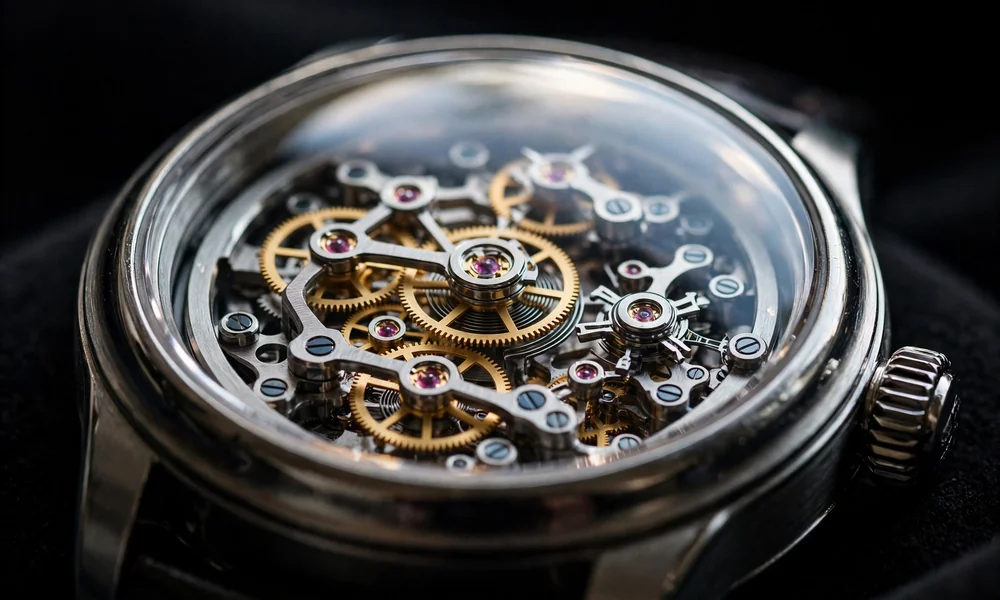
Natural sapphire is the blue gemstone of jewellery, but the sapphire in watches and phones is colourless, grown in a furnace rather than mined, and chemically identical to the gem. The same crystal that guards a watch face is also used for the windows of military aircraft and the lenses of barcode scanners, because it is one of the few transparent materials that can survive sand, grit and heat without scratching.
That is the quiet extravagance of a material that looks like nothing at all: a crystal grown for weeks in a furnace hotter than lava, cut with diamond wire, polished for days, and still cheaper to replace than the watch it protects. It costs so much because hardness is a double-edged gift. The same property that makes sapphire nearly impossible to scratch makes it nearly impossible to make.


