The black saloon glides up to the kerb without a sound of hurry, and nothing about it looks unusual. The paint is deep and flawless, the chrome is polished, the chauffeur steps out in a dark suit and opens the rear door with a white-gloved hand. It could be any luxury limousine on a city street. Then you notice the details: the glass is thicker than your thumb, the door closes with a heavy, bank-vault thunk, and the car sits a fraction lower on its suspension than it should. This is not a limousine that happens to be safe. It is a fortress that happens to look like a limousine, and every panel, pane, and hinge has been rebuilt to keep the person inside alive.
An armoured limousine starts life as an ordinary luxury saloon, usually a large Mercedes-Benz, BMW, or Rolls-Royce, and is then taken apart and rebuilt by a specialist armouring company. The work is slow, secretive, and astonishingly precise: a finished car can stop rifle fire, survive a grenade blast underneath, and keep driving on shredded tyres, all while looking exactly like the car it started as. Building one takes months, and the order of the work matters as much as the materials.
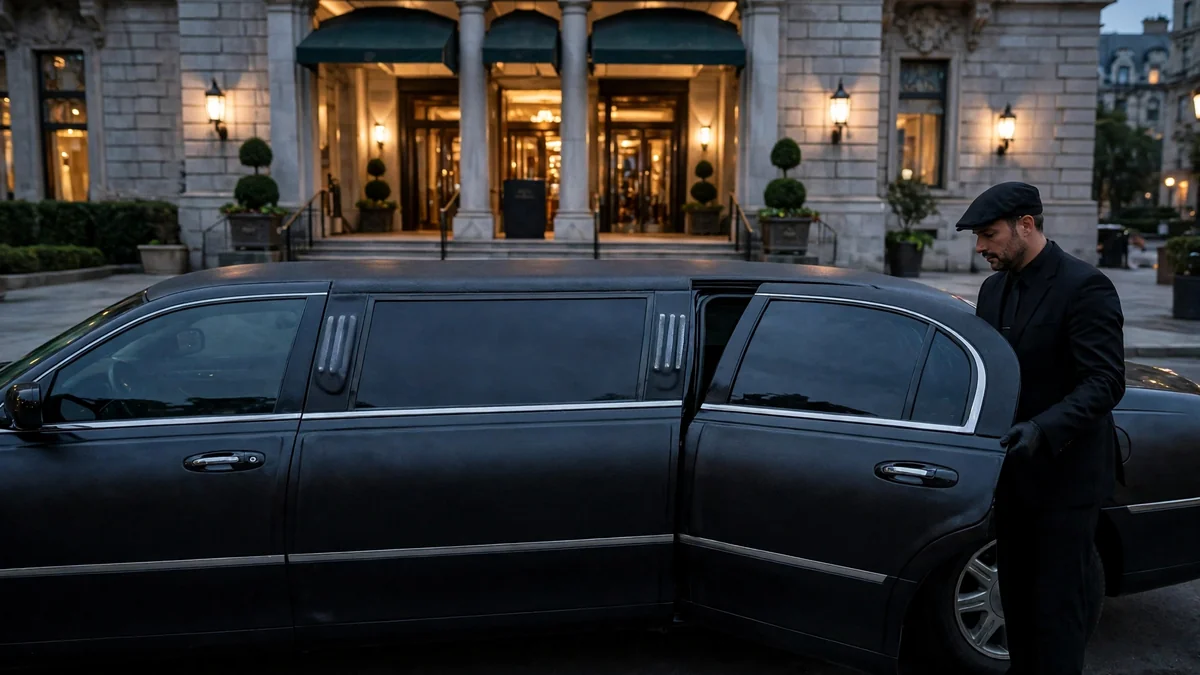
How an Armoured Limousine Is Made
The build takes roughly three to six months from the day the donor car arrives to the day it is handed over, and it happens in a strict sequence. Armour goes in before trim, the suspension is rebuilt before the glass is fitted, and nothing is bolted on as an afterthought. A limousine that gains a tonne of steel and glass has to be re-engineered from the inside out, or it will not stop, steer, or survive the way it should.
Step 1: Stripping the donor car to a bare shell
Everything starts with a brand-new luxury saloon, driven straight from the dealer to the armouring workshop. Technicians remove the interior completely: seats, carpets, headlining, door cards, dashboard, and wiring looms all come out until only a painted steel shell remains. Every part is labelled and stored, because most of it will go back in at the end. Engineers then scan the shell and map exactly where armour can be fitted without fouling the wiring, the airbags, or the crumple zones that still have to work in a crash.
Step 2: Fitting the armoured passenger cell
The heart of the car is the armoured cell, a cocoon of ballistic steel and composite panels that wraps the cabin. Flat panels of high-hardness steel are cut, bent, and welded into the doors, roof, floor, and pillars, overlapping at every joint so there is no gap a bullet can find. Behind the steel go layers of aramid fibre, the same material used in bulletproof vests, which catch fragments and slow anything that gets through.
Step 3: Installing the bullet-resistant glass
Next comes the glass, and it is nothing like ordinary car glass. Each window is a sandwich of glass and polycarbonate layers bonded together, often 40 millimetres thick or more, and a single side window can weigh as much as a grown adult. The windscreen is usually a single curved slab, laminated in one piece so it cannot be punched out of its frame.
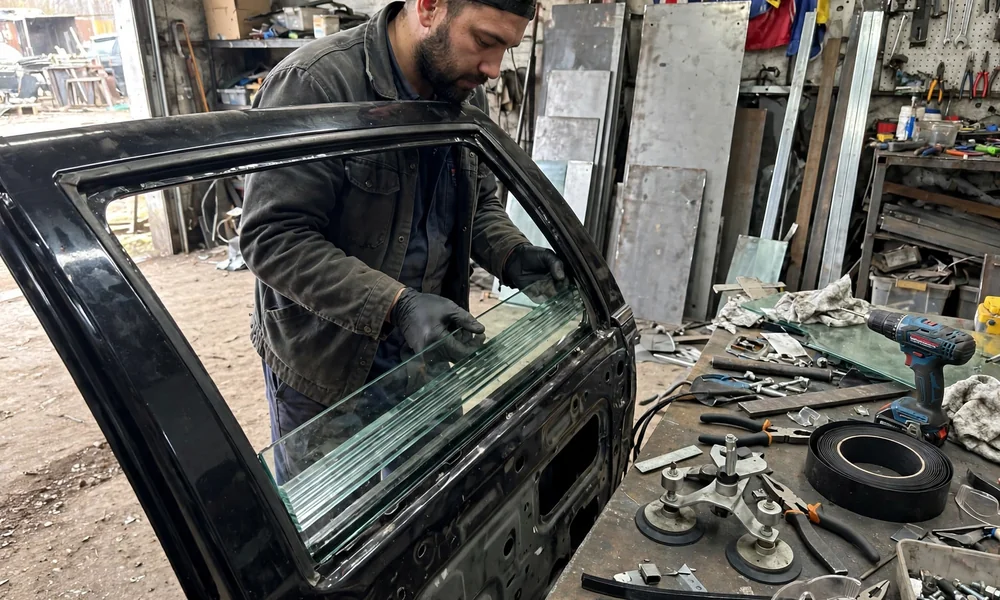
Step 4: Protecting the floor and fuel system
With the cell and glass in place, the team turns to the underside. The floor gets an angled steel plate designed to deflect the blast of a grenade or mine away from the cabin, and the fuel tank is wrapped in self-sealing material that closes around a puncture instead of leaking. Brake lines, fuel lines, and the battery are rerouted inside the protected cell where possible, and the exhaust is fitted with a guard so it cannot be blocked. This is the stage that separates a car that resists bullets from one that survives a bomb.
Step 5: Rebuilding the suspension, brakes, and tyres
An armoured limousine can weigh a tonne more than the car it started as, so the running gear is rebuilt to cope. Springs are uprated, dampers are replaced with heavy-duty units, and the brakes get larger discs and calipers so the car still stops in a safe distance. The tyres are run-flat designs with a solid support ring inside, which lets the car keep driving at motorway speed for tens of kilometres after a blowout or a bullet strike. The steering is recalibrated too, because a car this heavy needs different geometry to feel calm rather than ponderous.
Step 6: Rebuilding the interior and final testing
Finally, the original interior goes back in, refitted around the armour so that nothing looks different from the outside. The seats are retrimmed, the wood and leather are restored, and discreet additions appear: an intercom, a fresh-air system with filters, and sometimes a separate oxygen supply. Then the car is tested hard: it is driven over rough roads, braked from speed again and again, and its armour is proven on a firing range, where sample panels are shot with the exact weapons the car is rated to stop. Only when every test passes is the car handed to its owner.
Armoured Limousine Specs
| Specification | Typical figure |
|---|---|
| Base vehicle | Large luxury saloon |
| Added armour weight | 800–1,200 kg |
| Glass thickness | 40–70 mm |
| Protection level | VPAM VR7 / VR9 |
| Run-flat range | 50–80 km after damage |
| Build time | 3–6 months |
| Engine | V8 or V12, often uprated |
| Top speed | Electronically limited |
The numbers vary by protection level, because armour is a trade-off. A VR7 car stops high-velocity rifle fire; a VR9 car adds grenade and blast protection, and weighs more for it. What they share is the basic deal: a luxury car, a steel cell, and glass as thick as a book. Kevlar composite is one of the materials that makes that deal possible, layering aramid fibre behind steel to catch what the hard plate cannot stop on its own.
How Much Does an Armoured Limousine Cost?
A finished armoured limousine typically costs an estimated $400,000 to $1.5 million, depending on the base car and the protection level. The donor car itself might cost an estimated $150,000 to $400,000, and the armouring work adds an estimated $200,000 to $600,000 or more.
The price buys discretion as much as protection, which is why the cabin is finished to the same standard as the car it started as. How a luxury car seat is made shows the hand-stitching and shaping that goes into the seats, and the armourer’s job is to hide a tonne of steel underneath that craftsmanship without changing how the seat feels. Why a luxury car interior is so expensive explains the other half of the bill: the leather, wood, and hand finishing that make a fortress feel like a lounge.
A Rare Fact
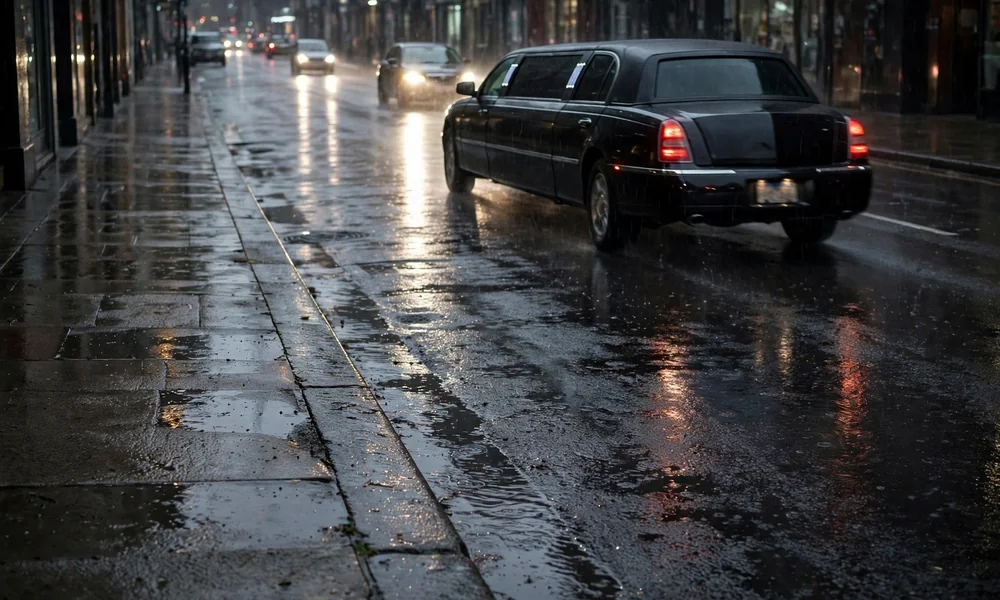
Some of the most heavily armoured limousines in the world weigh more than a small truck, yet their builders go to extraordinary lengths to hide it. The car’s windows are so thick that the glass alone weighs more than the engine of a small hatchback, and the whole vehicle is still expected to drive, turn, and stop like a normal luxury saloon.
That is the real trick of the armoured limousine: not the steel or the glass, but the invisibility. A car that looks like it belongs outside a hotel, drives like it belongs on a motorway, and yet can take a bullet and keep going is the product of months of quiet, exacting work.


