Ten years ago, an electric scooter that could reach 25 mph felt fast. Today, the fastest production scooters will out-accelerate most cars to 30 mph and keep going past 60, on two ten-inch wheels, standing up, with nothing between the rider and the road but a helmet and good judgement. These are hyperscooters.
This ranking is ordered by independently tested top speed, not the maker’s claim, because claimed speeds are usually optimistic and the gap grows with speed. The test figures below come from GPS-logged independent testing, and the difference between claimed and tested speed on some of these machines is ten miles per hour or more.
How We Ranked the Fastest Scooters
Each scooter is ranked by its independently tested top speed, measured by GPS with a real rider aboard, and the ranking also weighs peak power, battery size, braking and whether the machine is genuinely rideable at its top speed or merely capable of reaching it once.
1. EMOVE Roadster — 73.5 mph tested
The outright record belongs to the EMOVE Roadster, Voro Motors’ $5,795 halo scooter, rated at 80 mph by its maker and independently tested at 73.5 mph — the fastest verified speed of any production electric scooter. It is a big, heavy, expensive machine built around the single goal of going faster than anything else with a standing deck.
2. RoadRunner RX7 — 67.4 mph tested
The RX7 is the fastest scooter most riders will ever actually buy, tested at 67.4 mph against a 70 mph claim — the smallest gap between claim and reality near the top of this list. It is a purpose-built speed machine with a huge battery and dual motors, and its tested figure has stood against every challenger that followed.
3. Kaabo Wolf King GTR — 66 mph tested
Kaabo’s Wolf King GTR was tested at 66 mph, actually beating its 65 mph claim, which almost never happens in this class. Twin motors deliver 7,200 watts of peak power, twin detachable battery packs make charging practical, and sine-wave controllers keep the power delivery smooth rather than violent.
4. Kaabo Wolf King GTR Max — 65.3 mph tested
The GTR Max takes the same platform and adds a bigger 2,880 Wh Samsung battery pack and a peak output of 13,440 watts, for a tested 65.3 mph. The extra battery does not make it faster than the standard GTR, but it does mean it can hold high speed for longer without the voltage sag that slows lesser scooters down.
5. Inmotion RS — 65.2 mph tested
The Inmotion RS was tested at 65.2 mph against a claimed 68.3, and it is the most technically interesting scooter in the top five, with adjustable suspension geometry and a striking, angular design that looks like nothing else on the road. It proves the point: 65 mph, stable and repeatable.

6. Solar Hyperion RST — 64.3 mph tested
The Hyperion RST is the quiet achiever of this ranking, a lesser-known machine tested at 64.3 mph against a 70 mph claim. It is a reminder that the hyperscooter world extends well beyond the famous brands, and that smaller makers are building genuinely fast machines.
7. Dualtron X Limited — 63 mph tested
The Dualtron X Limited is the heavyweight of the list, a motorcycle-grade machine with a 5,040 Wh battery — bigger than some electric cars’ first batteries — and a chassis built to match. It was tested at 63 mph, beating its 62.5 mph claim, and it feels more like a small motorcycle than a scooter at speed.
8. Nanrobot LS7+ 72V — 62.8 mph tested
The Nanrobot LS7+ has the biggest gap between claim and reality in this ranking: 74.5 mph claimed, 62.8 mph tested. That is still fast enough for eighth place, and its 72-volt, 6,000-watt dual-motor system delivers brutal acceleration even if the top speed disappoints against the brochure. The motor behind all of this is explained in our guide to how an electric scooter motor works.
9. Dualtron Thunder 3 — 61.4 mph tested
The Thunder 3 is Dualtron’s flagship hyperscooter, with dual 50-amp controllers, an overtake boost mode and four-piston hydraulic brakes, tested at 61.4 mph against a 62 mph claim. It is the most complete package in the lower half of this list: fast, well braked, well built and backed by the biggest dealer network of any hyperscooter brand.
10. NAMI Burn-E 4 Max — 61 mph tested
The Burn-E 4 Max closes the list at 61 mph tested, with 52.3 miles of range from its 2,880 Wh pack. The Burn-E series has been the benchmark for ride quality in this class since the Burn-E 2 Max, and the 4 Max builds directly on it: superb suspension, a stable frame and the most comfortable ride of any scooter here.
Fastest Electric Scooters Compared
| Rank | Scooter | Tested top speed | Claimed top speed | Peak power |
|---|---|---|---|---|
| 1 | EMOVE Roadster | 73.5 mph | 80 mph | About 8,000 W |
| 2 | RoadRunner RX7 | 67.4 mph | 70 mph | About 8,000 W |
| 3 | Kaabo Wolf King GTR | 66 mph | 65 mph | 7,200 W |
| 4 | Kaabo Wolf King GTR Max | 65.3 mph | 65 mph | 13,440 W |
| 5 | Inmotion RS | 65.2 mph | 68.3 mph | About 8,000 W |
| 6 | Solar Hyperion RST | 64.3 mph | 70 mph | About 7,000 W |
| 7 | Dualtron X Limited | 63 mph | 62.5 mph | About 8,000 W |
| 8 | Nanrobot LS7+ 72V | 62.8 mph | 74.5 mph | 6,000 W |
| 9 | Dualtron Thunder 3 | 61.4 mph | 62 mph | 10,080 W |
| 10 | NAMI Burn-E 4 Max | 61 mph | 61 mph | About 8,400 W |
What Does a Hyperscooter Cost?
A hyperscooter costs roughly $1,600 to $5,795, and the price rises steeply with speed. The Kaabo Wolf King GTR, the best value in the top three, costs about $2,899; the NAMI Burn-E 2 Max, the previous generation’s benchmark, about $3,499; the Dualtron Thunder 3 about $4,299; and the EMOVE Roadster $5,795. On top of the scooter, budget for a full-face helmet, armoured jacket and gloves, because at 60 mph the protective gear matters more than the scooter. For comparison, our ranking of the best electric motorcycles of 2027 shows what the same money buys with a seat and a licence plate.
A Rare Fact
The fastest electric scooter ever built is not a production machine at all. Track-only racing scooters with custom motors and batteries have been recorded past 100 mph, including the Weped Sonic S Dual at a claimed 100 mph and the Rion RE90, which is electronically limited to 80 mph but has a potential top speed of 100. At those speeds the limiting factor is not power but tyres: no scooter tyre is rated for sustained running at 100 mph.
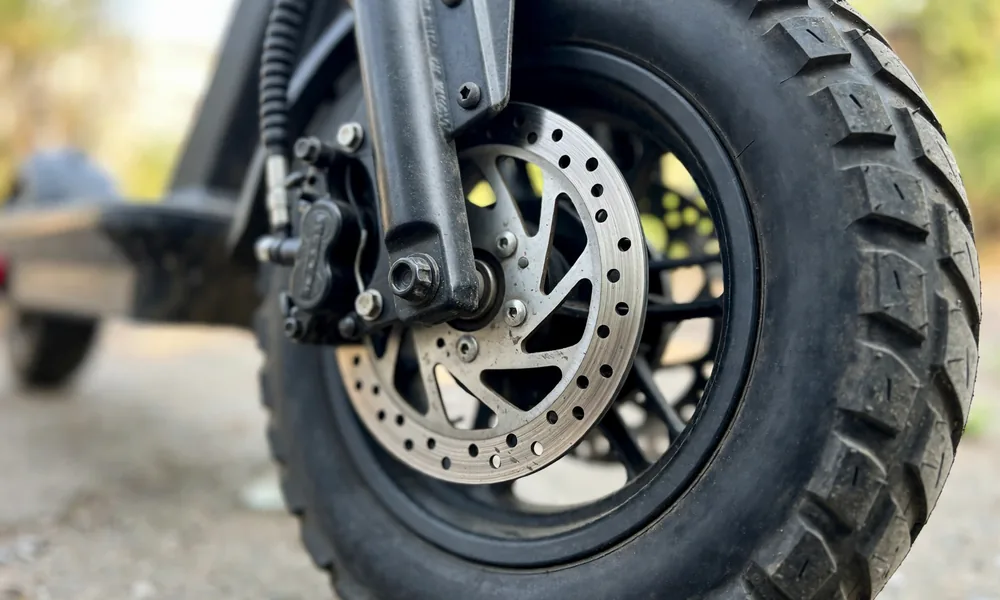
The ten scooters above prove that electric standing vehicles have reached motorcycle speeds, and the engineering is now ahead of the law, the tyres and the roads. The difference between the fastest and the tenth fastest is just 12.5 mph, which shows how competitive the top of this class has become. But speed is only half the machine: the brakes, the frame and the rider’s judgement decide whether a fast scooter is a thrill or a statistic. Before buying anything on this list, read our case against overpowered electric scooters, because the fastest scooter is not always the best scooter.