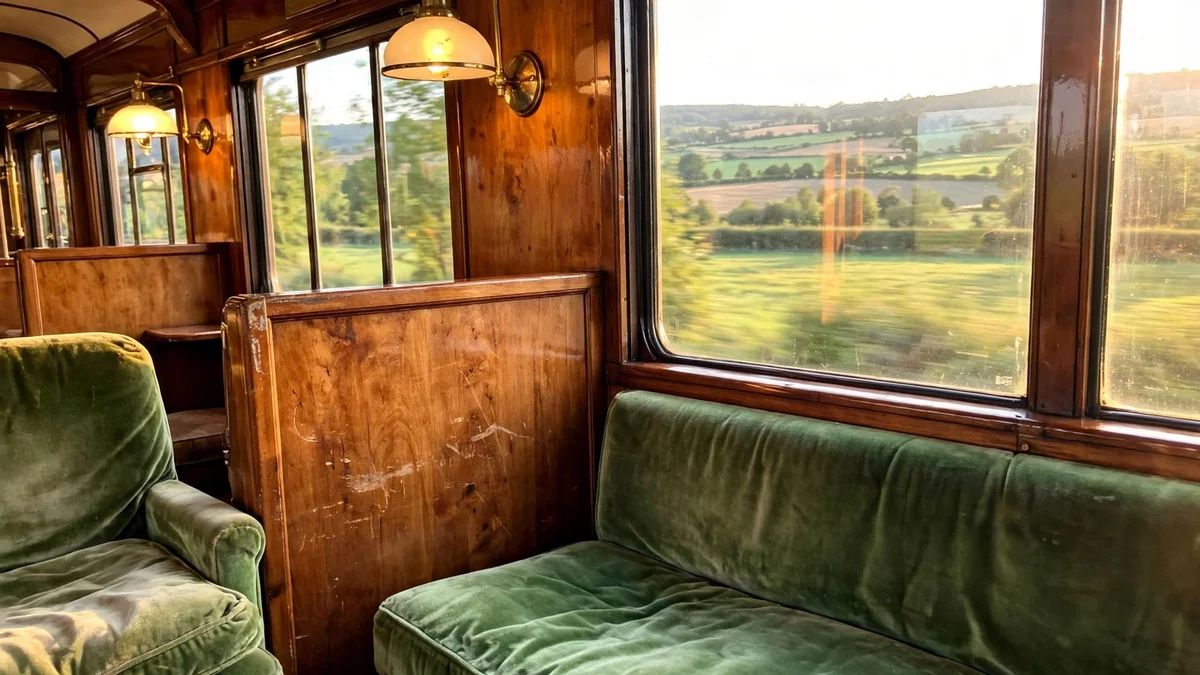
The train pulls out of the station at dusk, and inside the carriage the world goes quiet. Outside the window, mountains slide past in the last light; inside, a steward pours tea into a porcelain cup that does not rattle, a brass lamp glows over polished wood, and the only sound is the soft, distant rhythm of the rails. It feels less like a train than a hotel that happens to move. That feeling is not an accident. A luxury train carriage is built like a five-star suite that has to survive decades of vibration, curves, and weather, and every panel, hinge, and cushion is engineered twice: once for beauty, and once for the railway.
Unlike an ordinary passenger coach, which is assembled on a production line in weeks, a luxury carriage is usually built or rebuilt by hand over many months. Some are restored vintage carriages from the golden age of rail, stripped to the frame and rebuilt with modern engineering hidden inside period woodwork. Others are brand new, built from scratch for trains that cross continents in style.
How a Luxury Train Carriage Is Made
The build takes roughly six to twelve months from the day work starts to the day the carriage joins the train, and it happens in a strict sequence. The steel body and running gear come first, the insulation and services second, and the visible luxury last, because a carriage that looks beautiful but rattles, leaks, or sways will never carry a paying guest twice. Every stage is checked against railway standards that are far stricter than anything a hotel ever faces.
Step 1: Building or restoring the steel body
Everything starts with the body shell, a long steel or aluminium tube that has to be both rigid and light. New carriages are welded from formed panels and checked for straightness to the millimetre, because a twist in the shell will show up as a draught, a rattle, or a door that never quite closes. Restored carriages are stripped to bare metal, repaired where a century of service has thinned the steel, and given new floors and roofs.
Step 2: Fitting the bogies and suspension
Underneath the shell go the bogies, the wheeled frames that carry the carriage and let it follow curves. A luxury carriage uses air suspension, with rubber bellows that inflate and deflate to keep the floor level over uneven track, plus dampers tuned to swallow the jolts that would spill a cup of tea. The wheels are profiled to a precise shape, and the bogies are balanced so the carriage glides rather than hunts from side to side. This is the stage that decides whether the ride feels like a hotel or a fairground.
Step 3: Insulating against noise, heat, and vibration
Next comes the invisible work that makes the luxury possible. Layers of acoustic insulation go into the walls, floor, and roof, followed by thermal insulation that keeps the cabin warm in the mountains and cool in the desert. Floating floors are laid on rubber mounts so vibration from the wheels never reaches the carpet, and the windows are double-glazed units set in rubber seals.
Step 4: Installing power, water, and air systems
With the shell quiet and sealed, technicians install the services that make the carriage liveable. Generators or power pickups feed lighting, heating, and air conditioning; water tanks and pumps supply the bathrooms and the small galley kitchen; and a climate system holds the cabin at a steady temperature whatever the weather outside. Everything is duplicated or protected, because a carriage in the middle of a desert cannot call a plumber. Wiring runs in sealed channels, and every system is tested under load before a single piece of furniture arrives.
Step 5: Fitting the hand-built interior
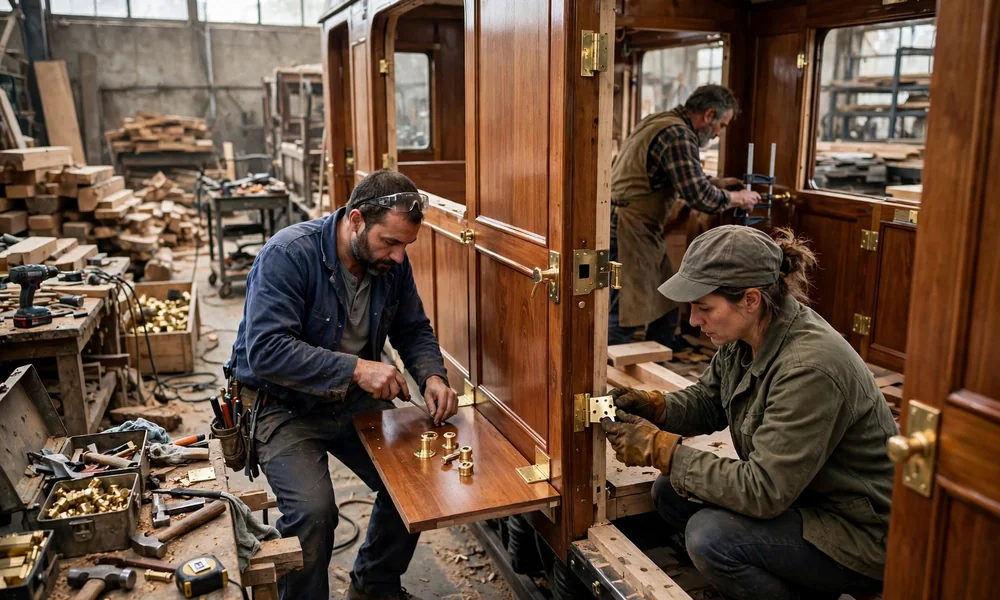
Now the craftsmen take over. Joiners fit book-matched wood veneers, cut from the same tree so the grain flows across the panels; upholsterers shape seats and beds by hand; metalworkers polish brass fittings and fit marquetry inlays. Cabins are built as self-contained suites with their own bathrooms, and the dining car gets tables fixed to the floor so they never slide on a curve. Why a luxury car interior is so expensive describes the same obsession at a smaller scale: hand stitching, rare materials, and hours of labour that no machine can replace.
Step 6: Testing on the rails and final handover
Finally, the finished carriage is put through its paces. It is weighed, measured, and run on test tracks at increasing speeds while engineers check the ride, the brakes, and the noise. Water systems are run for days, the air conditioning is tested in heat and cold, and inspectors check every safety system, from fire detection to emergency brakes. Only when the carriage can run at line speed in silence and comfort does it join the train, where a steward will make the beds and a chef will light the galley stove for the first paying journey.
Luxury Train Carriage Specs
| Specification | Typical figure |
|---|---|
| Length | 20–26 metres |
| Width | 2.8–3.2 metres |
| Weight | 40–60 tonnes |
| Passenger capacity | 10–40 guests |
| Build or rebuild time | 6–12 months |
| Suspension | Air, with tuned dampers |
| Cabin noise level | Under 60 decibels |
| Service life | 30–50 years |
The numbers vary by train and route, because a carriage is built around the railway it will run on. A narrow mountain line needs a smaller, lighter carriage than a broad continental route, and the interior is sized to match. What they share is the basic deal: a steel shell, a silent ride, and a hand-built interior. Composite layup is one of the techniques that keeps modern carriages light, layering fibres and resin into panels that are strong without the weight of solid steel.
How Much Does a Luxury Train Carriage Cost?
A new luxury train carriage typically costs an estimated $2–5 million, depending on size, materials, and the level of the interior. A full restoration of a vintage carriage can cost an estimated $1–3 million, because the craftsmen must rebuild a century-old body to modern safety standards while keeping its historic character.
The price buys longevity as much as luxury, which is why carriages are built to last for decades rather than years. Honeycomb core panels show how engineers save weight without losing strength, using a light cellular core between stiff skins for floors and partitions. That kind of engineering is what lets a carriage carry marble bathrooms and brass fittings without weighing so much that the locomotive struggles on a mountain gradient.
A Rare Fact
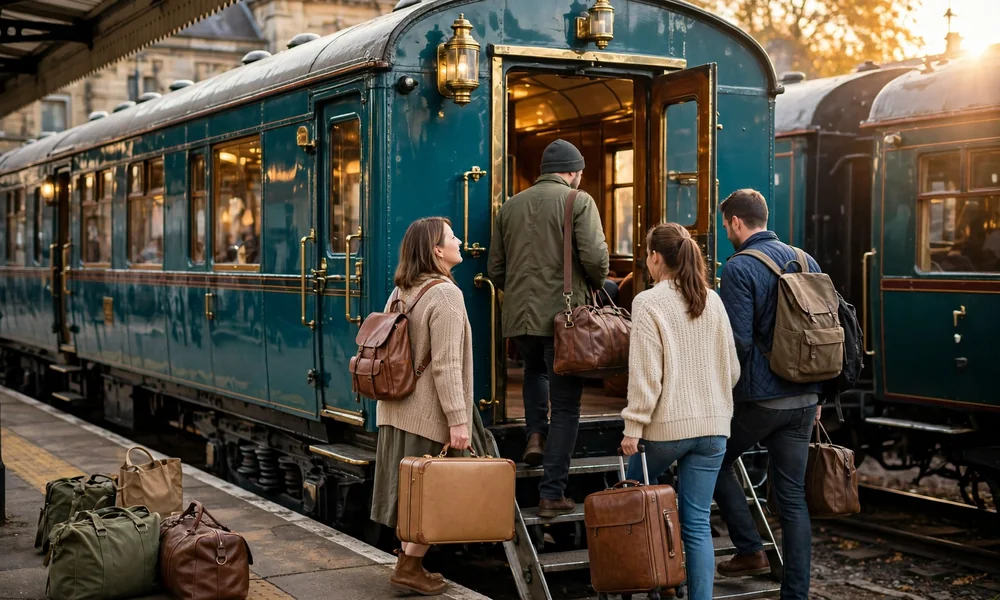
Some of the most famous luxury carriages in the world are older than the passengers who ride in them. Carriages built in the 1920s for the great European expresses are still in service today, having been rebuilt so many times that almost no original metal remains, yet their woodwork, marquetry, and Lalique glass panels are still the originals. One celebrated dining car has crossed Europe so many times that its wheels and bogies have been replaced several times over, while its mahogany interior has simply been polished, repaired, and polished again for a century.
That is the real story of the luxury train carriage: not a vehicle, but a room that travels. The steel shell, the air suspension, and the hand-fitted wood all serve a single purpose, which is to make the journey feel like the destination. When the train pulls out at dusk and the lamp glows over polished wood, the engineering disappears, and all that is left is the quiet rhythm of the rails.


