An electric bike motor is a small electric motor that adds power to your pedalling, turning a normal bicycle into a machine that flattens hills and shortens commutes. It does not replace your legs. On a legal e-bike in most countries it only assists while you pedal, and it cuts out above a set speed, usually around 25 kilometres per hour in Europe. The motor, the battery, and the sensors that join them together are the heart of the bike, and understanding how they work explains almost everything about how an e-bike feels to ride.
Hub motors: power in the wheel
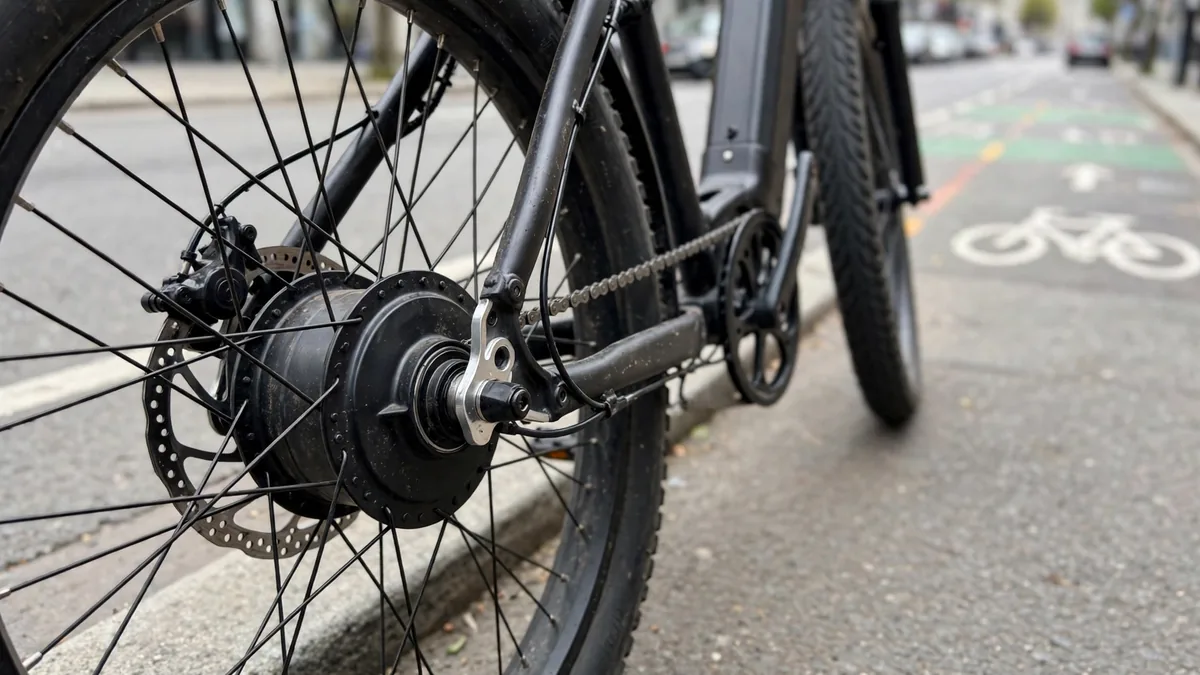
The simplest kind of e-bike motor is the hub motor, a drum-shaped unit built into the centre of the front or rear wheel. Inside it are coils and magnets arranged in a ring, and when the controller sends current through the coils in sequence, the magnetic field rotates and drags the wheel around with it. The motor is the wheel’s hub, so there is no chain or belt involved in the drive itself, and the whole unit is sealed against weather. Most hub motors are direct drive, with no gears inside, or geared, with a small planetary gear set that lets a smaller motor spin fast and still produce strong torque at the wheel.
Hub motors are cheap, reliable, and easy to fit, which is why they dominate affordable e-bikes and conversions. Their weakness is that they drive the wheel directly, so they cannot use the bike’s gears to their advantage: on a steep hill the motor is turning slowly and inefficiently, exactly when it is working hardest. A rear hub motor also puts weight at the back of the bike, which can make the handling feel tail-heavy, and changing a flat tyre means disconnecting a cable. For flat city riding and gentle hills, though, a hub motor is hard to beat for simplicity. The same idea, built into a smaller wheel, drives many electric scooter motors, and the two share most of their parts.
Mid-drive motors: power at the pedals
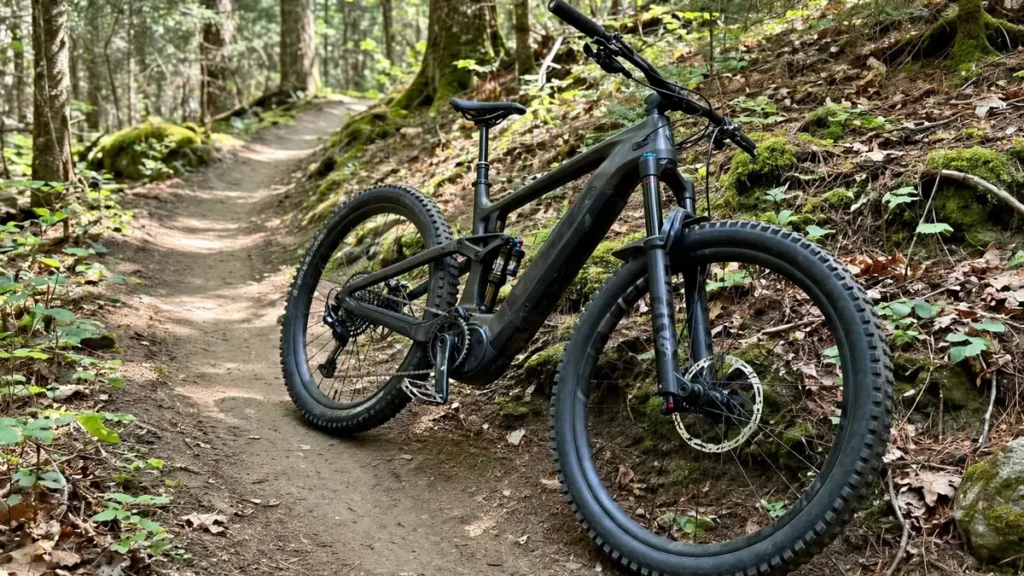
The other main type is the mid-drive motor, mounted at the bottom bracket where the pedals meet the frame. Instead of driving a wheel directly, it drives the chain, which means it benefits from the bike’s gears just as your legs do. On a steep hill you can drop into a low gear and the motor spins fast and efficiently while the wheel turns slowly with great force; on the flat you can shift up and let the motor cruise. That is why almost every serious mountain e-bike and touring e-bike uses a mid-drive, and why they climb so much better than hub-motor bikes of the same power.
A mid-drive is more complex and more expensive than a hub motor, and it wears the chain and cassette faster, because the motor adds its torque to yours through the same parts. It also puts its weight low and in the middle of the bike, which is the best place for balance, and it leaves the wheels standard, so a flat tyre is a normal repair. The motor itself is a compact unit, usually around 250 watts of rated power in Europe, with a gearbox inside that steps the fast-spinning motor down to pedalling speed. How an e-bike mid-drive motor works in detail comes down to that gearbox and the torque sensor that tells it how hard you are pushing.
How the motor knows when to help
A motor that pushed all the time would be a moped, not a bicycle, so an e-bike needs sensors to decide when to assist. The simplest system is a cadence sensor, a small magnet and pickup that detects whether the pedals are turning, and switches the motor on at a fixed level when they are. It works, but it feels crude: the help arrives in a lump, and it does not know whether you are cruising gently or grinding up a hill.
Better bikes use a torque sensor, which measures how hard you are pressing on the pedals, usually by detecting a tiny twist in the crank or the bottom bracket spindle. The controller then adds power in proportion to your effort, so the harder you push, the more the motor helps, and the assistance feels like your own legs have suddenly become stronger. The best systems sample the torque hundreds of times a second and adjust smoothly, which is why a good e-bike can feel almost invisible until you hit a hill and realise how easy it has become.

The controller and the battery
Between the battery and the motor sits the controller, a small box of electronics that is the bike’s brain. It takes the direct current from the battery, chops it into precisely timed pulses, and sends them to the motor’s coils in the right sequence to keep the magnetic field rotating. It reads the sensors, watches the speed, limits the power to the legal maximum, and cuts the assistance when you stop pedalling or exceed the speed limit.
The battery is usually a lithium-ion pack hidden in the down tube or mounted on it, and its size decides how far the bike can go. A typical pack holds between 400 and 700 watt-hours, which in practice means somewhere between 40 and 100 kilometres of assistance, depending on the hills, the wind, the rider’s weight, and how much help is asked for. The motor’s appetite is set by the power it draws: a 250-watt motor at full assist uses a quarter of a kilowatt-hour every hour, so a 500-watt-hour battery gives roughly two hours of hard work. E-bike battery specs explain what those watt-hour and voltage numbers mean in real riding, and they matter more than the motor’s headline power figure.
Torque, power, and what the numbers mean
E-bike motors are sold on two numbers, and both are often misunderstood. Power, measured in watts, is the rate at which the motor uses energy, and in Europe it is legally capped at 250 watts of continuous rated power for a pedelec. Torque, measured in newton-metres, is the twisting force the motor can apply, and it is the number that decides how a bike climbs: a motor rated at 85 newton-metres will drag you up a steep hill far better than one rated at 40, even if both are called 250-watt motors. The peak power of a mid-drive can briefly reach two or three times its rated figure on a steep climb, which is legal as long as the continuous rating stays within the limit.
An electric bike motor is a small, quiet machine that does one job well: it multiplies your effort. A hub motor does it simply, in the wheel, and a mid-drive does it cleverly, through the gears, and the sensors and controller decide how natural the result feels. The numbers on the box, the watts and the newton-metres, only tell part of the story; the rest is in the ride. Get the motor, the battery, and the sensing right, and the bike disappears beneath you, leaving only the feeling that the hill is not as steep as it looked.