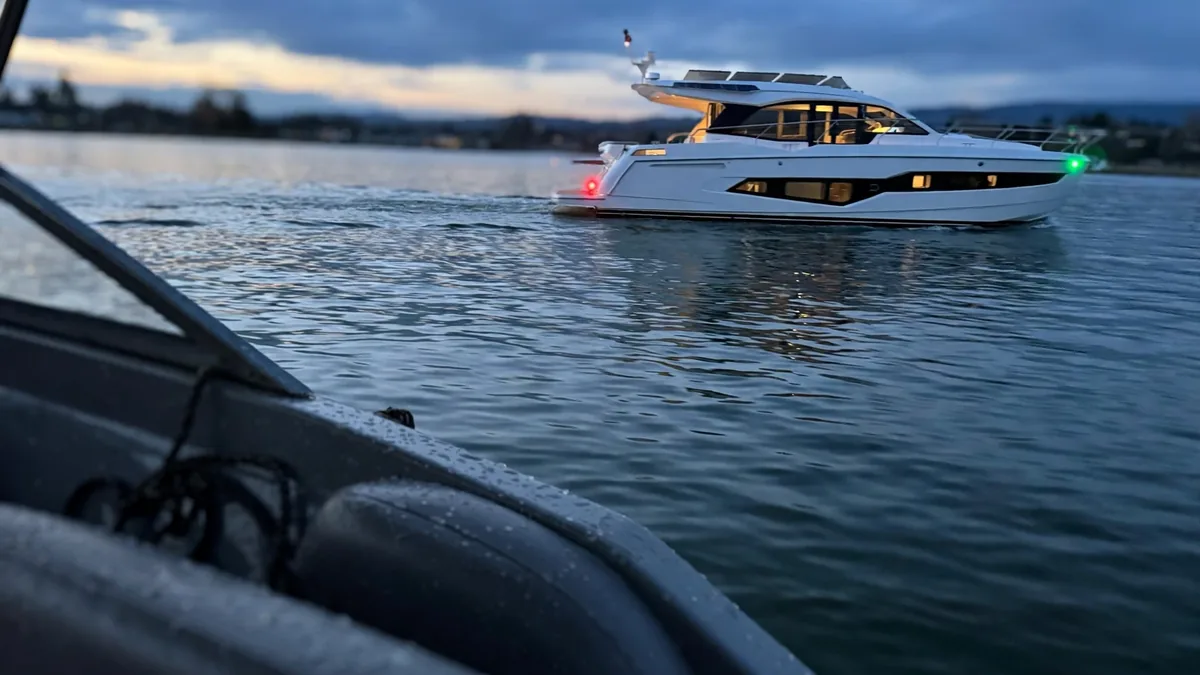
An electric yacht running on autopilot is a quieter thing than most people imagine. There is no engine rumble, no vibration through the deck, no smell of diesel drifting back from the stern. The boat moves through the water on battery power alone, the electric motors humming at a pitch you have to listen for, and the wheel does not move. Nobody is steering. A computer is holding the course, making small corrections every second, while the crew watches the chart and drinks coffee. It looks effortless. It is not. It is a control loop, running constantly, between sensors, software and steering.
Electric yachts change what an autopilot has to do. On a diesel yacht the autopilot only steers; the engines do whatever the throttles tell them. On an electric yacht the steering, the propulsion and the battery are one system. The autopilot has to hold the course while spending as little energy as possible, because every watt it wastes is range lost. It has to know how much charge is left, how the motors are loaded, and whether the boat is sailing fast enough to spin the propellers backwards and put charge back into the battery. The best systems on modern electric yachts do all of this at once, and the result is a boat that can cross a bay on its own, silently, on a fraction of the energy a diesel boat would burn.
The idea is older than the electric yacht itself. A conventional yacht autopilot already reads a compass, compares the heading with the course the crew set, and moves the rudder to close the gap. What makes the electric version different is not the steering — it is everything around it. The steering actuator is electric rather than hydraulic, the power comes from a lithium battery bank rather than an alternator, and the autopilot talks to the propulsion system over the same network as everything else on board. Here is how the whole thing works, from the sensors to the rudder.
The Control Loop: Sense, Compare, Correct
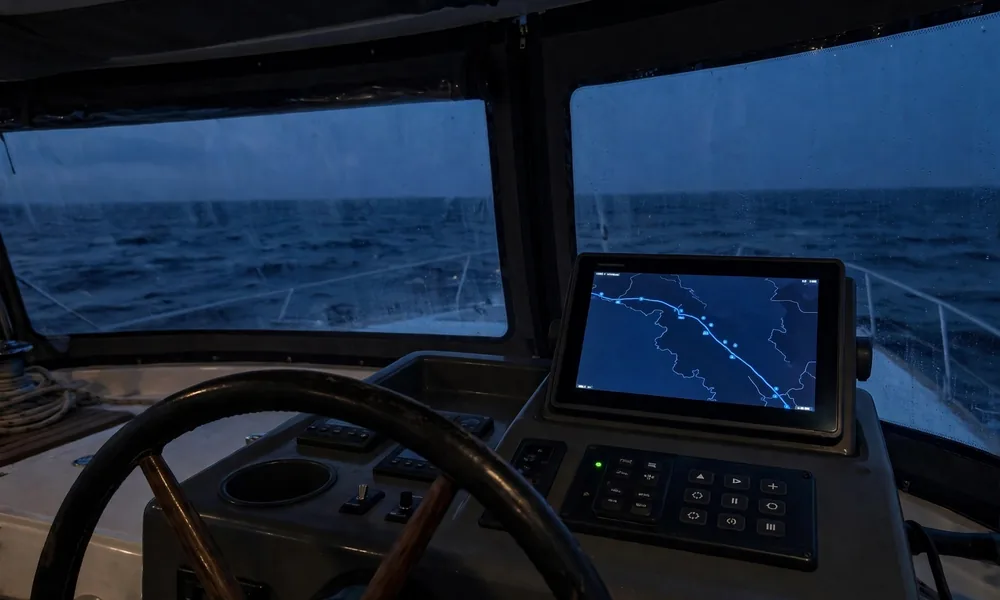
Every autopilot, electric or not, is a closed loop. It measures where the boat is pointing, compares that with where it should be pointing, and moves the rudder to reduce the difference. Then it measures again, and again, many times a second. The loop is what makes the system work in real water, where waves and wind are always pushing the bow off course. A good loop corrects early and gently; a bad one overcorrects, swings the stern, and wastes energy with every swing.
The first input is heading, and on a modern electric yacht it comes from a nine-axis sensor: a magnetic compass, a gyroscope and an accelerometer in one small housing. The compass gives the absolute heading. The gyroscope measures how fast the boat is turning, which lets the computer predict where the bow will be a second from now rather than waiting to see it. The accelerometer measures pitch and roll, so the computer can tell the difference between a real change of course and a wave lifting one side of the hull. Older systems used a fluxgate compass alone and reacted late; the nine-axis sensor lets the pilot steer ahead of the motion instead of behind it.
Electric Steering: No Hydraulics, No Pump
The muscle of the system is the drive unit, and on an electric yacht it is almost always electric. A high-torque electric motor, usually driving a linear ram or a rotary actuator, pushes the rudder stock directly. There is no hydraulic pump running constantly, no oil, no hoses to leak, and no pump noise in the cabins. The motor only draws power when it actually moves the rudder, and at anchor or in calm water that can be almost nothing — a few watts, against the hundreds of watts a hydraulic pump would draw just to stay pressurised.
Talking to the Motors: Speed, Torque and Silence
The part that makes an electric yacht autopilot genuinely different is its connection to the propulsion system. On most electric yachts the propellers are driven by electric pod motors or saildrives, and the autopilot shares a data network — usually NMEA 2000 or a CAN bus — with the motor controllers and the battery management system. That shared network lets the pilot do things a diesel autopilot cannot.
The most important is speed management. Holding a course at seven knots uses far more energy than holding it at five, because the drag on a hull rises with roughly the square of speed. A smart autopilot can hold a target speed that the crew sets for range, trimming the motor power as the wind and current change, rather than holding a fixed throttle and letting the speed wander. Some systems go further and suggest the most efficient speed for the distance remaining, using the battery state of charge to work out whether the boat can reach its destination at the current pace. The electric yacht battery is the limiting factor on every electric passage, so the autopilot treats it as an input, not an afterthought.
Modes, Alarms and the Human Override
In practice the crew uses three modes. Heading hold keeps the bow on a compass number and is the simplest, best for open water. Track mode follows a route of waypoints and is the one used most on passages, because it corrects for current automatically. Wind mode, on sailing yachts, steers to a constant angle to the apparent wind so the sails stay trimmed while the wind shifts. Each mode is a different answer to the same question — what should the boat hold constant — and the pilot switches between them at the touch of a button on the control head or the chart plotter.
The alarms are as important as the modes. If the GPS signal drops, a good system falls back to heading hold and warns the crew rather than steering blind. If the heading sensor disagrees with the GPS course over ground by more than a set amount, it flags a possible sensor fault. If the rudder feedback sensor reports that the rudder is not where the computer told it to be, it disengages. And if the battery state of charge falls below a threshold, it warns the crew and, on some systems, reduces speed automatically to stretch the remaining range. None of this replaces a lookout. An autopilot steers; it does not navigate, and it cannot see a fishing boat, a container or a swimmer.
That is the limit that matters most. The autopilot on an electric yacht is a remarkable piece of engineering — a silent, precise, energy-conscious helmsman that never gets tired. But it is still a tool, and the crew is still responsible for where the boat goes. The best electric yacht autopilots are the ones that make that responsibility easier: they hold the course, mind the battery, and leave the humans free to do the one job no sensor can do, which is to look out of the window and pay attention. Compared with the older choice, the case for going electric is covered in our guide to diesel vs electric yacht propulsion, where the running costs and the range trade-offs are set out side by side.


