The battery bank is the most expensive part of an electric yacht, and also the one that demands the most respect. A large yacht can carry hundreds of kilowatt-hours of lithium batteries below deck, enough energy to run the boat for days and, if something goes wrong, enough to start a fire that seawater cannot easily stop. Between that stored energy and everything that uses it sits a system most owners never see: the battery management system, or BMS.
The BMS is the guardian of the battery bank. It watches every cell, decides how fast the bank may charge and discharge, keeps the cells in balance, and disconnects the bank the moment something looks dangerous. Without it, a lithium battery bank on a boat would be a hazard. With it, the bank is a quiet, reliable power station. This is how electric yacht battery management works, step by step.
What a Battery Management System Is
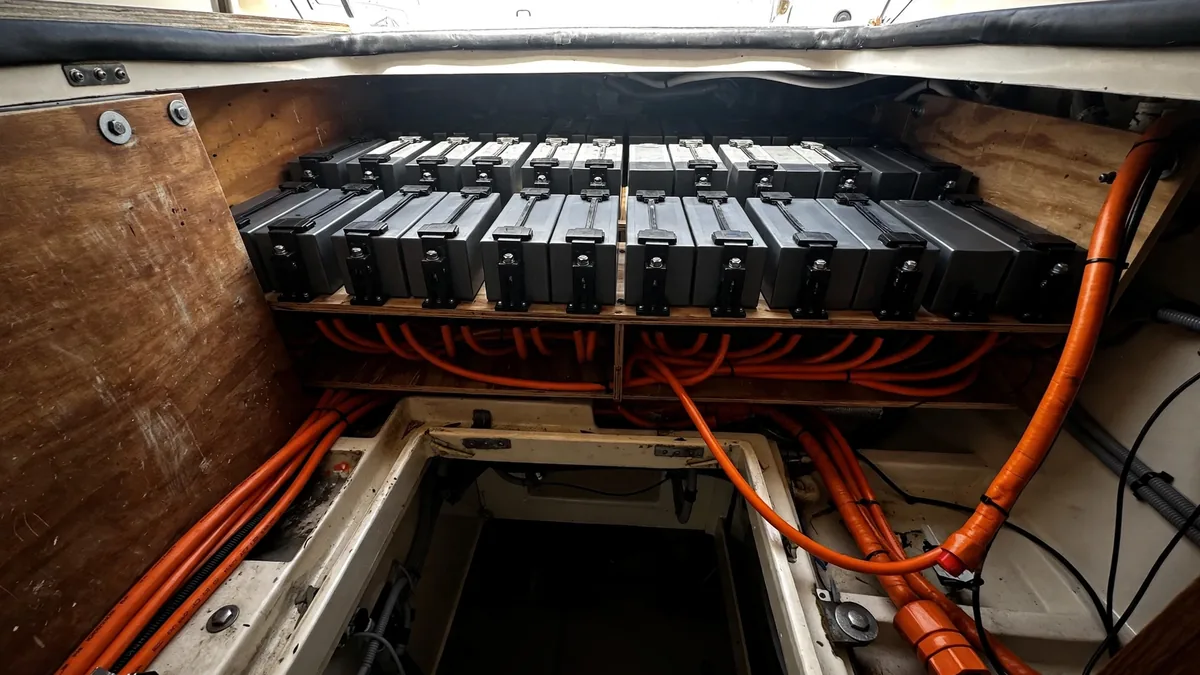
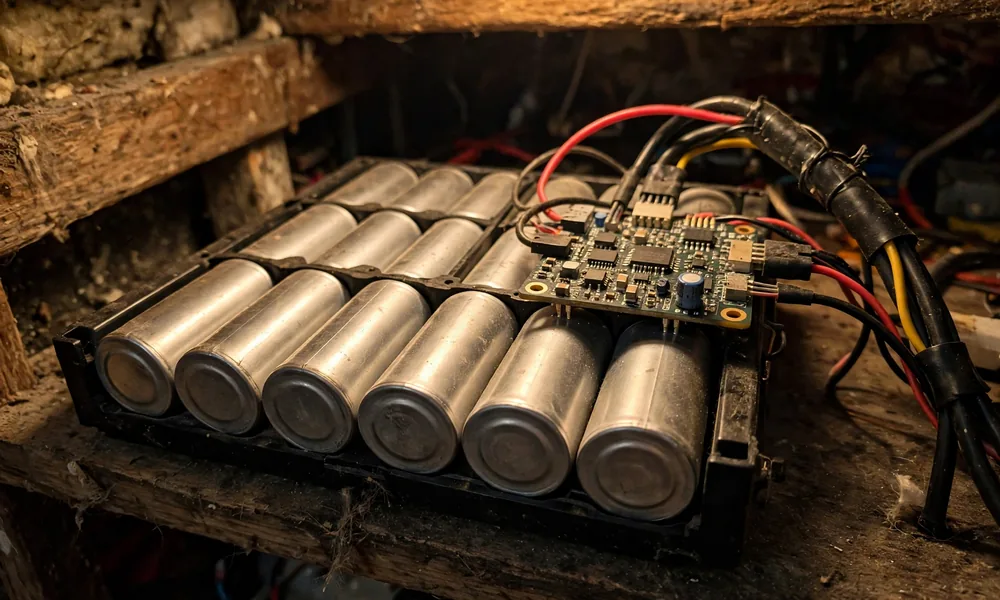
A battery management system is the electronics that sit between a battery bank and the rest of the yacht. It is not the batteries themselves, and it is not the charger. It is the control layer that decides what the batteries are allowed to do at any moment. On a large electric yacht it is a distributed system, with a small monitor on every module reporting to a central controller.
The BMS has three jobs, and it does them continuously. It measures: the voltage of every cell, the current flowing in and out, and the temperature at several points in the bank. It decides: whether charging and discharging are safe right now, and at what rate. And it acts: opening contactors to disconnect the bank, telling chargers to slow down, and warning the crew when something needs attention. It does all of this without being asked, hundreds of times a second.
The Cells It Watches
A yacht battery bank is not one big battery. It is hundreds of individual lithium cells wired in series and parallel to reach the voltage and capacity the yacht needs, often around 400 volts on a larger vessel. Each cell is a chemical device with a narrow safe window: too much voltage and it degrades or overheats, too little and it is damaged permanently. The BMS watches them one by one, because a bank is only as healthy as its weakest cell.
That is why cell-level monitoring matters. If one cell in a series string drifts high while the others stay normal, the total bank voltage can still look fine, and a charger that only watches the total would keep pushing power into a cell that is already full. The BMS sees the single cell going high and stops the charge, even though the bank as a whole could take more. Electric yacht battery specs explained covers the cells themselves, their chemistry and what the numbers on the label mean.
How Charging Is Managed
Charging a lithium bank is a two-stage process, and the BMS runs both stages. In the first stage it allows a steady current while the voltage rises. In the second stage, as the cells approach full, it tapers the current down so the voltage never overshoots. Throughout, it talks to the charger, whether that is a shore-power charger, a solar charge controller or a generator, telling it how much current the bank may accept right now.
Temperature changes everything about charging. A cold lithium cell cannot accept a fast charge without damage, so on a cold morning the BMS limits the current until the bank warms up, sometimes by running a small heater. A hot cell is the opposite danger, so in tropical heat the BMS may slow charging and call for cooling. It also balances the cells during charging, bleeding a little energy from the highest cells so they all arrive at full together. How electric yacht charging works explains the shore-power and solar side of this in more detail.
How Discharging Is Managed
When the yacht is under way, the BMS manages the other direction: power flowing out. Propulsion is the biggest load by far, and the BMS sets a discharge limit based on the state of the bank. A full, warm bank can deliver full power. A nearly empty or cold bank cannot, and the BMS will cap the motor’s draw rather than let the cells sag below their safe voltage. The crew feels this as a gentle limit on top speed, not as a sudden failure.
The BMS also protects a reserve. It will not let the bank drain to zero, because a lithium cell taken to zero volts is usually destroyed. Most marine systems keep a reserve of around ten to twenty percent, and shut down non-essential loads before that: air conditioning first, then the watermaker, then everything but navigation and safety systems. The yacht can still manoeuvre and call for help, but the BMS has drawn a line the crew cannot cross by accident.

Safety: What Happens When Something Goes Wrong
The BMS is also the fire prevention system. If a cell temperature climbs past its limit, or a cell voltage goes out of range, or the current spikes in a way that suggests a short circuit, the BMS opens the main contactors and physically disconnects the bank from the yacht. This happens in milliseconds, faster than any human could react, and it is the last line of defence. The yacht goes dark electrically, but the bank is isolated.
On a well-designed yacht the BMS does not work alone. It talks to the fire detection system, the ventilation fans and the alarm panel, so a thermal event triggers a coordinated response rather than a single silent disconnection. Some systems also seal the battery compartment and flood it with an inert gas. The goal is not to save the batteries, which may already be lost, but to keep a battery problem from becoming a boat problem. Prevention is the whole job.
What Battery Management Cannot Do
A BMS cannot fix a bad battery. It can work around a weak cell by limiting the whole bank to what that cell can handle, but the bank will never perform better than its worst cell, and a failing cell will eventually need replacing. It cannot create range either: it can only manage the energy that is actually stored, and honest range figures come from the bank’s capacity, not from clever software. Owners who chase extra range by overriding BMS limits are trading battery life, and sometimes safety, for miles.
It also cannot make up for a badly designed installation. A bank crammed into an unventilated locker will overheat whatever the BMS does, and a bank wired with undersized cables will trip protections constantly. Good battery management starts with the physical installation: space, airflow, access for inspection, and cables sized for the real current. The BMS is the brain, but it needs a healthy body to look after. How electric yacht propulsion works shows what the bank is feeding, and why the loads it protects are so demanding.
So, How Does It Work?
Electric yacht battery management works by watching every cell, every second, and by having the authority to say no. The BMS measures voltage, current and temperature, balances the cells, limits charging and discharging to what the bank can safely handle, and disconnects the bank instantly when something goes wrong. It is invisible when it works well, and that is the point: the crew should never have to think about it. The battery bank is the heart of an electric yacht, and the BMS is what keeps that heart beating safely.


