The battery is the most important part of an electric yacht. It decides how far the yacht can go, how fast it can charge, how much it weighs and, most importantly, how safe it is. A yacht battery lives in a damp, salty, moving environment, and it must survive years of deep cycles, fast charging and long periods sitting at anchor. The best electric yacht batteries are the ones built for that life from the start, not car batteries with a marine label stuck on.
This ranking judges batteries on energy density, safety, cycle life, charging speed and how well the whole system is engineered for marine use, including the battery management system, cooling and housing. The list runs from the best all-round marine battery system to the emerging chemistries worth watching.
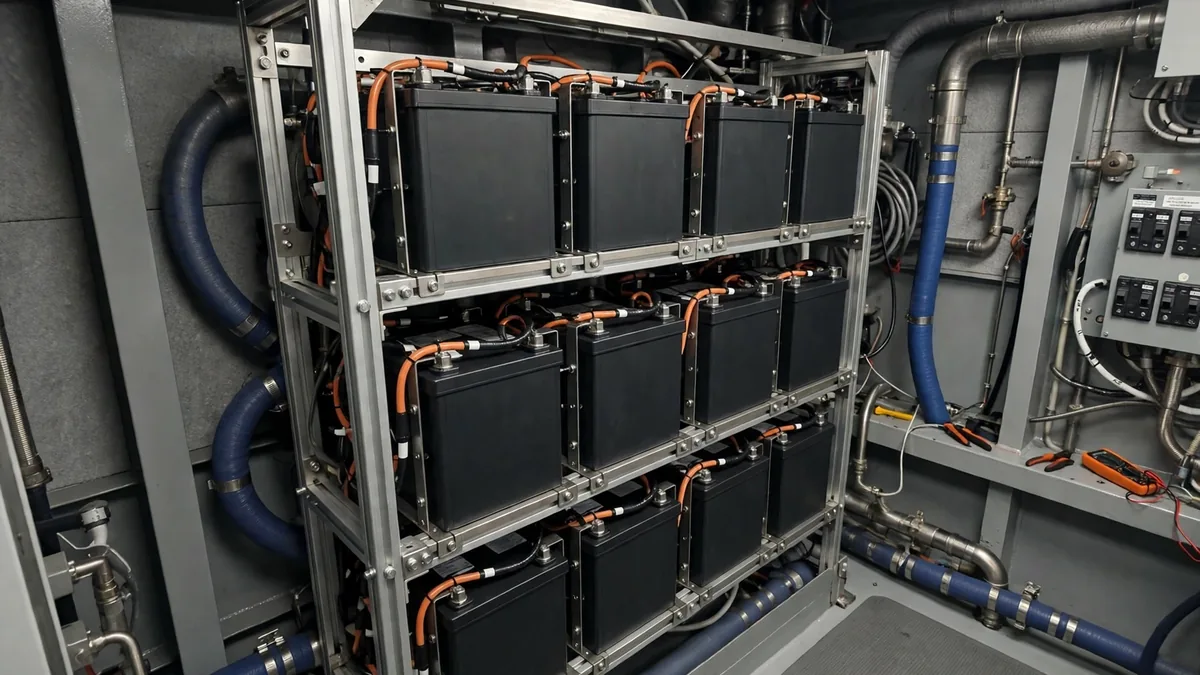
What makes a yacht battery great
Chemistry is the first decision, and it is a trade-off. Lithium iron phosphate, or LFP, is heavier and less energy-dense than nickel manganese cobalt, or NMC, but it is far more stable, lasts for more cycles and is much harder to push into thermal runaway. For a yacht, where a fire at sea is the worst possible failure, that safety margin matters more than squeezing in extra range. Cycle life is the second measure: a good marine battery should survive thousands of full cycles before losing serious capacity. Thermal management is the third, because batteries charge and discharge best in a narrow temperature band, and the sea is not always cooperative. The electric yacht battery specs explained cover the numbers in detail, but the judgement here is about the whole system, not one figure.
The best electric yacht batteries, ranked
1. Torqeedo Deep Blue Battery
The Torqeedo Deep Blue Battery is the best electric yacht battery system you can buy, because it was designed as a marine system from the first sketch. Built around lithium-ion cells in a sealed, marinised housing, it offers capacities up to around 40 kilowatt-hours per pack, with multiple packs linked together for larger yachts. The battery management system monitors every cell, the cooling is liquid-based, and the whole package is built to survive salt air and vibration. It is expensive, but it is the reference that other marine batteries are measured against.
2. MG Energy Systems LFP
MG Energy Systems builds some of the finest LFP marine batteries available, and they are the safest choice on this list. LFP chemistry gives up some energy density compared with NMC, but it delivers thousands of cycles, tolerates abuse, and is exceptionally stable. MG’s modular packs, typically around 5 to 10 kilowatt-hours each, can be combined into systems of hundreds of kilowatt-hours, and the company’s battery management system is one of the most thorough in the marine world. For an owner who wants the safest possible battery, this is the one.
3. Mastervolt MLI Ultra
The Mastervolt MLI Ultra is the best lithium battery for yachts that need serious power in a compact space. Its NMC chemistry packs more energy per kilogram than LFP, which matters on a yacht where weight and volume are precious, and its integrated battery management system handles charging, balancing and protection in one unit. Capacities run to around 6 kilowatt-hours per module, with larger banks built from multiple modules. It is not as inherently stable as LFP, but Mastervolt’s engineering and safety systems close much of that gap.
4. Super B Nomia
Super B’s Nomia series brings LFP safety to a package that is unusually light and compact for its capacity, with modules around 5 kilowatt-hours that stack into larger banks. The cells are designed for high discharge rates, which matters when a yacht needs full power for manoeuvring, and the battery management system is built for marine use, with sealed connectors and corrosion-resistant housings. It is a strong choice for smaller electric yachts and for hybrid systems where the battery must deliver bursts of power.
5. Victron Lithium Smart
Victron’s Lithium Smart batteries are the most flexible option here, because they integrate so cleanly with Victron’s chargers, inverters and monitoring systems, which are already on thousands of yachts. The LFP cells are reliable and long-lived, with capacities around 12 to 25 kilowatt-hours per bank depending on configuration, and the whole system can be monitored from a phone.

6. Oceanvolt Battery System
Oceanvolt builds its battery systems specifically for electric and hybrid propulsion, and that focus shows in the engineering. The packs are designed around the company’s electric motors and regeneration systems, so the battery charges while the yacht sails, and the management system is tuned for propulsion loads rather than house loads. Capacities are modular, scaling from small daysailers to large cruising yachts. It is a specialist system, but for a yacht built around electric propulsion, it is one of the best-matched options available.
7. Candela C-POD Battery
Candela’s battery system, built for its hydrofoil ferries and leisure boats, is one of the most efficient on this list, because foiling cuts energy use so dramatically that the battery can be smaller. The packs use high-energy-density cells in a marinised, liquid-cooled housing, and the management system is integrated with the foil control system, so power delivery is matched to the vessel’s flight. It is not sold as a standalone yacht battery, but it shows what happens when the battery and the boat are designed together.
8. Lithium Werks LFP
Lithium Werks, formerly known for its work in electric vehicles, builds LFP cells and packs that have found their way into marine use because of their safety and cycle life. The chemistry is the same stable LFP as the MG and Super B entries, with long life and good tolerance for deep discharge, and the packs are available in modular formats that suit refits.
9. Sodium-ion marine packs
Sodium-ion batteries are the most interesting emerging option for electric yachts, because they use abundant materials, are inherently safer than lithium chemistries, and perform well in cold conditions. Their energy density is lower than lithium, so a sodium-ion bank is bigger and heavier for the same range, but for a yacht where weight matters less than safety and cost, that trade can make sense. The first marine sodium-ion packs are appearing now, and they are worth watching closely, though they are not yet the equal of the lithium systems above.
10. Solid-state marine batteries
Solid-state batteries close the list as the future rather than the present. By replacing the liquid electrolyte with a solid one, they promise higher energy density, faster charging and far greater safety, which would solve almost every problem a yacht battery faces. The technology is not yet available in marine packs at scale, and early examples are expensive and unproven in salt air.

The verdict
The best electric yacht battery is the Torqeedo Deep Blue, because it is the most complete marine system: marinised, liquid-cooled, well managed and proven at sea. The MG Energy LFP system is the safest choice, the Mastervolt MLI Ultra is the most energy-dense, and the Victron system is the most flexible for refits. Whichever you choose, the battery management system matters as much as the cells: how electric yacht battery management works explains why monitoring, balancing and cooling decide how long a battery lasts. And the battery only makes sense as part of the whole yacht, as the best electric yacht brands ranked show: the best yachts are the ones where the battery, the motors and the hull were designed together, not bolted together afterwards.


