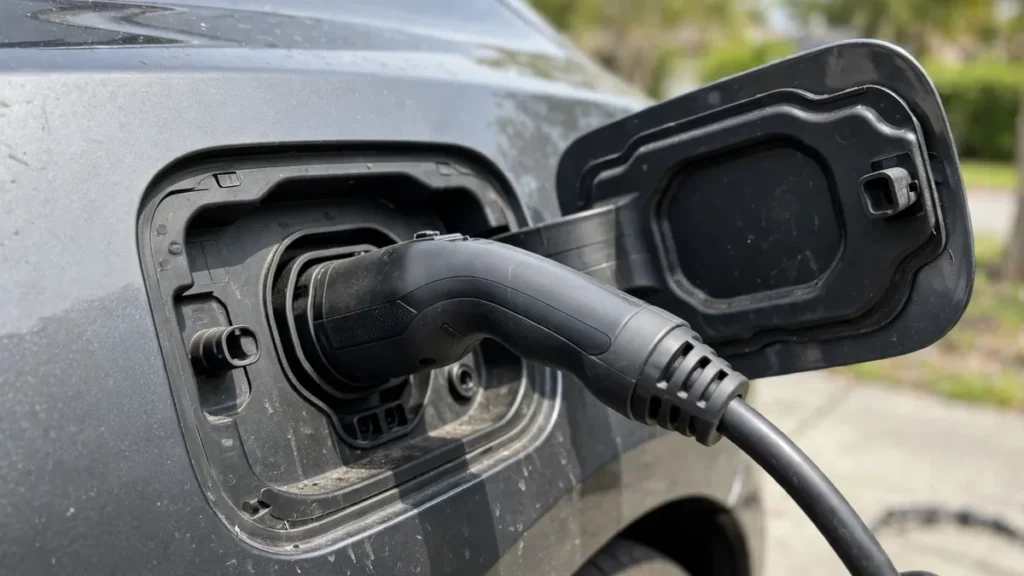
You plug it in, hear a click, and walk away. A few minutes later your car has enough charge for the drive home, and you never think about what happened in between. But the little socket behind the flap on your car’s flank is one of the most carefully engineered parts of the whole vehicle. It carries hundreds of volts and hundreds of amps, in the rain, in the cold, thousands of times over the car’s life, and it must never spark, never overheat, and never let you touch a live conductor.
An EV charging port is far more than a socket. It is a gatekeeper, a negotiator and a safety system in one, and it talks to the charger before a single watt flows. This is how it works, from the click of the plug to the moment charging stops.
How It Works
The port’s job sounds simple: connect the charger to the battery. In practice it must do that safely under conditions that would destroy an ordinary socket, while also letting the car and the charger agree on exactly how much power to send. The whole sequence is controlled by a handshake, a conversation in electrical signals that happens in the first second after you plug in.
Step 1: The plug locks in
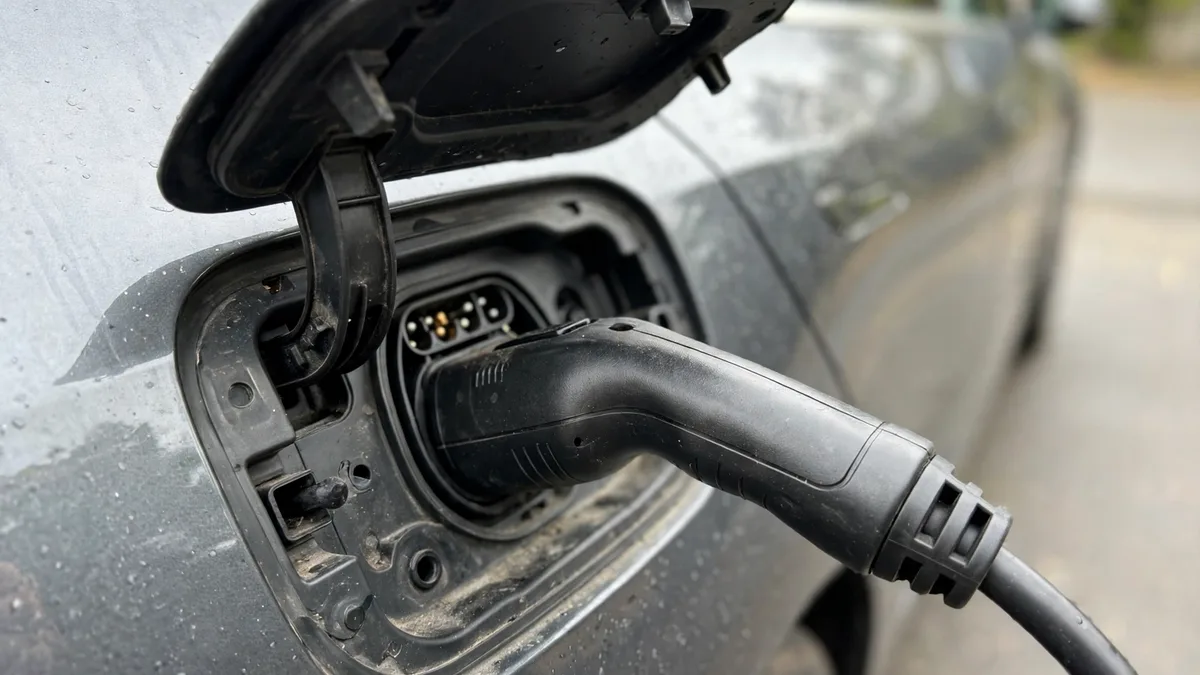
When you push the charging plug into the port, the first thing that engages is not power but a mechanical lock. A small pin or latch inside the port snaps into a notch on the plug and holds it firmly in place, and on many cars the lock is motorised, so the car itself grips the plug and will not let go until charging ends. This matters because the pins inside carry huge currents, and a plug that wiggled loose mid-charge could arc, which is a spark hot enough to melt metal.
Step 2: The car and charger shake hands
Before any power flows, the car and the charger talk. On an AC charger, the conversation is simple: the charger sends a small pilot signal down a thin wire in the cable, and the car answers by changing the resistance on that wire, which tells the charger the car is present, ready, and how much current it can accept. On a DC fast charger, the conversation is a full digital dialogue over dedicated communication pins, with the car reporting its battery voltage, temperature and state of charge, and the charger confirming its voltage and current limits. The physical build of the socket itself is covered in the account of how an EV charging port is made.

Step 3: The power pins take the load
Once the handshake passes, current flows through the thick power pins, which are made of silver-plated copper and sized like small bolts, because they must carry up to 500 amps on the fastest chargers without overheating. The pins are spring-loaded so they press tightly against the mating pins in the plug, and the contact surfaces are shaped to wipe clean each time the plug is inserted, scraping away any oxide or dirt. Behind the pins, thick cables run to the battery, and temperature sensors watch the pins constantly: if a pin starts to get hot, the car tells the charger to slow down before anything is damaged.
Step 4: AC charging goes through the onboard charger
On a home or workplace AC charger, the port sends alternating current to the car’s onboard charger, a box of electronics that converts AC to the direct current the battery needs. The onboard charger is usually limited to 7 or 11 kilowatts, which is why home charging takes hours: the limit is not the port or the cable, but the converter inside the car.
Step 5: DC fast charging bypasses the converter
On a DC fast charger, the port does something different: it routes the current straight past the onboard charger and directly into the battery, using the two large DC pins at the bottom of the connector. The charger itself, a cabinet the size of a fridge standing beside the car, does the conversion from grid AC to battery DC, and it can deliver 150 to 350 kilowatts, which is why a fast charger can add hundreds of kilometres of range in twenty minutes. The port’s temperature sensors and the liquid cooling in the thickest fast-charging cables are what make that possible: at those currents, even a small resistance turns into serious heat. The electronics that manage power on the other side of the battery are explained in the guide to EV inverter specifications, explained.
Step 6: Charging stops, and the plug releases
As the battery fills, the car asks the charger for less and less current, tapering the charge to protect the cells, and when the target is reached, or you press stop, the car tells the charger to cut the power, waits for the voltage to fall to zero, and only then releases the lock. The sequence matters: releasing a plug while hundreds of volts are still live would draw an arc across the pins. The whole cycle, from click to release, is choreographed to make a dangerous amount of power feel as ordinary as plugging in a phone.
Specifications
| Specification | Typical value |
|---|---|
| Connector types | Type 2 for AC, CCS for DC fast charging |
| AC charging power | Up to 11 kW through the onboard charger |
| DC fast charging power | 150 to 350 kW direct to the battery |
| Maximum current | Up to 500 amps on DC |
| Operating voltage | 400 to 800 volts |
| Power pin material | Silver-plated copper |
| Safety features | Locking latch, temperature sensors, handshake, discharge resistor |

What It Costs
The charging port assembly itself typically costs the manufacturer roughly $100 to $300 per car, depending on whether it includes a motorised lock, a powered flap and liquid-cooled cabling, and a replacement port fitted by a dealer can cost several hundred dollars including labour. That is a small fraction of the car’s price, but the cost of the system around it is far larger: the onboard charger, the high-voltage cabling and the battery management system all exist to make the port’s job possible.
A Rare Fact
An EV charging port will never give you a shock, even if you plug it in during a rainstorm, and the reason is a trick borrowed from industrial machinery. The communication pins in the plug are shorter than the power pins, so they connect last and disconnect first: the moment you start pulling the plug out, the signal pins break contact and the charger cuts the power before the power pins have even separated. The socket is also designed so that the live pins sit deep inside a shrouded housing, where fingers cannot reach them, and the whole assembly is sealed to a standard that keeps out driving rain. The same philosophy of layered, overlapping safety runs through the rest of the car, from the braking that recovers energy to the systems described in how the regenerative braking system works.
It looks like a socket, but it behaves like a bouncer, a translator and a safety officer. The next time you plug in and hear that click, remember what is happening behind the flap: a handshake, a lock, and up to 500 amps, all agreeing to behave.