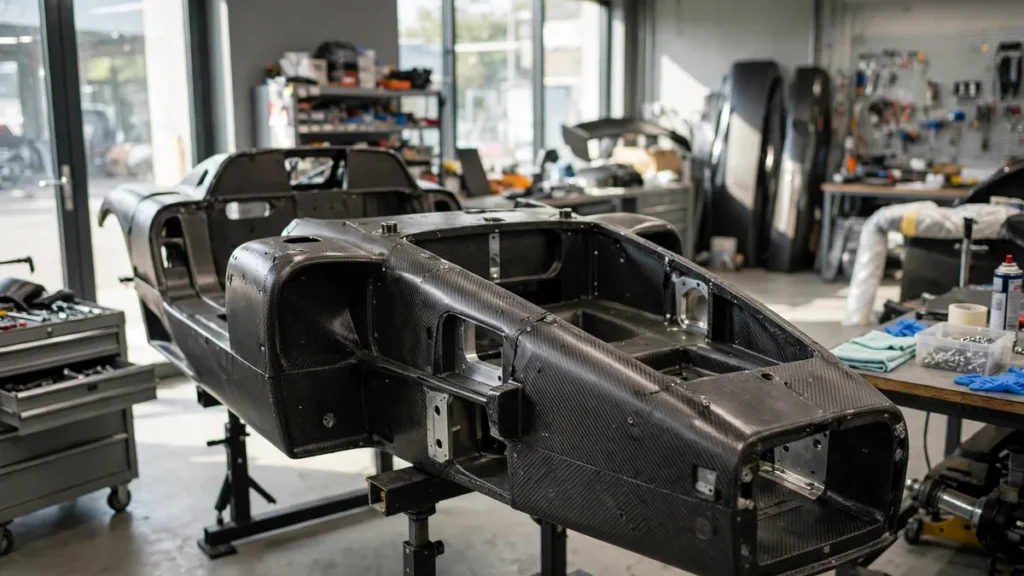
It is a freezing January morning, and the electric car in the driveway has been plugged in all night. The driver presses the start button, and instead of a cold engine coughing awake, something quieter happens: a pump hums, a valve clicks, and warm coolant begins to circulate through the battery pack, bringing it gently up to temperature before a single mile is driven. By the time the car pulls away, its battery is already in its comfort zone.
That quiet warm-up is the work of the EV thermal management system, the network of pumps, radiators, chillers, and valves that keeps an electric car’s battery, motor, and electronics at the right temperature in every season. A battery that is too cold cannot deliver its full power or accept a fast charge. A battery that is too hot ages quickly and, in the worst case, becomes dangerous. The system exists to keep everything in a narrow band, roughly 20 to 40 degrees Celsius, whatever the weather is doing outside.
Unlike a petrol car, which throws most of its fuel’s energy away as heat, an EV has little waste heat to spare. Its thermal system must therefore be clever: it moves heat from where it is not wanted to where it is needed, scavenging warmth from the motor and the electronics to heat the cabin and the battery. Here is how it works.

How It Works
Step 1: Sensing temperature everywhere
The system starts with measurement. Temperature sensors are fitted throughout the battery pack, on the motor, on the inverter, and in the coolant loops, reporting constantly to a thermal controller. The controller builds a live map of heat across the car and decides, moment by moment, what needs warming, what needs cooling, and what can be left alone. The inverter, which turns the battery’s direct current into the alternating current the motor needs, is one of the hottest parts of the car, and its workings are explained in how ev inverter works.
Step 2: The battery cooling plate
At the heart of the system is the battery pack, and under its cells sits a cooling plate, a flat aluminium plate threaded with channels through which coolant flows. On a hot day or during fast charging, the pump pushes chilled coolant through the plate, pulling heat out of the cells from below. The plate must cool evenly: if one end of the pack runs ten degrees hotter than the other, the cells age at different rates and the pack’s capacity fades unevenly.
Step 3: The heat pump and the chiller
The coolant itself is cooled and heated by a heat pump, the same technology that heats a house. In cooling mode, the heat pump works like a refrigerator, pulling heat out of the coolant and dumping it outside through a radiator at the front of the car. In heating mode, it runs in reverse, gathering heat from the outside air, the motor, and the electronics, and pushing it into the coolant. A chiller links the heat pump to the battery loop, letting the system cool the battery far below the outside temperature on a hot day. The cells themselves set the limits of what the system must protect, and their specifications are laid out in ev battery cell specs explained.
Step 4: Sharing heat between systems
The cleverest part of the system is that it does not treat the battery, motor, and cabin as separate jobs. Heat is a resource, and the thermal controller moves it around. On a cold morning, the warmth generated by the motor and inverter is diverted to the battery and the cabin, instead of being thrown away. On a hot day, the cabin air conditioning and the battery cooling share the same heat pump, with valves deciding which one gets priority.
Step 5: Fast charging and the cooling sprint
Fast charging is the system’s hardest test. Pushing 150 or 350 kilowatts into a battery creates a surge of heat inside the cells, and the thermal system must remove it as fast as it arrives. When the driver navigates to a fast charger, many EVs begin preconditioning, cooling or warming the pack to the ideal charging temperature before arrival. During the charge, the pumps run at full speed, the heat pump works at maximum, and the radiator fans roar. The system is the reason some cars can add hundreds of miles of range in twenty minutes while others take twice as long.

Step 6: Keeping the cabin comfortable
The final loop serves the people inside. The cabin is heated and cooled by the same heat pump, and on many cars the cabin and battery loops are connected by valves that let them share heat. In summer, the air conditioning cools the cabin while the chiller keeps the battery in range. The whole arrangement is a balancing act, and the controller rebalances it constantly, trading a degree of cabin comfort for a mile of range, or a mile of range for a faster charge. Keeping all of this working is not cheap, as why ev thermal management is so expensive explains.
| Battery comfort zone | Roughly 20 to 40 degrees Celsius |
| Key parts | Cooling plate, heat pump, chiller, radiator, pumps, valves |
| Sensors | Dozens of temperature sensors across the pack and drivetrain |
| Coolant | Glycol and water mix, circulated through the pack |
| Heating method | Heat pump, scavenging heat from motor and electronics |
| Fast charging | Preconditioning warms or cools the pack before arrival |
| Cabin link | Shared heat pump with valves splitting heating and cooling |
| Control | Thermal controller rebalancing loops many times a second |
What Does EV Thermal Management Cost?
The thermal management system is estimated at roughly $1,000 to $3,000 of a new EV’s build cost, covering the heat pump, chiller, cooling plates, pumps, valves, and sensors. It is one of the more expensive systems in the car after the battery and the motor, and its cost is rising as cars charge faster and batteries grow larger. The cost is repaid in range, charging speed, and battery life: a well-managed pack can outlast a poorly cooled one by years.
A Rare Fact
The first mass-market EVs had almost no battery thermal management at all. Some early cars cooled their packs with air alone, using fans to blow cabin air through the battery, and their batteries degraded far faster in hot climates than the makers expected. Today, every serious long-range EV uses liquid cooling, and the thermal system is designed alongside the battery from the first sketch, not added afterwards.
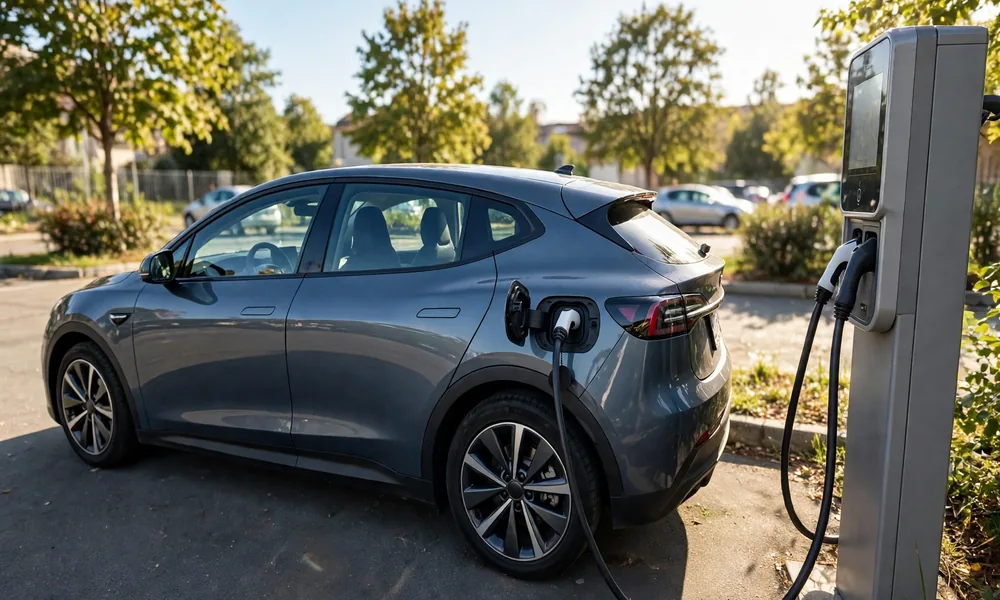
The next time an EV charges quickly on a hot day or starts warm on a freezing morning, it is worth remembering the quiet system making it possible. The battery never sees the weather. It lives in its own small climate, held steady by a system that treats heat not as waste, but as a resource to be spent wisely.