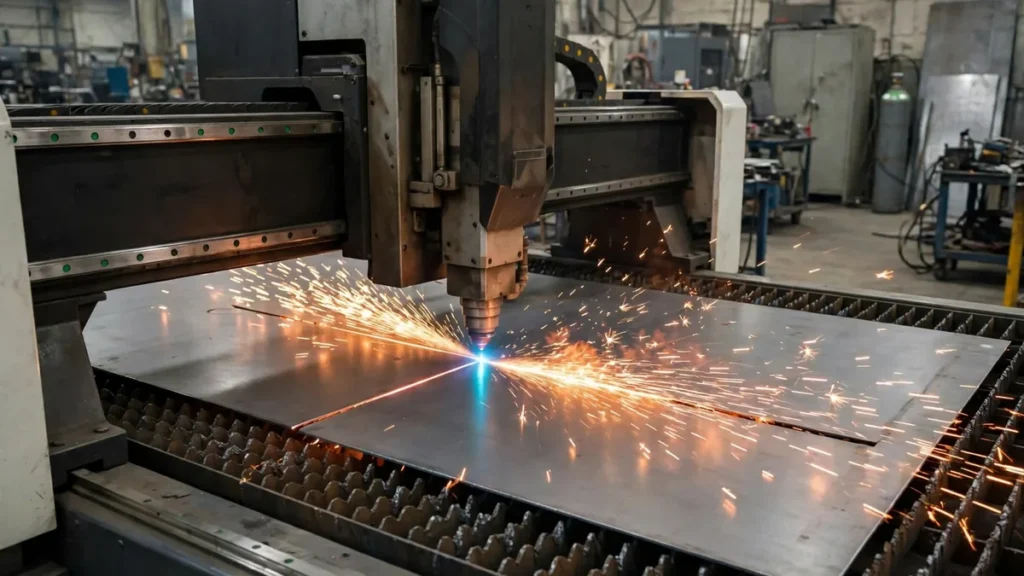
Stand beside a laser cutter at work and the first thing you notice is the noise, or rather the lack of it. There is no screaming saw, no hammering press, just a quiet hiss and a line of bright sparks racing across a steel sheet as if someone were drawing with light. In a few seconds the beam has traced a shape that would take a machinist half an hour with a saw and a file, and the edge it leaves is so clean that the part is ready to use straight off the bed. It feels like cheating, and in a sense it is: a focused beam of light doing the work of a hundred cutting tools.
Laser cutting works because light, concentrated tightly enough, is heat. A modern fibre laser pours several kilowatts of energy into a spot smaller than a grain of sand, and the metal at that spot melts or vaporises almost instantly. A jet of gas, usually nitrogen or oxygen, blows the molten metal out of the cut, leaving a narrow slot called the kerf. The cutting head moves on computer-controlled rails, following a digital drawing with an accuracy of a fraction of a millimetre, and it never gets tired, never slips, and never needs its blade sharpened.
The machines that do this sit at the heart of modern metal fabrication. They cut the brackets in your car, the panels of kitchen equipment, the enclosures of electrical cabinets and the intricate parts of medical devices. A single machine can switch from cutting paper-thin stainless steel to slicing through twenty-millimetre plate in minutes, simply by changing its settings. That flexibility is why workshops that once needed a room full of saws, punches and shears now need little more than a laser cutter and a press brake.
How It’s Made
Step 1: Drawing the part
Every cut starts on a computer, where the part is drawn in CAD software as a precise two-dimensional outline. The drawing is then nested, meaning many parts are arranged on a single sheet like pieces of a jigsaw puzzle to waste as little metal as possible. The nesting software also plans the cutting order, so the head takes the shortest path and the sheet stays stable as parts are freed from it.
Step 2: Loading the sheet
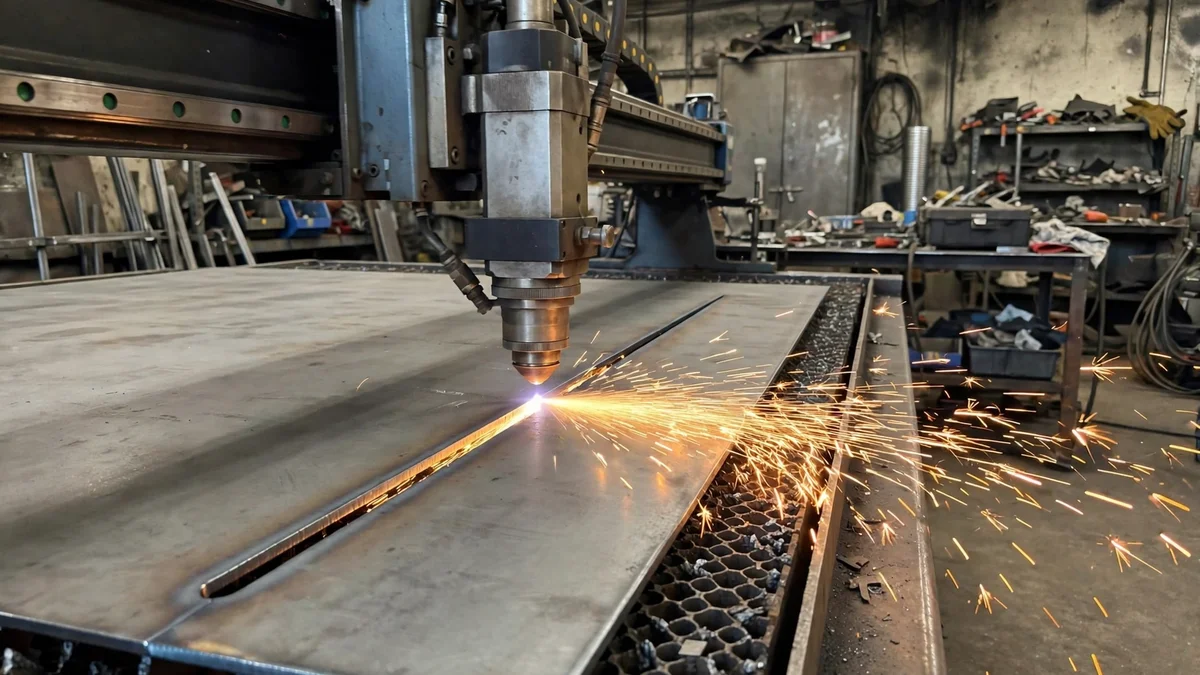
A flat metal sheet is loaded onto the cutting bed, which is a grid of sharp steel slats that support the sheet while letting sparks and molten metal fall through. The sheet must lie flat and clean; a warped sheet or a layer of rust can throw off the focus of the beam and ruin the cut. Operators check the sheet thickness and material grade, then clamp it in place and set the machine’s parameters for that exact material. They also check for protective film on the surface, since film left on the underside can melt into the cut and stain the edge, while film on top is usually cut through cleanly.
Step 3: Focusing the beam
The laser source, usually a fibre laser, generates the beam and sends it through fibre optic cable to the cutting head, where lenses focus it to a pinpoint on the surface of the metal. The focus position is critical: a beam focused a fraction of a millimetre too high or too low will cut a wider, rougher slot. Modern machines measure the focus automatically and adjust it continuously as the head moves across the sheet.
Step 4: Cutting with gas assist
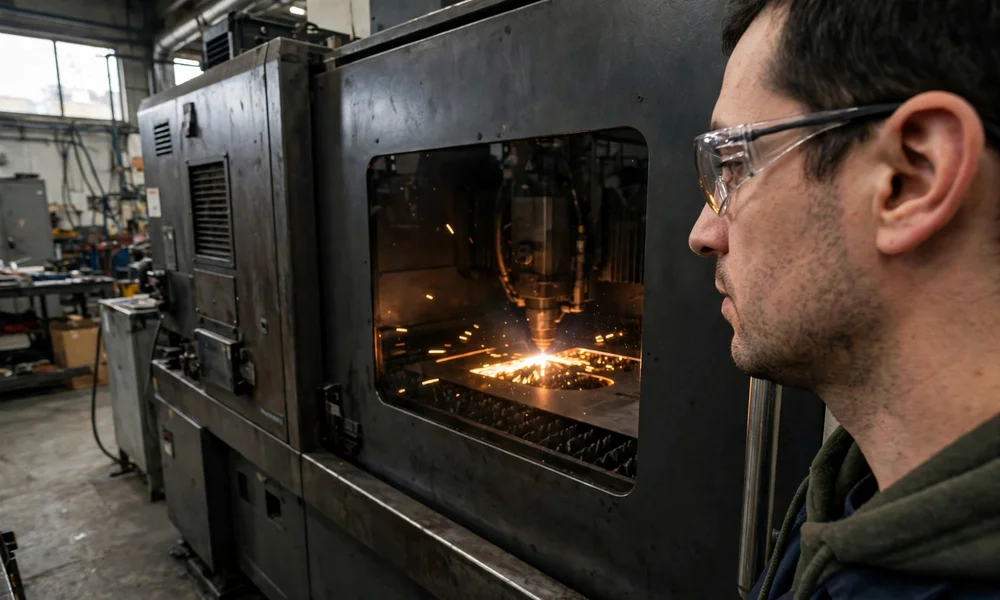
As the head moves, the beam melts a tiny pool of metal and a jet of assist gas blows the molten material out of the kerf. Oxygen is used for mild steel, where it adds extra heat by burning the iron and speeds the cut, while nitrogen is used for stainless steel and aluminium, where it leaves a clean, oxide-free edge. The gas pressure, beam power and cutting speed are balanced for each thickness, and getting that balance right is the operator’s real craft.
Step 5: Piercing and profiling
Before each new outline, the beam must pierce through the sheet, a slower and hotter step that starts the cut. Once pierced, the head accelerates to full cutting speed and follows the programmed path, tracing curves, holes and slots with steady precision. Small holes and sharp corners need slower speeds and lower power, or the heat will distort them, so the program adjusts the settings hundreds of times during a single sheet.
Step 6: Unloading and finishing
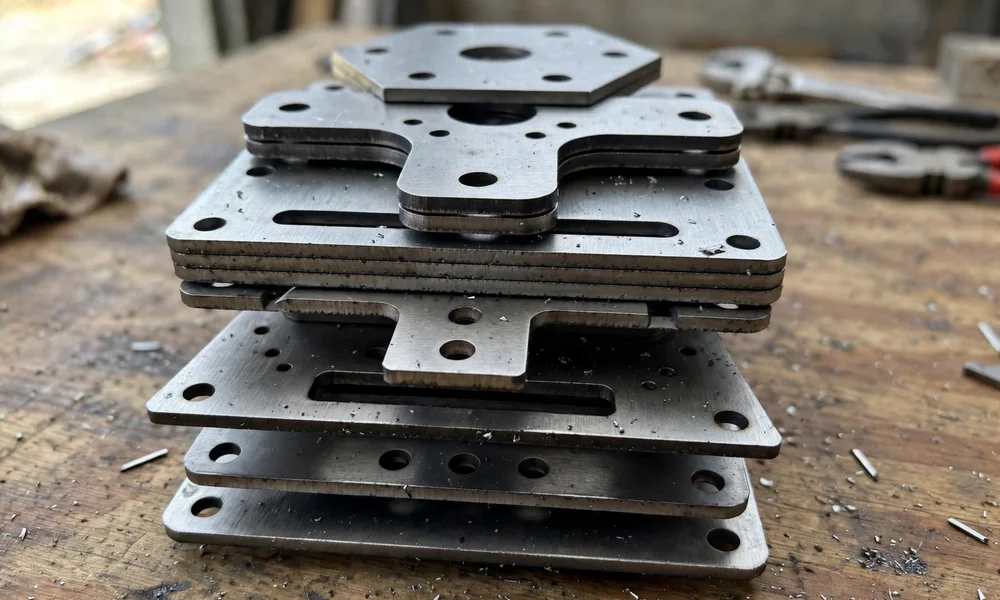
When the sheet is done, the finished parts are lifted out, the skeleton of leftover metal is removed, and the parts are checked against their drawings. Laser-cut edges are usually smooth enough to use as they are, but some parts are deburred, bent on a press brake, or welded into assemblies. Offcuts are collected for recycling, and the machine is cleaned and checked before the next sheet goes on.
Specifications
The figures below describe a typical industrial fibre laser cutter. Power, speed and thickness limits vary widely between machines, from small workshop units to heavy plate cutters.
| Property | Typical value |
|---|---|
| Laser type | Fibre laser |
| Laser power | 3 to 20 kW |
| Cutting speed | Up to 40 m per minute on thin sheet |
| Maximum mild steel thickness | Up to 25 mm |
| Maximum stainless steel thickness | Up to 20 mm |
| Positioning accuracy | Plus or minus 0.05 mm |
| Kerf width | 0.1 to 0.3 mm |
What It Costs
A laser-cut steel part costs roughly $0.50 to $5 per minute of cutting time as an estimate, with the rate depending on machine power, material thickness and order size, so a simple bracket may cost only a few dollars while a large, thick plate part can cost hundreds. Buying the machine itself is a different scale: a new industrial fibre laser cutter costs roughly $150,000 to $500,000 as an estimate. Most small workshops therefore buy cutting time from a specialist rather than owning a machine outright.
A Rare Fact
The first laser cutter, built in the 1960s, used a ruby laser to drill holes in diamond dies for drawing wire, and engineers at the time doubted that light could ever cut metal in production. Today a single fibre laser can cut through steel plate faster than a plasma torch, and the same technology is used to cut the stents that hold human arteries open, with features smaller than a human hair. From diamond dies to heart surgery, the beam has travelled a long way in sixty years.
Laser cutting turned a workshop full of noisy tools into a quiet room where light does the heavy work. The specs of laser cutting metal show what different machines can cut and how fast, while how electron beam welding is made covers the process that often joins laser-cut parts together. For the numbers that decide whether a part is accurate enough, the specs of precision CNC machining explain the tolerances that workshops measure against. Together they describe the modern metal shop: drawn on screen, cut by light, finished by hand.