In a clean workshop at the end of a factory floor, a machine the size of a small wardrobe is printing a part that no mill could ever cut, and it is doing it without a sound louder than a hum. Nothing about it looks dramatic. The drama is in how precisely it happens, layer after layer, for hours.
This is how a luxury 3D printer works, from the file and the heated nozzle to the motion system, the print bed and the cooling, and why a machine that looks like a cabinet can out-perform a workshop full of tools.
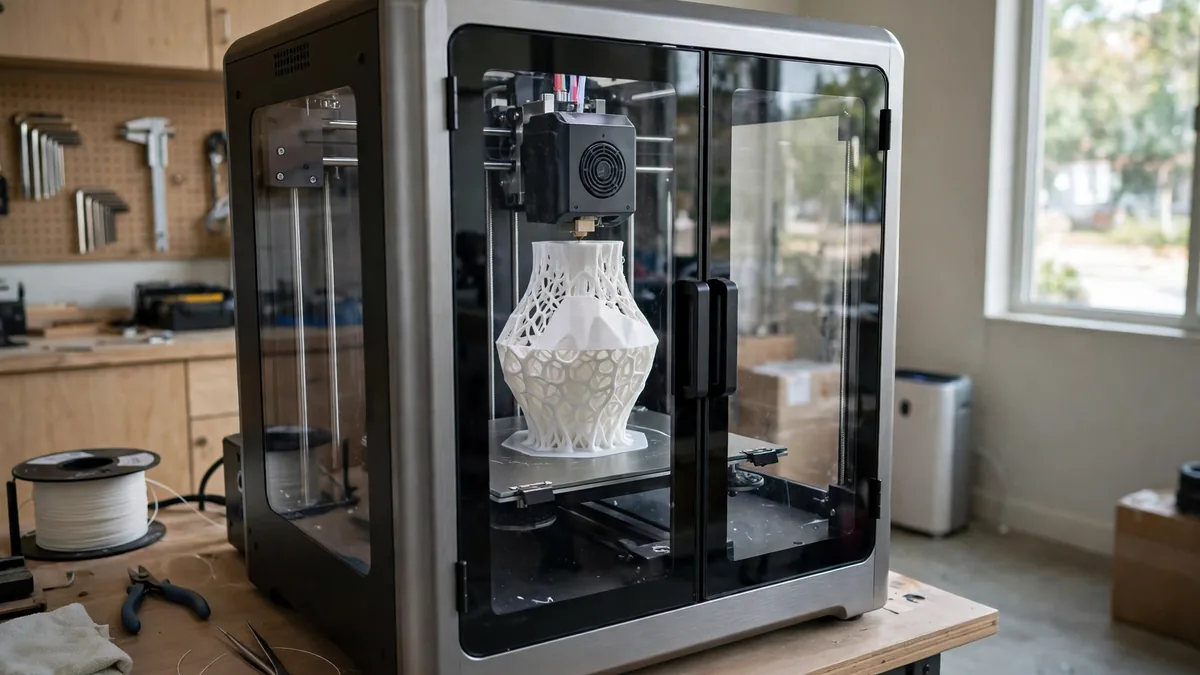
Step 1: The file becomes a stack of layers
Every print starts as a digital model, a three-dimensional drawing built on a computer, and the printer cannot use it directly. The operator checks the sliced preview on screen, looking for overhangs that need support and walls that are too thin, and adjusts the settings until the preview looks right. The guide to how a luxury 3D printer is made follows the machine itself from the workshop floor, from the machined frame and the rails to the first perfect print.
Step 2: The nozzle heats and the filament feeds
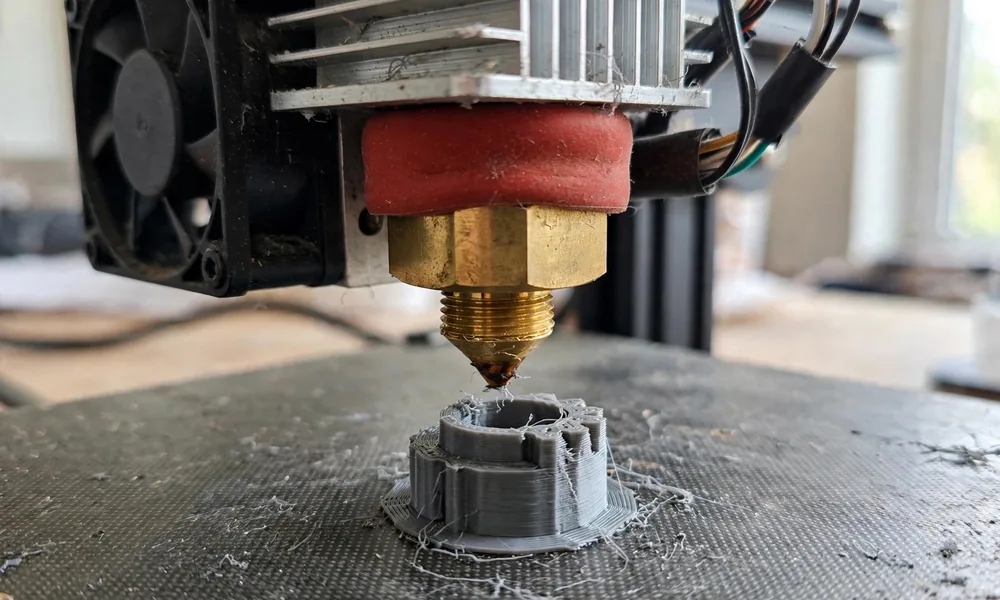
With the file ready, the printer warms up. The nozzle, a small brass tip with a hole less than half a millimetre wide, is heated to well over two hundred degrees, and a sensor beside it holds that heat steady within a degree or two. The filament itself is a spool of plastic thread, fed through a tube to the print head, and the printer checks that it is flowing smoothly before the first layer goes down. If the nozzle is too cold the plastic will not stick, and if it is too hot the print will sag, so the temperature is the first thing a good operator learns to trust.
Step 3: The motion system moves in microns
The print head has to move with extraordinary precision, and that is the job of the motion system. Hardened steel rails run along the frame, and small carriages ride along them on recirculating ball bearings, so smooth that a fingertip push will send one gliding. The cost of that precision is set out in the guide to why a luxury 3D printer costs so much, which follows the money from the frame and the rails to the lasers and the people who keep the machine running.
Step 4: The bed holds the first layer
Under the print head sits the bed, a flat plate that the object grows on, and the first layer is the most important one in the whole print. On a luxury machine the bed is a thick aluminium plate with a heater bonded underneath, covered by a spring steel sheet with a textured coating that the plastic grips while hot and releases when cool. The bed is heated so the plastic stays warm enough to bond, and the printer lays the first layer slowly, giving it time to stick. A good operator watches that first layer like a hawk, because if it fails, the whole print fails with it, hours later.
Step 5: The chamber keeps the print warm and clean
Around the frame go the enclosure panels, often with a glass door, and inside the chamber a heater and a filter keep the air warm and clean. This matters more than it looks: plastic shrinks as it cools, and if one part of a print cools faster than another, the whole piece warps and cracks. The door stays closed for the whole print, and the operator watches through the glass, because opening it lets in a draught of cold air that can split a tall print in half. The same sealed, controlled conditions at factory scale are covered in the guide to how metal 3D printing works, where the material is powdered metal rather than plastic.
Step 6: Cooling, release and the final check
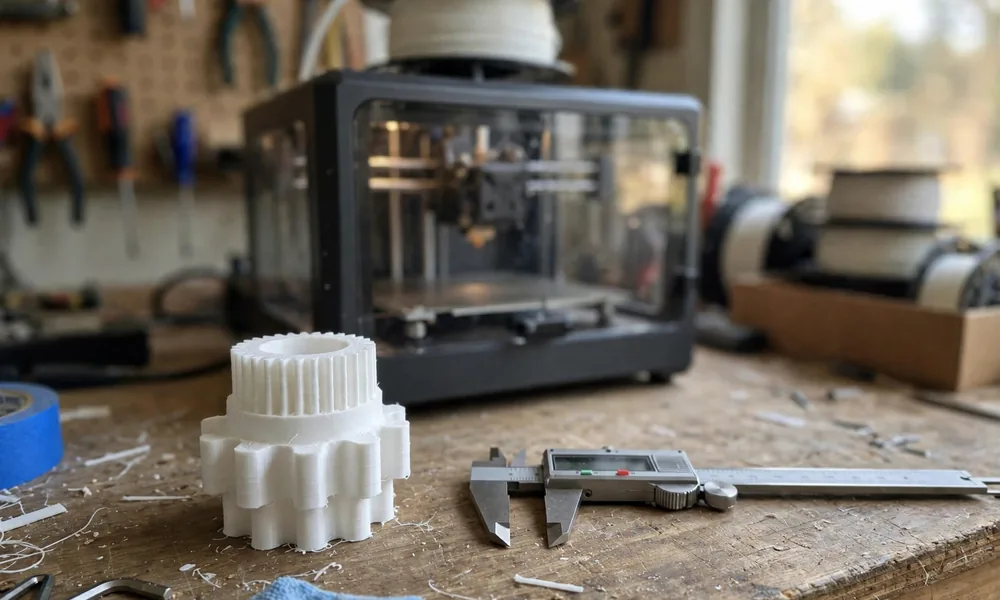
When the last layer is down, the print is not finished. The nozzle parks, the bed cools, and the object is left to shrink gently to room temperature, still stuck to the steel sheet. Once cool, the sheet is flexed and the object pops off, and the operator removes the support structures by hand, snapping or dissolving them away, and sands any rough edges. Then comes the check: the object is measured with callipers against the drawing it came from, and on a luxury machine the measurements are expected to match within a fraction of a millimetre. Only when it measures true and fits its place does the printer get its next file, and the whole quiet process begins again.
The spec sheet at a glance
| Specification | Typical luxury figure | What it tells you |
|---|---|---|
| Layer thickness | Roughly 0.05 to 0.2 millimetres | How fine the detail is, and how smooth the surface feels |
| Nozzle | Brass or hardened steel, under 0.5 mm | How fine a line the printer can draw |
| Nozzle temperature | Over 200 degrees, held within a degree | How steadily the plastic melts and bonds |
| Build volume | A cabinet-sized space, often 300 mm or more | How large an object the printer can make in one go |
| Motion | Servo motors, ball screws, steel rails | How precisely the head knows where it is |
| Bed | Heated aluminium, spring steel sheet | How well the first layer grips and releases |
| Chamber | Heated, filtered, sealed | How evenly the print cools, and how clean the air stays |
| Print time | Hours, sometimes days | How patient the process is, layer by layer |
| Accuracy | Within a fraction of a millimetre | How closely the part matches its drawing |
What good design looks like
A well-designed luxury 3D printer gives itself away in small details. The first layer should lay down flat and even, without curling at the corners, the motion should be silent rather than rattling, and the chamber should hold its temperature without the heater cycling wildly. The bed should release the finished part with a gentle flex, the supports should snap away cleanly, and the finished object should measure true against its drawing without sanding. The best test is the simplest: print the same part twice and compare them. If the two are identical to the eye and to the callipers, the machine is doing its job.
What it costs
A luxury 3D printer typically costs an estimated $10,000 to $100,000, depending on its size, its motion system, its chamber and whether it prints plastic or metal. The estimate covers the machine alone, not the materials, the software or the operator. Most of the price is in the machined frame, the servo-driven motion system and the heated, sealed chamber, and in the precision that lets it hold a fraction of a millimetre over a build that lasts for days.
A rare fact
One detail few visitors ever learn is that a luxury 3D printer can print a part that no mill could ever cut, and the reason is simple: a mill can only remove material from the outside, while a printer builds from the inside out. That means it can make hollow shapes, internal channels and lattices that are lighter than solid metal yet just as strong, and a part that looks like a solid block can be mostly empty air inside, which is why engineers now design parts for printers that would have been impossible to make any other way.