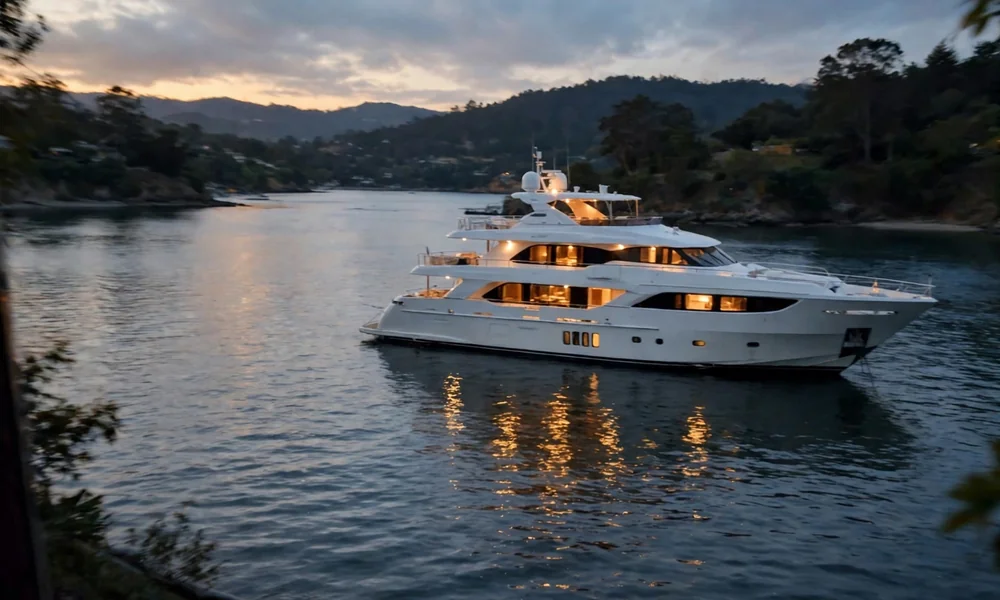
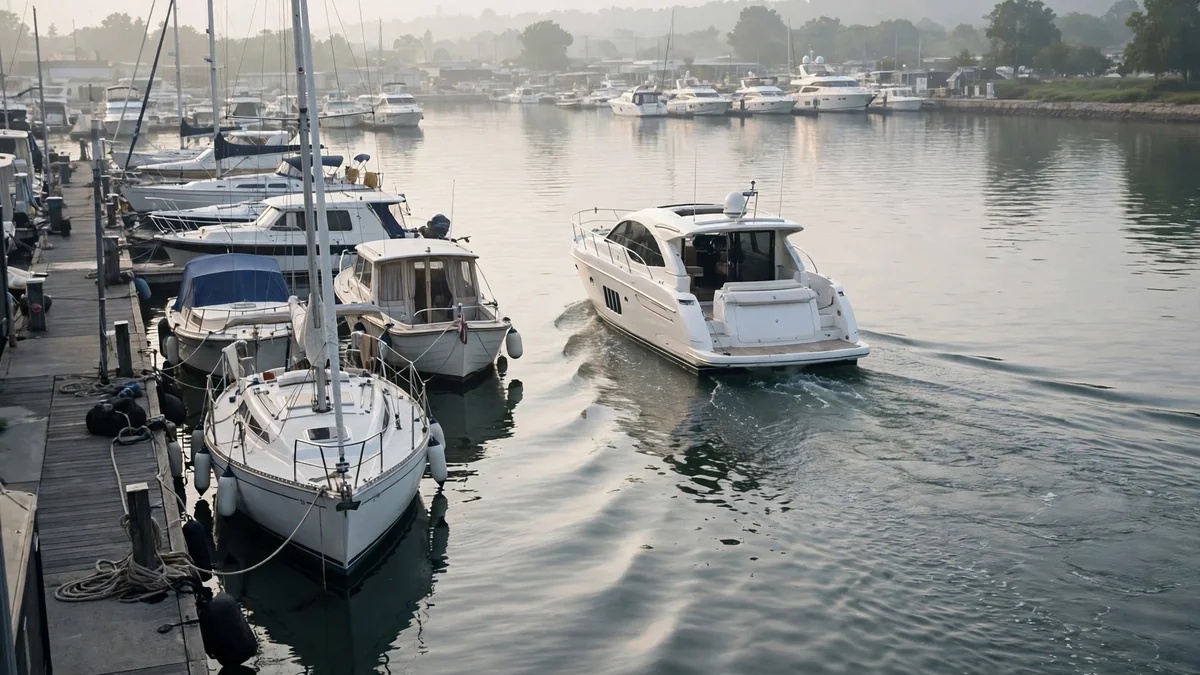
On a calm morning in a busy harbour, a luxury yacht slips away from its berth, turns toward the open water, and sets its course without anyone touching the wheel. The crew is on deck, watching, but the boat is doing the driving. It reads the traffic, keeps its distance from the other boats, and holds its line as if it has done this a hundred times before.
It has, in a sense. A luxury autonomous yacht is a boat that can sense its surroundings, decide what to do, and carry out the decision, all while a human supervisor watches over it. This is how it works, from the sensors on the mast to the motors that answer the helm.
Sensing the world around the boat
Everything starts with sensing. The yacht carries radar on the mast, cameras around the superstructure, and often lidar, which sweeps the surroundings with laser pulses and builds a three-dimensional map of what is nearby. It also listens to AIS, the radio system that broadcasts the position, speed, and course of other vessels, and it reads its own GPS, compass, and motion sensors hundreds of times a second.
Each sensor has a weakness, and that is why the boat carries several kinds. Radar sees through fog but gives a coarse picture. Cameras see detail but struggle in the dark. Lidar is precise but short-ranged in rain. By combining them, the yacht builds a picture that is better than any single sensor could give, and it updates that picture constantly as the boat moves.
Building the picture: sensor fusion
The raw sensor data goes to the fusion computer, which merges it into a single model of the world around the yacht. A blob on the radar, a shape on a camera, and an AIS broadcast all pointing at the same place become one object: a ferry, moving at twelve knots, on a course that will cross ahead of the yacht in four minutes. The computer tracks that object, predicts where it will be, and keeps the prediction updated with every new reading.
This tracking is what makes autonomy possible at sea. The fusion system sorts all of that out and hands the helm a clean, simple picture: here is the water, here is the traffic, and here is the safe space to move in.
Deciding: routes and collision avoidance
Once the picture is built, the navigation computer decides what to do. It plans a route to the destination, usually following a course the owner or the captain has set, and it checks that route against the traffic picture. If another vessel is on a collision course, the system works out the safest way to avoid it, following the same rules of the road that human skippers use, such as passing port to port and giving way to a vessel on the starboard side.
The decision is made well in advance, because a yacht cannot stop quickly. The system plans its turn minutes ahead, changes course smoothly, and keeps a safe distance at all times. How electric boat autopilot works explains the simpler version of this idea, a system that holds a course but does not watch the traffic. An autonomous yacht does both, and it does them together.
Steering and throttle: doing the driving
The decisions are carried out by the steering and propulsion system. The navigation computer sends commands to the autopilot, which moves the rudders, and to the electric or hybrid motors, which set the speed. Small corrections happen many times a second, so the ride feels smooth rather than mechanical, and the yacht holds its line even in a crosswind or a choppy sea.
The system also manages the speed for comfort and for energy. When the yacht needs to hold still, for example while waiting for a bridge, it uses dynamic positioning: the motors and bow thruster work together to keep the boat in one place without an anchor.
Docking itself
Docking is the hardest part of autonomy, and it is where the newest systems show their worth. The yacht approaches the berth slowly, using its cameras and lidar to measure the distance to the quay, the neighbouring boats, and the mooring lines. The bow thruster and the twin motors push the boat sideways into the gap, adjusting constantly as the wind and the current push back.
The system works in centimetres at this stage, not metres, and it stops the moment anything looks wrong. If a sensor loses sight of the quay or a gust pushes the boat off line, the yacht holds position and waits for the supervisor to take over. How yacht radar works covers one of the sensors that makes this possible, the radar that watches the water around the boat even when the cameras cannot see clearly.
The human in the loop
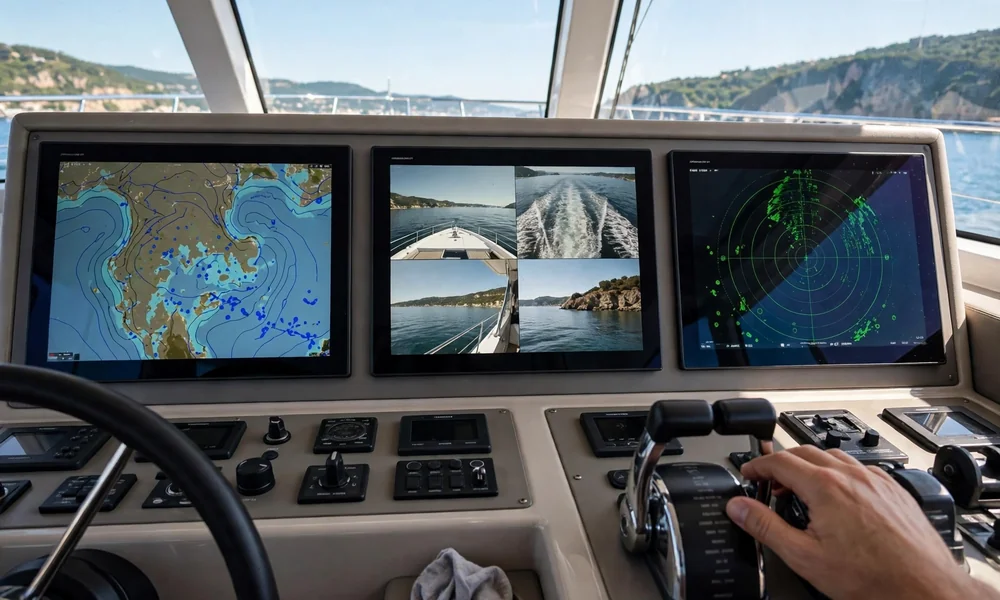
An autonomous yacht is not a boat without a crew. Every luxury system is built around a human supervisor, usually the captain, who watches the screens, approves the plan, and can take the helm at any moment. The system explains what it is doing in plain language on the display, so the supervisor is never guessing, and it hands back control smoothly when asked.
The boat also watches itself. It checks its sensors, its computers, and its steering for faults, and if something important fails, it slows down, holds position, and calls for help. The autonomy is there to do the routine work; the human is there to make the judgements.
Specifications
| Detail | Specification |
|---|---|
| Length | Around 20 to 30 metres |
| Sensors | Radar, cameras, lidar, AIS, GPS |
| Autonomy level | Supervised autonomy, crew on board |
| Propulsion | Hybrid electric, twin motors |
| Cruising speed | Around 10 to 12 knots |
| Position holding | Dynamic positioning, no anchor needed |
| Control range | On board helm plus remote monitoring ashore |
| Crew | Around 2 to 4 crew, including supervisor |
Price
The estimated price of a new luxury autonomous yacht is around 8 million dollars, and that figure is an estimate only, because the cost depends on size, sensor fit, and the standard of the interior. The sensor suite and the computing hardware account for a large share, followed by the hybrid propulsion and the luxury fit-out. A buyer is paying for a yacht that can handle the routine driving itself, keep a constant watch in all weathers, and still give its owner the comfort of a crewed superyacht.
A rare fact
Few people know that an autonomous yacht can spot a small wooden fishing boat that its radar cannot see. The cameras and the lidar pick up shapes the radar misses, and the fusion computer combines them into a single contact. In busy coastal waters, that extra pair of eyes is often the difference between a smooth passage and a close call.
When the yacht reaches its anchorage and holds itself steady without dropping an anchor, the crew can simply step onto the deck and enjoy the evening. The boat did the driving, the watching, and the waiting, and the people on board were free to do what they came for. Why a luxury autonomous yacht is so expensive shows where the money goes in a boat like this, from the sensors on the mast to the computers below deck.