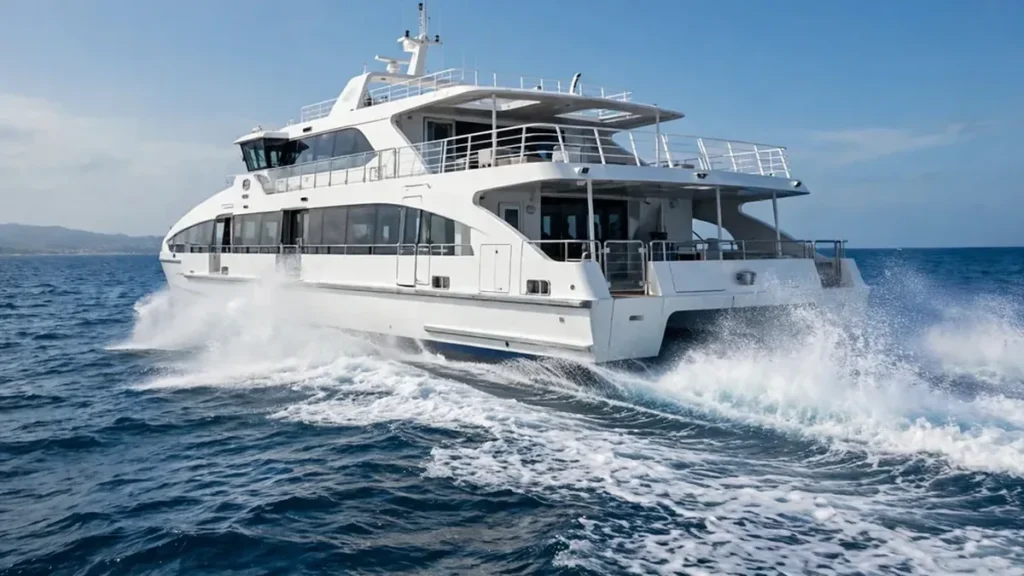
From the shore, a bulk carrier looks like a floating wall of steel. It is long, dark and almost silent as it slides into port, carrying enough grain, coal or iron ore to fill a small town. Yet the newest luxury bulk carriers are not the rusty workhorses people imagine. Their bridges are trimmed in wood and leather, their cabins are quiet and comfortable, and their hulls are shaped by computers before a single plate is cut.
A luxury bulk carrier is built for two jobs at once. It must carry enormous weight across rough oceans for decades, and it must keep its crew safe, rested and comfortable on voyages that can last for weeks. Building one takes a shipyard, hundreds of skilled workers and more than a year of careful work. Here is how a luxury bulk carrier is made, from flat steel plates to a finished ship ready for the open sea.
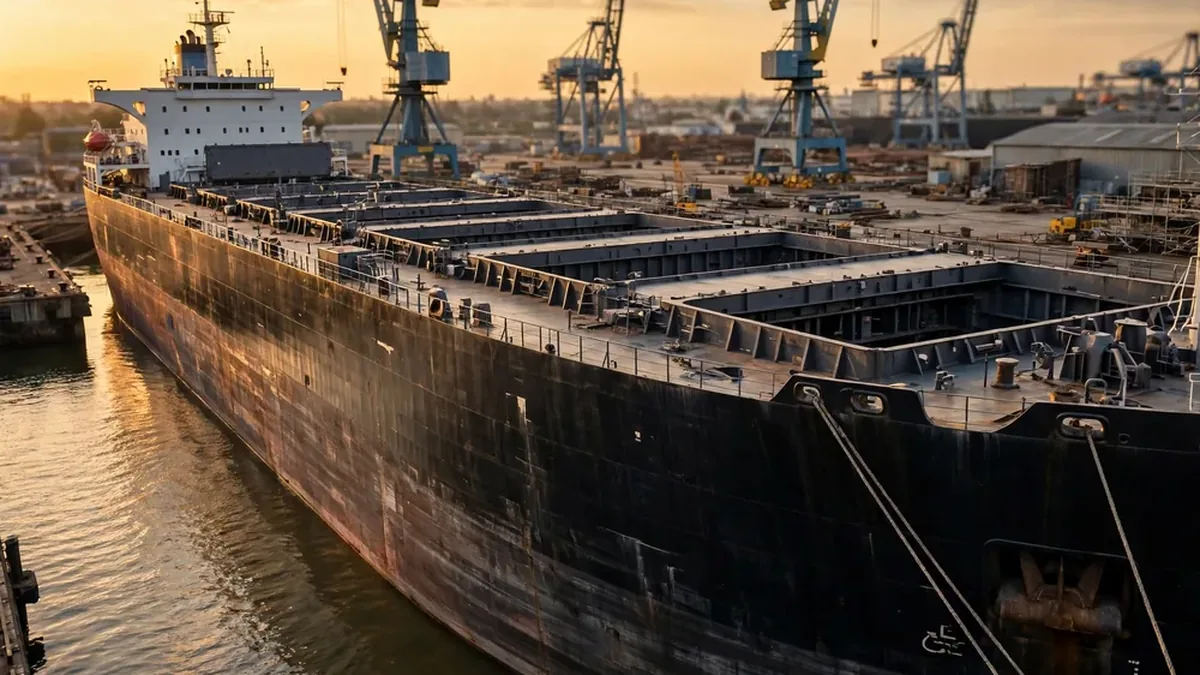
How It’s Made
Step 1: Designing the hull and cutting the steel
Every bulk carrier begins on a computer, long before anyone picks up a welding torch. Naval architects draw the hull to carry a chosen weight of cargo while using as little fuel as possible. Once the design is settled, the yard orders huge plates of high-strength steel, each one several metres across. Machines cut the plates with plasma torches or lasers, following the computer drawings exactly. Each plate is marked, bent into a curve where needed and stacked in order, ready for the giant jigsaw that follows.
Step 2: Building the hull in blocks
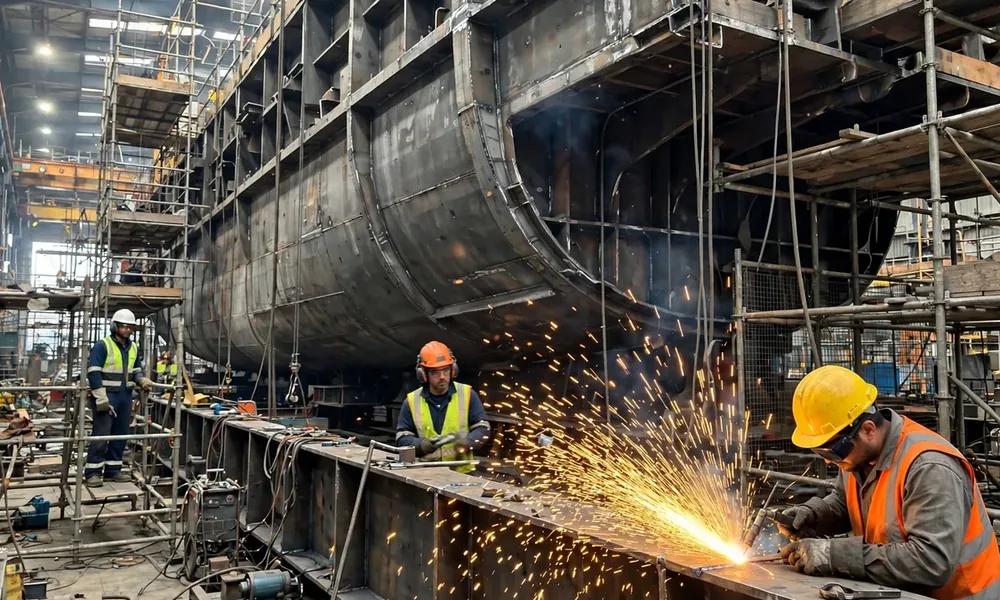
A modern bulk carrier is not built in one piece. Instead, workers build it in blocks, each one the size of a house. Steel plates are welded to frames inside a covered hall, forming sections of the hull, the cargo holds and the engine room. Cranes lift the blocks onto the slipway or into a dry dock, where they are lined up and welded together with great care. Welders work in pairs, checking every joint with ultrasound or X-ray, because a weak weld in a hull that flexes in heavy seas could become a serious problem.
Step 3: Fitting the cargo holds and hatches
The heart of a bulk carrier is its cargo holds, and they are built to be both huge and tough. Workers fit smooth steel walls that cargo can slide against without catching, and they coat them to resist rust from salt water and from damp loads like grain. Above each hold sits a massive hatch cover, often made of folding steel panels that roll open on rails. The hatches must seal tightly in a storm, so engineers test them with water jets and pressure checks. The story of how a luxury cargo ship is made shows the same care on a different kind of freighter, where loading speed and a watertight seal matter just as much.
Step 4: Installing the engine and the propeller
Deep in the stern, workers install the main engine, a slow-running diesel so large that a person can walk inside its crankcase during maintenance. The engine is lowered into place by crane and bolted to a foundation built into the hull, with flexible mounts that absorb vibration. A long steel shaft runs from the engine through the stern to the propeller, which can be five or six metres across. The propeller is cast from bronze, polished by hand and balanced to a fine tolerance, because even a small wobble would shake the whole ship.
Step 5: Building the bridge and the crew spaces
This is where a luxury bulk carrier earns its name. The bridge is fitted with polished wood panels, leather chairs and wide windows that give the captain a clear view over the bow. Navigation screens, radar and steering controls are arranged within easy reach, and the room is insulated so well that the crew can speak in normal voices even in a storm. Below the bridge, the cabins are larger than on older ships, with real beds, private bathrooms, air conditioning and soundproofing. There is a mess room, a small gym and a lounge, because a rested crew is a safer crew. The full specifications of a luxury bulk carrier explain how size, deadweight and speed are measured, and why those numbers decide which ports a ship can enter.
Step 6: Painting, sea trials and delivery
Before launch, the hull is painted with several coats of antifouling paint that stops barnacles and weed from clinging to the steel and slowing the ship down. The carrier is then floated out of the dock and taken to sea for trials. Engineers test the engines at full power, check the steering, the anchors and the cargo gear, and measure speed and fuel use in real waves. Any faults are fixed back at the yard, and the crew trains on every system. The craft behind a container ship hull follows the same idea: a ship is only finished when it has been tested at sea, not just in the yard. When the trials pass, the owner takes delivery and the carrier sails to its first cargo port.
Bulk Carrier Specifications
| Specification | Typical Luxury Bulk Carrier |
|---|---|
| Length | 180 to 230 metres |
| Deadweight | 55,000 to 85,000 tonnes |
| Cargo holds | 5 to 7 holds |
| Main engine | Slow-speed diesel, 9,000 to 13,000 horsepower |
| Service speed | Around 14 knots |
| Crew | 20 to 25 people |
| Build time | Around 12 to 18 months |
The Price
A luxury bulk carrier costs an estimated $35 million to $55 million to build, depending on its size, engine and the standard of its crew spaces. The larger ships, with the quietest cabins and the most efficient engines, sit at the upper end of that range. Running one costs an estimated $8,000 to $12,000 a day in crew, fuel, insurance and maintenance, but a single voyage can carry cargo worth many times that amount.
A Rare Fact
Some bulk carriers can load and unload without any help from the port. They carry their own cranes and grabs on deck, so they can work in small ports that have no shore cranes at all. The grabs open like giant jaws, scoop up thousands of kilograms of cargo at a time, and swing it into the hold with surprising precision. It means the ship is never stuck waiting for port equipment, and it can trade in remote places that bigger ships cannot reach.

Life on board a luxury bulk carrier is quieter and more comfortable than most people expect. The engine hum is kept low by insulation, the cabins stay cool in the tropics, and the crew eats well in a bright mess room. There is satellite internet, a small library and time to watch the sea change colour as the ship crosses from one ocean to another. The work is still hard, with watches through the night and heavy maintenance in port, but the ship itself makes it easier.
A luxury bulk carrier is proof that a working ship can also be a fine machine. Its hull is built from steel plates welded to survive storms, yet its bridge is trimmed like a gentleman’s study and its cabins are made for real rest. That balance is the whole point: the cargo pays for the voyage, but the crew brings the ship home safely. When it leaves the yard, painted and tested, it is not just a carrier. It is a steel giant with a comfortable heart.