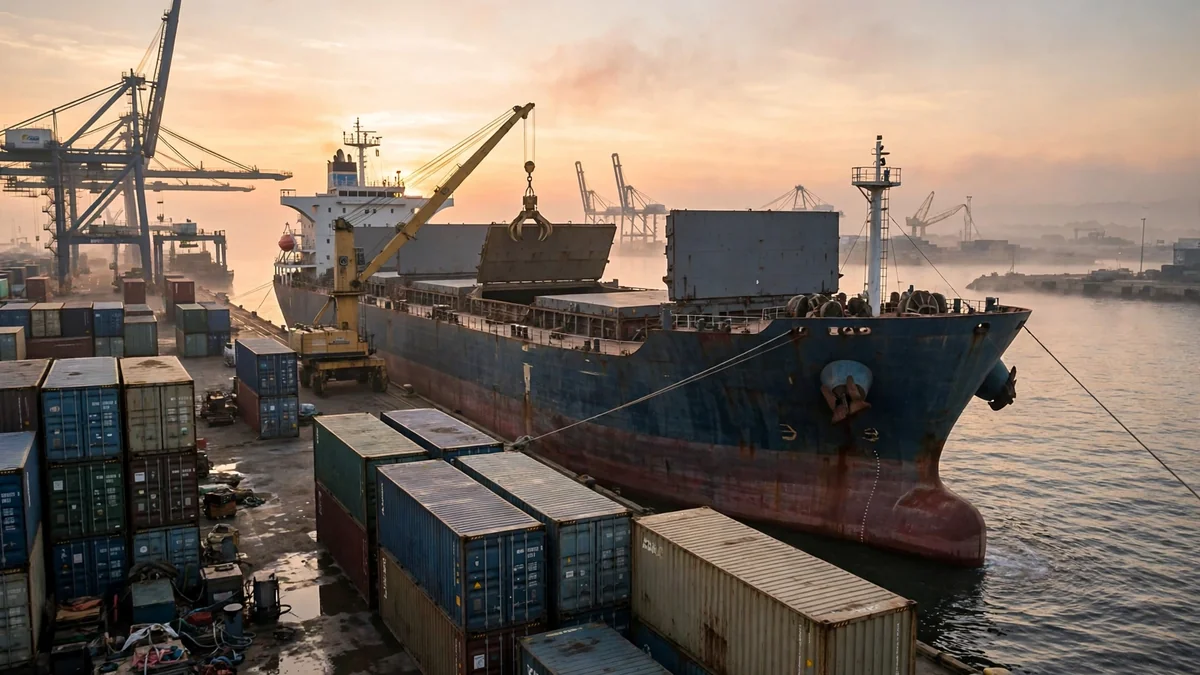
From the shore, a bulk carrier looks like a floating warehouse, a long steel wall with a small white castle at the back. I watched one being loaded once, the cranes swinging in a slow rhythm, and the ship barely moved as thousands of tonnes settled into its holds.
A luxury bulk carrier is a strange phrase, because these ships are not luxurious in the way a yacht is. The specification sheet is the honest record of that engineering, and this guide walks through size and tonnage, the hull, the holds, the engine, and the life aboard.
Size and Tonnage: How Big Is Big
The headline numbers are length and deadweight, and a large bulk carrier is usually 180 to 300 metres long, with a deadweight of 50,000 to 200,000 tonnes. Deadweight is the weight the ship can carry, including cargo, fuel, water, and stores, and it is the figure that decides what the ship can earn.
The gross tonnage, a measure of the ship’s internal volume rather than its weight, is often quoted alongside, and it decides the port fees and the crew size. The numbers sound abstract until you stand beside a hold and realise that a single hold can swallow a house, and the ship carries five to nine of them in a row.
The Hull: Steel Built to Bend
The hull is made from high-strength steel, welded into a double bottom and double sides, so that a grounding or a collision does not flood the cargo. The hull is also built to flex, because a ship this long bends in a swell, rising and falling by metres between the bow and the stern, and a rigid hull would crack.
The bow is shaped to cut through the water with as little resistance as possible, and many modern carriers carry a bulbous bow, a rounded swelling below the waterline that cancels the wave the ship makes. The stern carries the propeller and the rudder, and the propeller alone can be eight metres across, a single piece of bronze that weighs as much as a truck. The craft of building such a hull is shown in how a luxury cargo ship is made, which follows the steel, the welding, and the launch from the yard to the water.
The Holds: Rooms That Carry Mountains
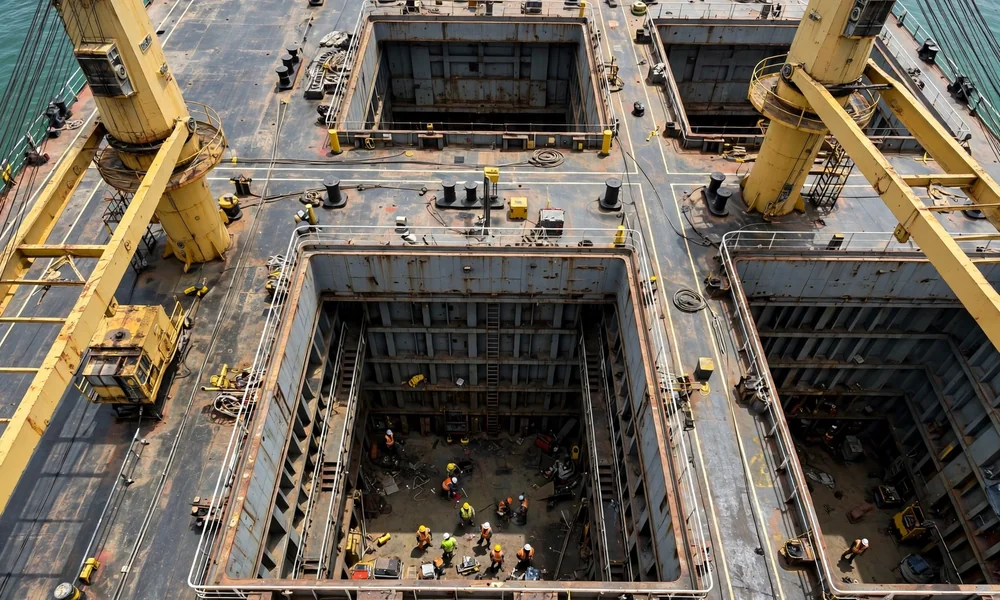
The holds are the reason the ship exists, and they are numbered from the bow, usually five to nine of them, each one a vast steel room with a hatch on top. The shape of the hold matters too, because the cargo must flow out cleanly when the ship is unloaded, and a hold with corners that trap cargo wastes time and money.
Some holds are coated for food cargoes, so grain or sugar can be carried without contamination, while others are built for ore, with thicker steel to survive the impact of rock dropped from a loader. The ship’s cranes, if it carries them, are mounted between the holds, and they can lift 30 to 50 tonnes at a time, which means the ship can unload itself in ports without shore cranes. The loading rate is a specification in itself, often 5,000 to 10,000 tonnes per hour, and it decides how long the ship spends in port, which is the most expensive part of any voyage. The same thinking about hulls and holds appears in container ships, and the container ship hull specifications explained shows how a different cargo changes the same steel.
The Engine: Slow, Huge and Efficient
The engine is a two-stroke diesel, often a single engine the size of a house, making 10,000 to 25,000 horsepower at barely 100 revolutions per minute. It drives the propeller directly, with no gearbox, and it burns heavy fuel oil, the thick residue left after refining petrol, which is cheap but must be heated before it will flow.
The service speed is usually 14 to 16 knots, which sounds slow, and it is, but a bulk carrier is not in a hurry, because fuel is the largest cost of a voyage, and slowing down by two knots can cut fuel burn by a third. The fuel consumption is quoted in tonnes per day, often 30 to 60 tonnes at service speed, and the ship carries enough fuel for a month at sea. The engine room is also where the ship makes its own fresh water and electricity, with generators that run around the clock. The electric cousin of this workhorse is explained in how an electric bulk carrier works, which shows how batteries and motors are changing the same job on shorter routes.
Life Aboard: The Castle at the Back
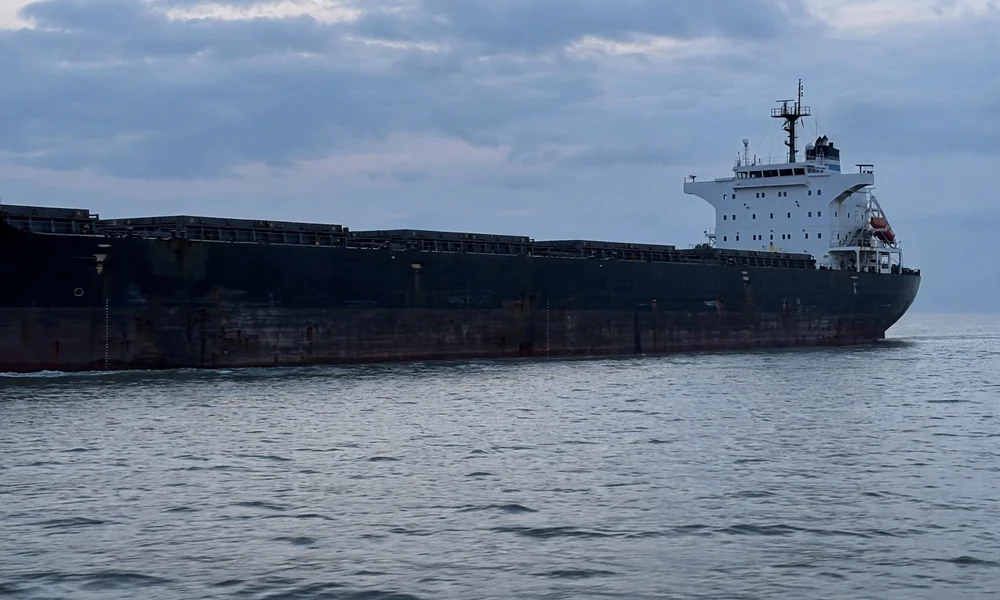
The accommodation block, the white castle at the stern, is home to 20 to 25 crew for weeks at a time, and on a modern carrier it is more comfortable than many people expect. The cabins are single rooms with a bed, a desk, and a bathroom, the mess room serves three meals a day, and there is a gym, a recreation room, and a small library.
The specification sheet also lists the lifeboats, the firefighting systems, and the ballast tanks, and the ballast is worth understanding. When the ship is empty, it takes on seawater as ballast to sit deep enough to steer, and when it loads cargo, it pumps the ballast out again. The ballast tanks are a pollution risk, because they carry sea life from one ocean to another, so modern ships treat the water before they discharge it. It is a small detail on the sheet, and a large one for the ocean.
The Numbers That Matter
| Specification | Typical large bulk carrier |
|---|---|
| Length | 180 to 300 metres |
| Beam | 30 to 50 metres |
| Deadweight | 50,000 to 200,000 tonnes |
| Cargo holds | Five to nine holds |
| Engine | Single two-stroke diesel, 10,000 to 25,000 hp |
| Service speed | 14 to 16 knots |
| Fuel use | 30 to 60 tonnes per day |
| Loading rate | 5,000 to 10,000 tonnes per hour |
| Crew | 20 to 25 people |
Read the sheet the way a shipowner would: start with the deadweight and the holds, then the engine and the fuel, and only then the length and the speed. A ship that can load quickly, carry more, and burn less fuel is a better bulk carrier than a faster ship that spends longer in port. The crew size is the last check, because a ship that needs fewer people to run safely is a ship that costs less every day it is at sea.
Price, and What You Are Really Paying For
The difference from a smaller cargo ship is not one part but all of them at once: the steel hull, the holds, the giant engine, and the cranes. The hull steel and the engine are the two most expensive parts, and the accommodation block, with its cabins and bridge, is not far behind.
A Rare Fact Worth Knowing
Here is the detail that surprises almost everyone who learns it for the first time. The largest bulk carriers are too big to pass through the Panama Canal, so they sail around the Cape of Good Hope, the route that gave them their name, Capesize. The canal was built for ships of a certain size, and the carriers simply outgrew it, the way a truck outgrows a country lane.


