The lights in the listening room are low, the record is already spinning, and a woman settles into an armchair and pulls a pair of heavy black headphones over her ears. The first thing she hears is not music. It is the breath a singer takes before the first note, a tiny sound most speakers lose entirely. She closes her eyes and smiles, because the room has gone away and only the music is left.
That is what a luxury pair of headphones is for: not to be loud, but to be honest, and to carry every small detail of a recording straight to the ear without adding anything of its own. Behind that simple experience sits a chain of small, exacting systems, from the driver that moves the air to the earcup that shapes the sound and the headband that disappears on the head.
This is how luxury headphones work, from the signal and the driver to the acoustics, the noise cancelling and the fit, and why a pair that looks simple can take so much engineering to get right.

Step 1: The signal arrives, clean and untouched
Everything starts with the signal, the electrical picture of the music, arriving from a phone, a player or an amplifier through a cable or a wireless link. On a luxury pair, the path is kept as clean as possible: a good cable with proper shielding, or a high-quality wireless codec that preserves the detail, and a small amplifier built into the headphones that has enough power to drive the speakers properly without adding hiss or distortion. The guide to how luxury headphones are made follows the pair from the first coil of wire to the final listening test, and the signal path described here is what that careful building is protecting.
Step 2: The driver turns electricity into sound
At the heart of every headphone is the driver, a small loudspeaker that turns the electrical signal into moving air. In a luxury pair the driver is usually a dynamic unit about forty millimetres across, built around a thin diaphragm, a voice coil wound from copper wire finer than a human hair, and a powerful magnet. When the signal flows through the coil, the coil moves in the magnetic field, the diaphragm moves with it, and the air in front of it moves too, which is what the ear hears as sound. The two drivers in a pair are matched so closely that they behave identically, because even a small difference between the left and the right would pull the music to one side.
Step 3: The earcup shapes the sound
The driver alone does not decide what the headphones sound like. The earcup around it does much of the work, and its shape, its volume and its damping are tuned like an instrument. A closed earcup seals the sound in and keeps the outside world out, while an open earcup lets air move freely and gives the music a wider, more natural feel. The guide to the luxury headphones spec sheet, explained reads the numbers behind this tuning, from driver size to frequency range, and the earcup described here is where those numbers turn into a sound the listener can feel.
Step 4: Noise cancelling listens, then cancels
Many luxury headphones add active noise cancelling, and it works by listening first. Small microphones on the outside of each earcup pick up the low, steady sounds of the world, the hum of an aircraft cabin or the drone of a train, and the headphones generate a mirror image of that sound, a wave that is exactly opposite, and play it through the driver at the same time. The two waves cancel each other out before they reach the ear, leaving the music in place and the noise gone.
Step 5: The headband, the seal and the fit
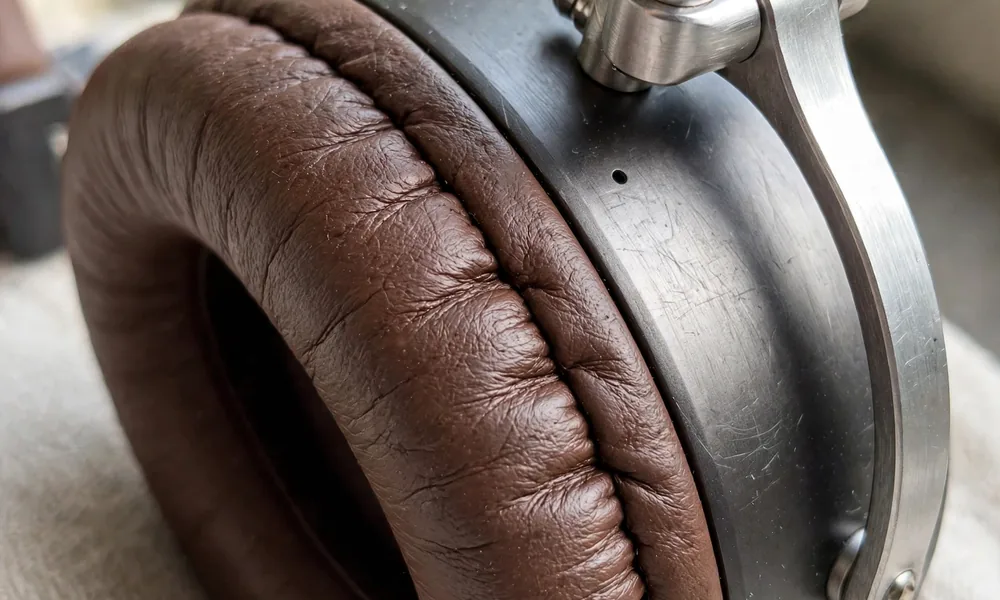
None of the engineering matters if the headphones do not fit. The headband is shaped to spread the weight evenly across the top of the head, the ear cushions are made from soft leather over memory foam, and the clamping force is tuned so the earcups seal gently against the head without pressing. That seal is part of the sound: a good seal keeps the bass in and the noise out, while a poor one lets both leak away. The same noise-cancelling idea in a smaller, in-ear form is covered in the guide to how noise-cancelling headphones work, where the seal is made inside the ear canal rather than around it.
Step 6: Listening, from the first note to the last
Put it all together and the listening runs like this. The signal arrives clean, the driver moves the air, the earcup shapes the sound, the noise cancelling removes the drone of the world, and the fit holds it all in place. That balance is the whole job of a luxury pair, and it is judged the way the woman in the listening room judges it: not by a number on a sheet, but by whether the room goes away and only the music is left.
The spec sheet at a glance
| Specification | Typical luxury figure | What it tells you |
|---|---|---|
| Driver | About 40 mm dynamic, matched in pairs | How the headphones move the air, and how evenly left and right match |
| Diaphragm | Thin coated film or metal alloy | How quickly and cleanly the driver responds |
| Frequency range | Often 10 Hz to 40 kHz or wider | How deep the bass goes, and how high the treble reaches |
| Impedance | Often 32 to 300 ohms | How much power the headphones need from their amplifier |
| Noise cancelling | Microphones plus opposite sound waves | How much of the world’s drone is removed |
| Earcup | Closed or open, damped and vented | How the sound is shaped, and how much leaks in or out |
| Weight | Often 250 to 400 grams | How heavy the pair feels over a long listening session |
| Connection | Wired, wireless, or both | How the signal reaches the drivers |
| Battery | Often 30 to 60 hours with cancelling on | How long the headphones play between charges |

What it costs
Luxury headphones typically cost an estimated $500 to $4,000, depending on their drivers, their materials, their noise cancelling and whether they are wired or wireless. The estimate covers the headphones alone, not the amplifier or the source. Most of the price is in the matched drivers, the machined earcups, the leather and the tuning, and in the listening tests that check every pair before it leaves the workshop.
A rare fact
One detail few listeners ever learn is that a luxury pair of headphones can reveal sounds the recording studio never intended anyone to hear, and the reason is simple: a good driver and a well-tuned earcup reproduce the tiny details a cheap pair smears away. That is why engineers listen to their own recordings on luxury headphones before release, checking for a chair creak, a page turn or a breath that slipped through, because the headphones do not add anything to the music, and they do not hide anything either.


