The driver pressed a single button on the steering wheel, and the cabin filled with the opening notes of a piano recording made in a concert hall three thousand miles away. The bass was deep enough to feel, the high notes crisp without harshness, and the singer seemed to stand just behind the windscreen. A luxury car sound system is not a radio with bigger speakers. It is a concert hall squeezed into a steel box that does 70 miles an hour, and building one takes a very different kind of engineering from the engine or the brakes.
The problem is the car itself. A cabin is small, full of glass and hard plastic, shaped nothing like a concert hall, and noisy with wind, tyres, and the engine. Worse, the driver sits closer to one speaker than the other, so sound arrives at one ear first and the whole image collapses to one side. Fixing that means measuring the cabin the way an architect measures a hall, placing speakers where the physics works rather than where the styling is easy, and tuning the result with software that can delay each speaker by thousandths of a second. This is how a luxury car sound system is made.
How It’s Made
Step 1: The cabin is measured like a concert hall
Before a single speaker is chosen, acoustic engineers measure the bare cabin. They place microphones where passengers’ heads will be, play test tones through a temporary speaker, and record how the sound bounces off the glass, the dashboard, and the roof. The data becomes a digital model of the cabin, and the engineers use it to decide where each speaker should go and how much power it needs. It is painstaking work, and it is why two cars that look identical inside can sound completely different: the measurements, not the badge, decide the result.
Step 2: Speakers are designed for the car, not the shelf
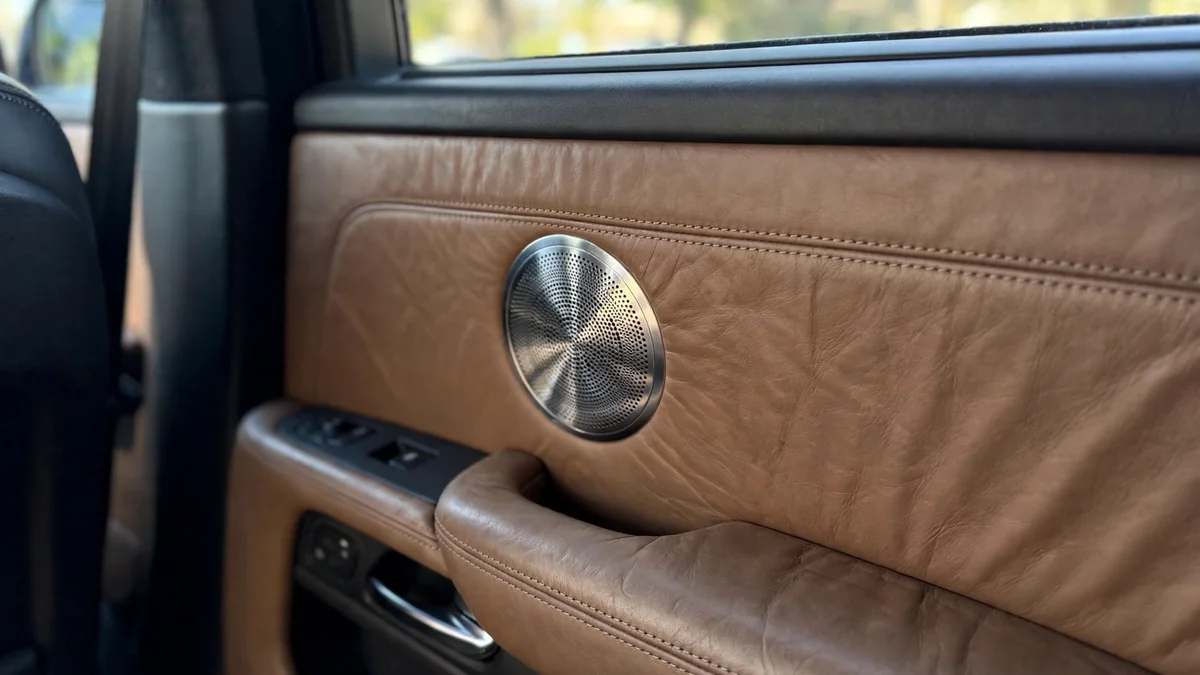
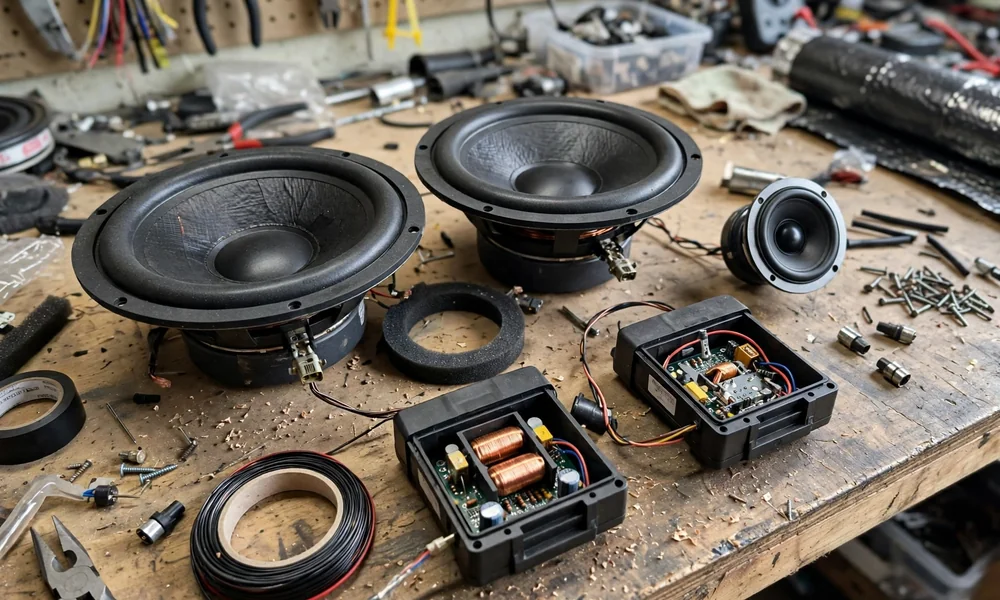
A home speaker lives in a quiet room at a steady temperature. A car speaker lives in a door that slams, bakes in the sun, freezes in winter, and vibrates at motorway speed, so it is built to a different standard. The cone is often woven glass fibre or a stiff composite that does not flex under power, the surround is rubber that stays flexible in the cold, and the magnet is sized for control rather than just loudness. Tweeters for the high notes sit high, near the windscreen pillars, so the sound arrives at ear level. Mid-range drivers sit in the doors, and the subwoofer for the bass is often hidden under a seat or in the boot, where it can move the most air.
Step 3: The amplifier and processing are built in
The amplifier in a luxury system is a serious piece of electronics, often delivering well over a thousand watts across a dozen or more channels, one for each speaker or pair of speakers. It is usually mounted under a seat or in the boot, on a heatsink, because that much power makes heat. Beside it sits the digital signal processor, the brain of the system: it delays the nearest speakers by milliseconds so sound from every driver arrives at the same instant, corrects the peaks and dips the measurements found, and can create a wide soundstage stretching beyond the windscreen. The same idea is at work in personal audio, as explained in how noise-cancelling headphones work, though a car must do it across four seats at once.
Step 4: The sound is tuned, seat by seat
A tuning engineer sits in each seat in turn with a calibrated microphone at ear height, plays sweeps and test tracks, and adjusts the processor: a little less bass here, a touch more sparkle there, a millisecond of delay to pull the soundstage back to the centre. The final check is always done by ear, with real music, in a real car, on a real road. Knowing what those numbers mean is half the battle, as shown in noise-cancelling headphone specs explained, where frequency, distortion, and sensitivity decide what is genuinely good.
Step 5: Road testing and the final sign-off
Finally the car goes out on the road, because a system that sounds perfect in a silent workshop can fall apart at speed. Test drivers listen at town and motorway speeds, over rough and smooth surfaces, with the air conditioning on and off, checking the bass does not boom, the treble does not tire the ear, and the volume stays balanced as road noise rises. The care that goes into a single driver is similar to the craft described in how noise-cancelling headphones are made. Only when the sound survives the road does the car get its badge and its price.
Luxury Car Sound System Specifications
| Specification | Typical figure |
|---|---|
| Number of speakers | About 12 to 30, depending on the system |
| Amplifier power | About 600 to 2,000 watts |
| Subwoofer | Usually 8 to 10 inch driver, under seat or in boot |
| Sound processing | Digital signal processor, per-seat tuning |
| Frequency range | Roughly 20 Hz to 20 kHz |
| Noise compensation | Cabin microphones, speed-sensitive volume |
| Tuning time | Weeks of measurement and listening |
How Much Does a Luxury Car Sound System Cost?
A top car sound system is one of the most expensive options on a luxury car, because the speakers, the amplifier, the processing, and the weeks of tuning are all bespoke to one model. Industry estimates put a flagship branded system at roughly $5,000 to $15,000 (estimate) as a factory option, while the very best systems in ultra-luxury cars can add $20,000 or more (estimate) to the price. Aftermarket builds can cost even more, with custom installations running from $10,000 to $50,000 (estimate) for a fully tailored system. Buyers pay it because the car is where many of them listen to most of their music.
A Rare Fact About Luxury Car Sound Systems
Here is something few drivers realise: in some luxury cars, the sound system is tuned using a recording of the car itself, played back in a laboratory. Engineers record the exact road and wind noise of the car at different speeds, then tune the system against that recording so the music stays balanced as the noise changes, and some systems even play a faint, carefully shaped sound through the speakers to mask the worst of the road roar.
So the next time a song starts in a luxury car and the world falls away, remember what is behind it: a cabin measured like a concert hall, speakers built to survive a slamming door, an amplifier with a channel for almost every seat, and an engineer who spent weeks listening to the same tracks in every seat until the singer stood in exactly the right place. A luxury car sound system is not loudness. It is a room, tuned by hand, that happens to have wheels.


