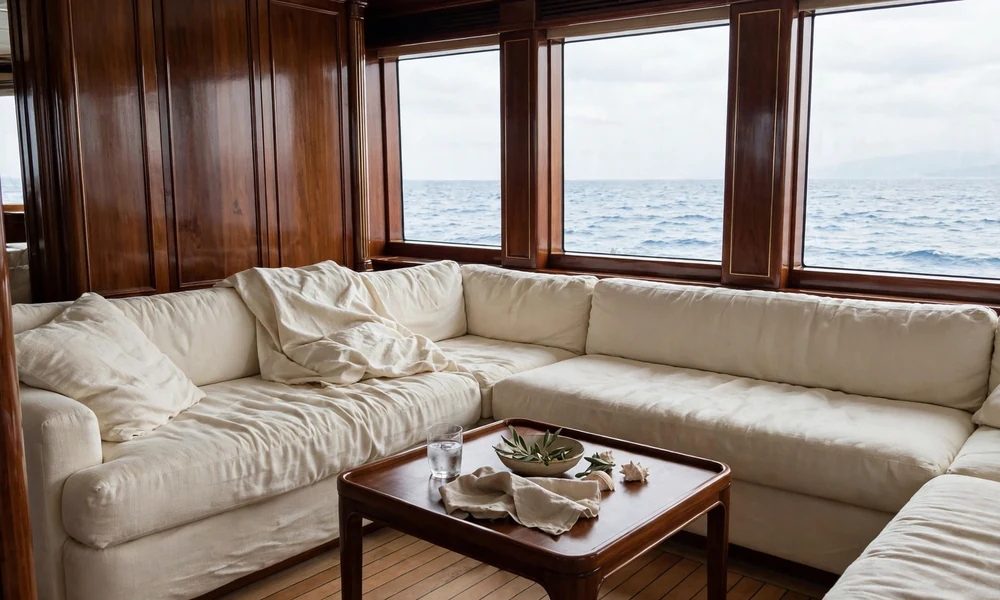
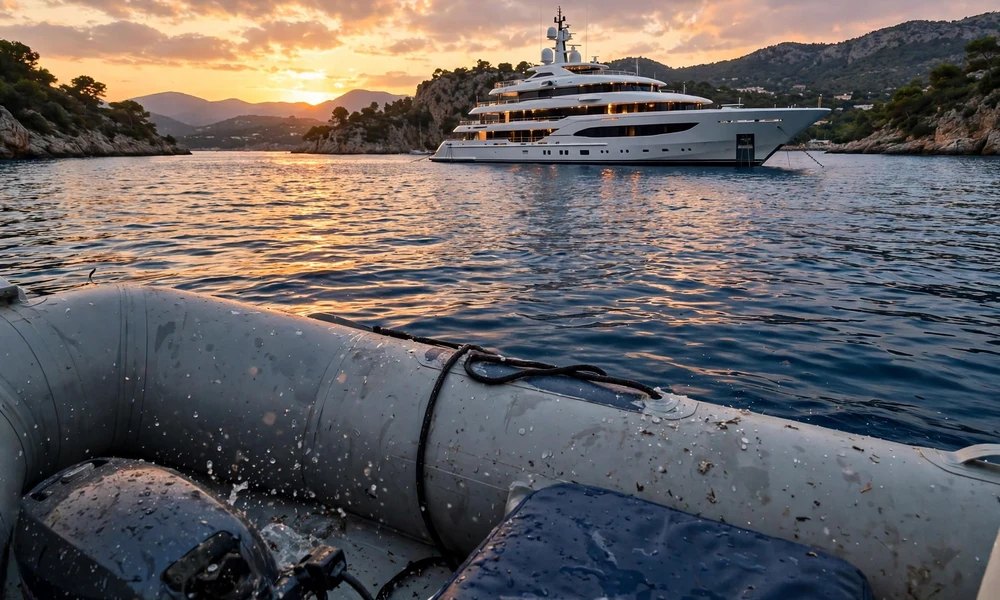
When a superyacht changes hands for 200 million dollars, the first reaction is usually disbelief. It is, after all, a boat. It floats, it has engines, and it carries people across the sea — things a modest fishing vessel also manages for a tiny fraction of the price. But a custom superyacht is not really a boat in the ordinary sense. It is a private floating estate, built once, by hand, to the exact wishes of one person, and almost every line of its cost comes from that single fact: nothing about it is standard.
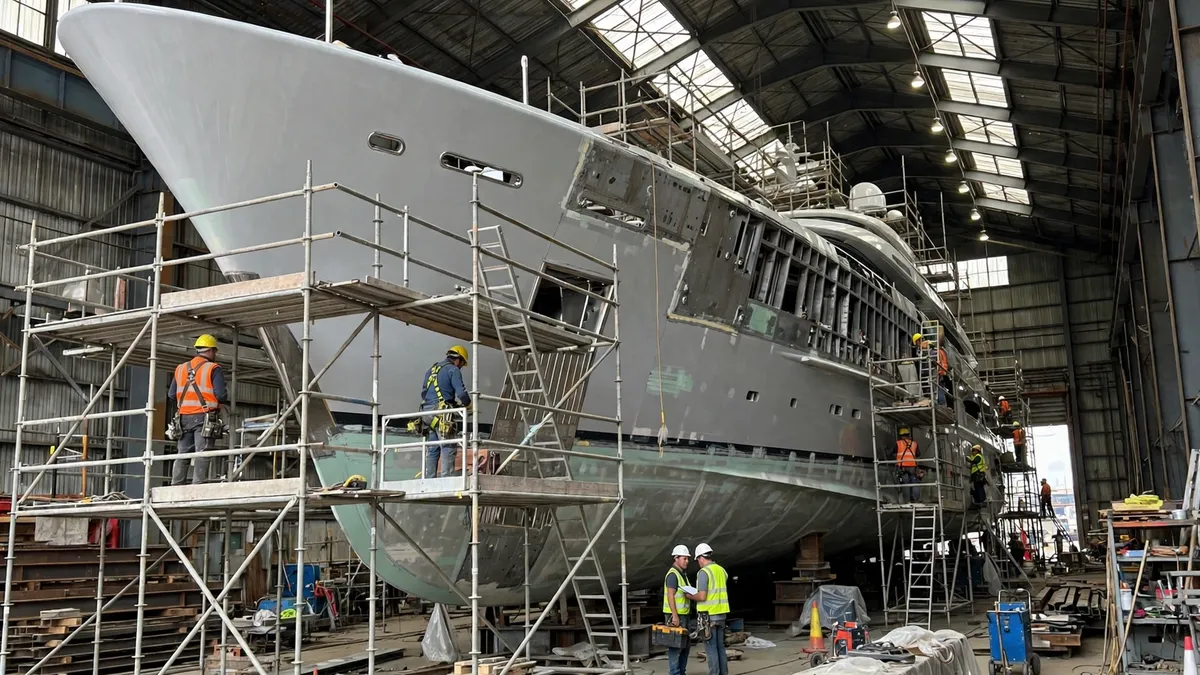
Walk through a shipyard in the Netherlands or Germany and the scale becomes clear. The shed is the size of an aircraft hangar. Inside, a steel hull longer than a football field is taking shape, and around it work hundreds of specialists — welders, joiners, electricians, painters, stone masons — many of whom have spent their whole careers on this one craft. A custom superyacht takes three to five years to build, and by the end, thousands of hands will have touched it. The price tag is, in large part, the cost of all that time and skill.
Where the Money Goes: A Custom Superyacht Price Breakdown
| Cost area | Share of build cost (estimate) | What it covers |
|---|---|---|
| Hull and superstructure | 20–25% | Steel or aluminium hull, decks, structural work |
| Machinery and propulsion | 15–20% | Main engines, generators, thrusters, stabilisers |
| Interior and joinery | 20–25% | Cabins, saloons, marble, rare woods, bespoke furniture |
| Systems and electronics | 10–15% | Navigation, communications, AV, automation, security |
| Exterior and paint | 5–10% | Decks, fairing, multi-coat superyacht paint finish |
| Design, engineering, project management | 10–15% | Naval architecture, styling, yard supervision |
These shares are estimates and vary with every build. But the pattern holds: no single item dominates, and that is exactly why the total climbs so fast — there are a dozen large bills, not one.
How a Custom Superyacht Is Built
A custom build follows a sequence, and each step adds cost because each step is done once, for one owner, with no chance to reuse the work on the next boat. Production builders spread design costs across dozens of identical hulls. A custom yard cannot.
- Design begins from a blank page. A naval architect draws the hull, a stylist shapes the exterior, and an interior designer plans every room. This phase alone can take a year and cost several million dollars.
- The hull takes shape. Steel plates are cut, curved and welded into a hull, then the aluminium superstructure goes on top. The hull is faired by hand until it is smooth to the touch — a job that can take months.
- Machinery goes in before the decks close. Main engines, generators, fuel tanks and stabilisers are lowered into the hull while it is still open, because they will never fit through a doorway later.
- The interior is built like a luxury hotel. Joiners fit rare woods, stone masons install marble bathrooms, and craftsmen build furniture to the millimetre. Much of it is made off site in specialist workshops, then installed by hand.
- Systems are wired and tested. Thousands of kilometres of cable connect navigation, communications, entertainment, lighting, climate and security. Every system is tested, then tested again, often with the owner present.
- Paint and finishing take months. A superyacht paint job is applied in many coats, sanded between each one, until the hull shines like glass. The finish alone can cost millions.
- Sea trials prove the yacht. The yacht goes to sea for weeks of trials — speed, range, noise, vibration, manoeuvring — and anything that falls short goes back to the yard for correction.
Why Custom Costs So Much More Than Production
The heart of the price is customisation itself. A production yacht of 50 metres might cost 30 or 40 million dollars. A custom yacht of the same length can cost twice that, and the difference is not the steel or the engines — it is the fact that everything is designed once and built once. The yard cannot buy materials in bulk, cannot reuse jigs and moulds, and cannot learn from the tenth identical boat, because there is no tenth boat.
Materials add their own premium. The interior of a custom superyacht reads like a list of the world’s rarest finishes: book-matched marble from a single quarry, walnut from one tree, hand-stitched leather, bespoke light fittings made by a single artisan. Some owners ask for specific stones, specific woods, even specific craftsmen, and the yard sources them at whatever the market asks. These are not decorations; they are commissions, priced like art.
Then there is the machinery. A 70-metre yacht’s engine room alone can cost 15 million dollars or more: twin main engines, multiple generators, stabilisers, thrusters, water makers and the miles of pipe and cable that connect them. The most expensive yachts ever built all share this pattern — enormous machinery bills hidden beneath beautiful interiors.
The Hidden Costs: Crew, Fuel and Upkeep
The purchase price is only the beginning. Running a large superyacht costs roughly 10 per cent of its value every year, and that figure surprises even wealthy owners. A 100-million-dollar yacht can cost 10 million a year to keep, and the breakdown explains why.
Crew is the largest single running cost. A 60-metre yacht needs 12 to 15 crew: a captain, engineers, deckhands, stewardesses and a chef. Their salaries, food, uniforms, training and travel run to several million a year. Fuel is next — a long-range yacht can burn 500 litres an hour at cruise, and a season of Mediterranean cruising can consume hundreds of thousands of litres. Insurance, berthing, maintenance and refits fill out the rest. A five-year refit, where the yacht is hauled out and repainted, reupholstered and re-equipped, can itself cost 10 million dollars or more. Restoration tells the same story: why vintage superyacht restoration is so expensive explains how rebuilding an older yacht can cost nearly as much as building new.
A Rare Fact From the Shipyard
Here is a detail that captures the world of custom yachts: some superyacht paint finishes are so demanding that the final coats are applied in a sealed, climate-controlled tent, and a single speck of dust can force a whole panel to be sanded back and repainted. The painters wear lint-free suits, the air is filtered, and the temperature and humidity are held steady around the clock. The result is a finish so deep and so smooth that it looks like the hull was carved from a single piece of glass — and it can take a team of painters six months to achieve on one yacht.
Another rarity is the sheer scarcity of the yards themselves. Only a handful of shipyards in the world can build a custom yacht over 80 metres, and their order books are often full years ahead. An owner is not just buying a yacht; they are buying a slot in a yard’s schedule, and the waiting list is part of the price. The choice of yacht type matters too: superyacht or explorer yacht: which suits you? compares the sleek Mediterranean cruiser with the rugged long-range explorer.
So Why Does Anyone Pay It?
Part of the answer is privacy and freedom. A custom superyacht is a place where an owner can travel the world without airports, hotels or crowds, with their own staff, their own schedule and their own rules. Part of the answer is that the yacht is also a statement: in the world of the ultra-wealthy, a custom yacht is one of the few possessions that is entirely personal — designed from a blank page, built by hand over years, and unlike anything else on the water.