Hold a titanium bicycle frame in your hands and the first thing you notice is how little it seems to weigh. The tubes are thin, the welds are small and neat, and the whole frame feels almost too light to be real. Then you see the price: three, five, sometimes eight thousand dollars for the frame alone, before wheels, gears or anything else. A good aluminium frame costs a tenth of that. A carbon frame, lighter still, can cost less. So why does a metal first used in jet engines command such a price on a bicycle?
The answer is not one thing. It is a chain of small, stubborn difficulties: a metal that is hard to get, harder to shape, and hardest of all to join. Every step demands skill, time and equipment that most bike factories do not have. The frame is rare not because the metal is rare, but because turning it into a bicycle is genuinely difficult.
It is also worth saying what a titanium frame is not. It is not the lightest frame you can buy, and it is not the stiffest. Carbon beats it on both counts. What titanium offers is a combination no other material matches: a ride that is springy and alive, a frame that will not rust or fatigue in normal use, and a lifespan measured in decades.
Where the Money Goes: A Titanium Frame Price Breakdown
| Cost area | Share of frame price (estimate) | What it covers |
|---|---|---|
| Titanium tubing | 20–25% | Seamless 3Al-2.5V or 6Al-4V tubes, butted and shaped |
| Machining and shaping | 10–15% | Cutting, mitring, butting, dropouts, bottom bracket shell |
| Welding | 25–30% | Skilled TIG welding in an argon-purged environment |
| Finishing | 10–15% | Brushing, blasting, polishing, decals, clear coat |
| Design, jigging and quality control | 15–20% | Geometry, alignment, testing, small-batch overhead |
These shares are estimates for a hand-built frame from a small specialist builder. The welding share is the one to notice: on a titanium frame, joining the tubes is the single most skilled and most expensive step.

How a Titanium Bicycle Frame Is Made
Building a titanium frame is a slow, manual process. A skilled builder might finish only a few frames a week, and each one passes through the same sequence of careful steps. Here is how it happens.
- Tubes are selected and cut. The builder chooses seamless titanium tubing, usually the 3Al-2.5V alloy, and cuts each tube to length. Wall thickness varies along the tube — thicker at the ends, thinner in the middle — to save weight where strength is not needed.
- Tube ends are mitred. Each tube end is shaped to fit exactly against its neighbour, so the joint is tight and clean before any welding begins. A poor mitre means a weak joint, so this step is done with care and checked by eye.
- The frame is set in a jig. The tubes are held in a precise steel jig that fixes the geometry — the angles, the lengths, the alignment. A frame that is a millimetre out at this stage will ride badly forever.
- Tack welding holds it together. Small welds fix the tubes in place, and the builder checks alignment again. Only when the geometry is perfect does full welding begin.
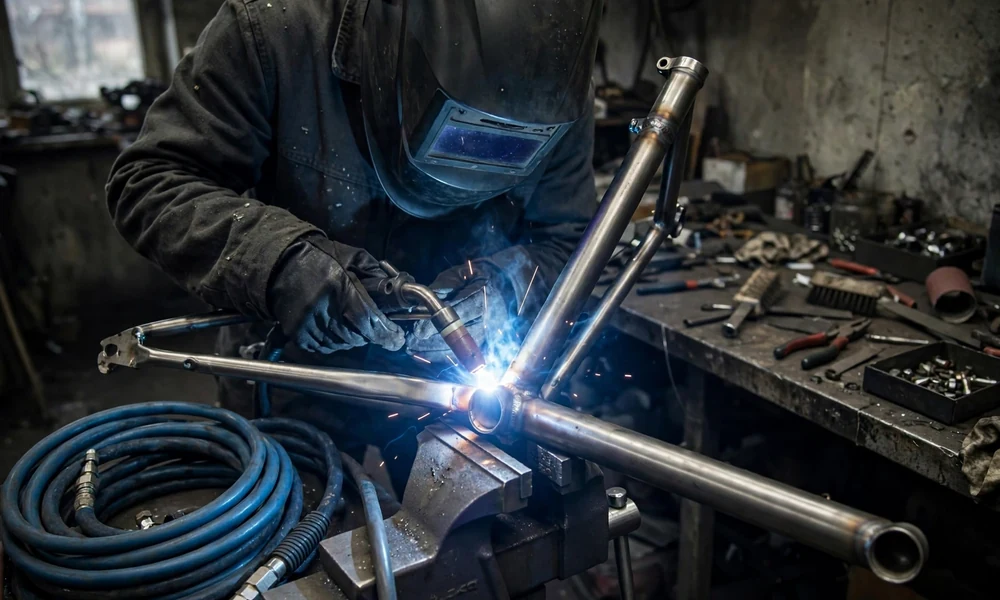
- Full welding happens under argon. The builder TIG-welds each joint, flooding the area with argon gas to keep oxygen away from the hot metal. Both the outside and the inside of the tube must be shielded, or the weld will be contaminated.
- The frame is finished by hand. Welds are inspected, the frame is checked for straightness, and the surface is brushed, bead-blasted or polished. Some builders leave the welds visible as a mark of craft; others smooth them for a clean look.
- Quality control closes the job. The frame is measured, the threads are checked, and the alignment is verified one last time. A good builder stands behind the frame for life, because a titanium frame is expected to outlast its owner.
Why Welding Titanium Costs So Much
Welding is where titanium earns its reputation — and its price. The metal reacts with oxygen and nitrogen at welding temperatures, and a contaminated weld becomes brittle and weak. To prevent that, the welder must shield the joint with argon gas, not just on the outside but inside the tube as well. That means purging the whole frame with argon before welding starts, and keeping the gas flowing until the metal has cooled.
The welder’s skill matters enormously. Titanium conducts heat slowly, so the weld pool behaves differently from steel or aluminium, and the margin for error is small. A good titanium welder trains for years, and there are not many of them. Small builders often have one welder, or two, and the whole production schedule depends on their hands. That scarcity is priced into every frame.
The equipment is specialised too: a high-quality TIG welder, argon purging gear, a very clean workshop, and inspection tools. Contamination can come from a dirty glove or a speck of dust, so workshop discipline is closer to aerospace than to an ordinary bike factory — as what a titanium alloy is shows, the same metal serves in jet engines, where the same rules about purity apply.
The Metal Itself: Expensive Before Work Begins
Titanium is the ninth most common element in the Earth’s crust, so it is not scarce in the ground. It is scarce in usable form, because extracting it from ore is a long, energy-hungry process. The ore is converted to titanium tetrachloride, then reduced with magnesium in a sealed vessel, then melted in a vacuum furnace — a sequence that takes days and consumes a great deal of energy. The result is an expensive raw material before a single tube has been drawn.
A Rare Fact About Titanium Frames
Here is a detail that captures the material’s character: a well-built titanium frame has, in practical terms, no fatigue limit. Steel and aluminium frames accumulate tiny damage with every bump and every pedal stroke, and eventually — after many years — they can crack. Titanium, used well within its limits, does not behave that way. A titanium frame ridden for twenty years can be as sound as the day it was built, and there are frames from the 1990s still being ridden daily by their original owners. That is why used titanium frames hold their value so well, and why owners describe buying one as buying the last frame they will ever need.
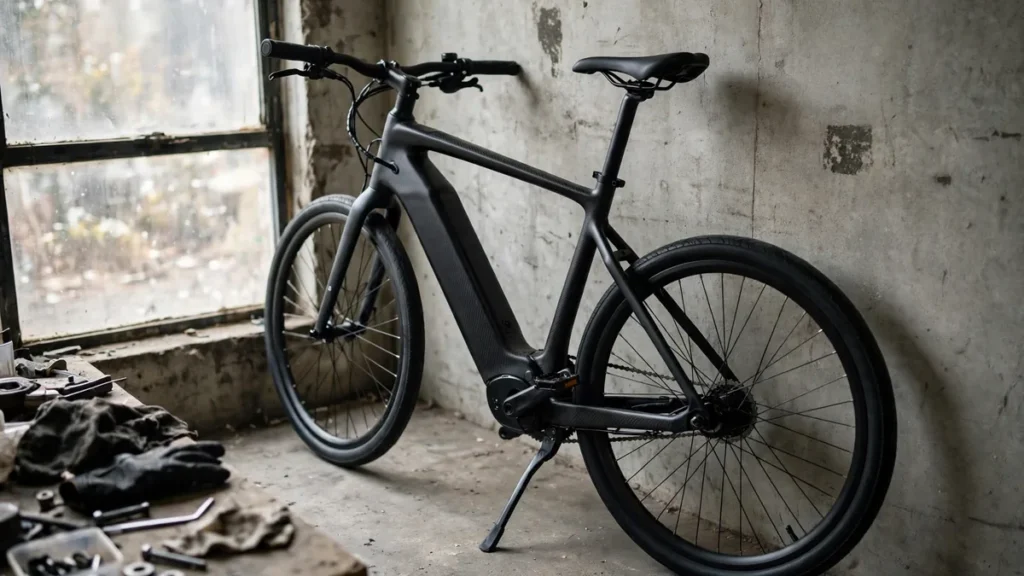
The ride itself is part of the story. Titanium is springy in a way that carbon is not: it absorbs small vibrations from the road and returns a little energy with each pedal stroke, giving a ride that owners describe as “alive” or “planing”. It is hard to measure and easy to feel, and it is one of the reasons riders who try titanium often refuse to go back. The same search for strength at low weight plays out in e-bike lightweight frame specs, and in carbon fibre or titanium: hypercar materials compared, where the same metal is chosen for the fastest cars on earth.
Is a Titanium Frame Worth It?
That depends on what you value. If you want the lightest frame, buy carbon. If you want the cheapest frame, buy aluminium. If you want a frame that rides beautifully, will not rust, will not fatigue, and will still be on the road in thirty years, titanium is the honest answer — and the price is the cost of that longevity. The price is high because the work is hard, the welder is rare, the metal is costly, and the frame is made once, by hand, for one rider.