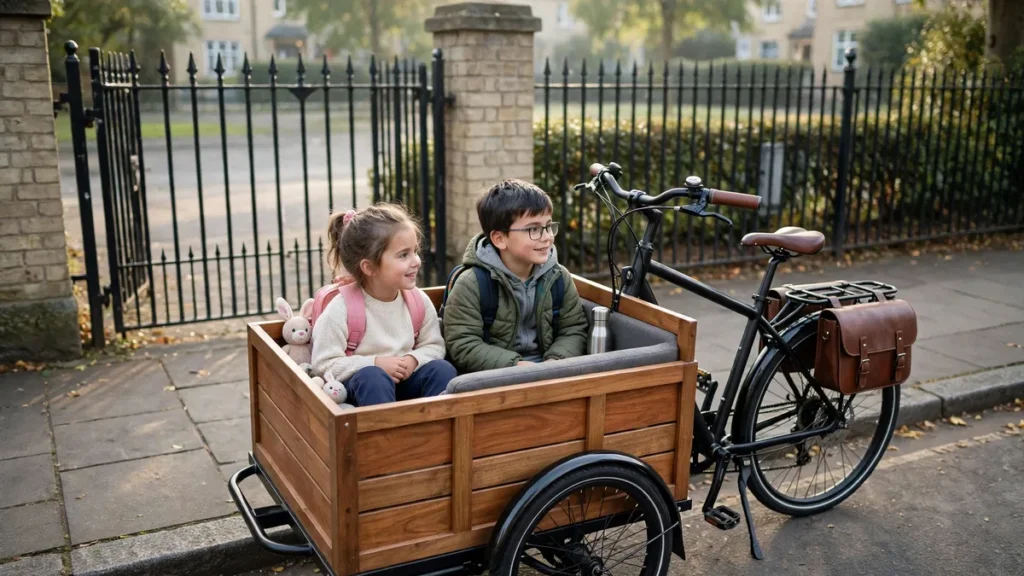
The school run in the morning looks ordinary until you notice what is doing the carrying. A parent pedals a long, low bicycle with a wooden box on the front, and inside the box are two children, a school bag, a violin case and a bag of shopping, all riding along as calmly as passengers in a car. Behind them, a courier pedals a different machine, a long bike with a huge rack at the back, stacked with parcels that would fill a small van. These are luxury cargo bikes, and they work by solving a problem that looks impossible: how to carry a heavy load on two wheels, at cycling speed, without tipping over, and without the rider arriving exhausted. The answer is a mix of electric power, clever geometry and a frame built like a small truck.
Step 1: The electric motor reads the rider’s legs
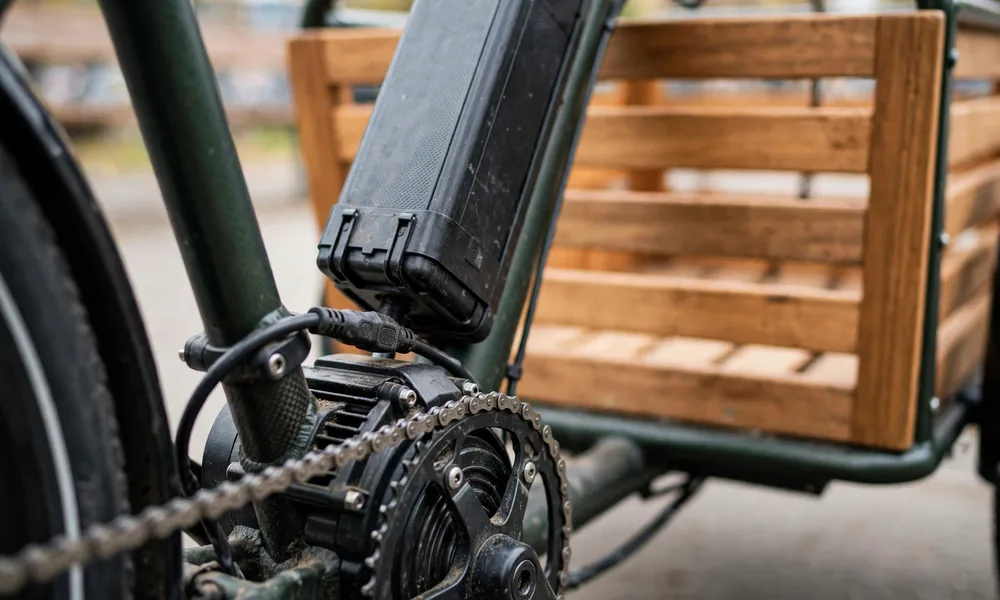
Everything starts with the motor, and on a luxury cargo bike the motor is not a throttle you twist but a helper that reads what your legs are doing. A torque sensor in the bottom bracket measures how hard the rider is pedalling, hundreds of times a second, and the motor adds power in proportion, so a gentle push gets a gentle boost and a hard push up a hill gets a strong one.
The battery is the size of a large water bottle or bigger, often 500 to 750 watt-hours, and it is locked into the frame where it is protected from rain and theft.
Step 2: The battery and controller manage the power
The battery is managed by a small computer, the controller, which decides how much power the motor may use and when. When the rider selects eco mode, the controller gives a small boost and the battery lasts for a hundred kilometres or more. In turbo mode it gives everything it has, and the range drops to forty or fifty kilometres, but a hill loaded with children becomes a gentle slope.
Charging is simple. The battery lifts out of the frame with a key and charges from a normal household socket in three to five hours, or it charges on the bike from a port under a flap. The cells are the same kind used in electric cars, and the battery is built to last thousands of charges, which is several years of daily use. The reason a good electric bike costs what it does is explained in the guide to why a luxury electric bike is so expensive, and the cargo bike spends most of that money in the same places, the motor and the battery, only bigger.
Step 3: The frame carries the load low and long
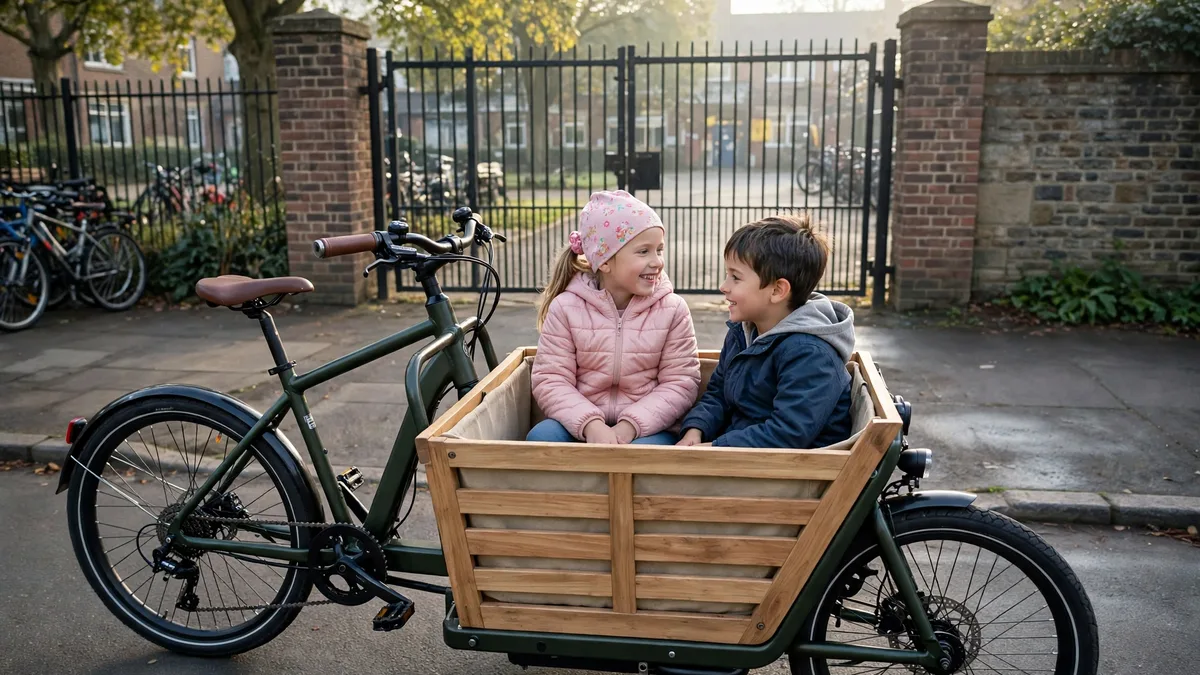
A cargo bike is not a normal bicycle with a box bolted on. The frame is built around the load, and there are two main shapes. A longtail stretches the rear of the bike, with a long rack behind the rider that carries children on a bench seat or panniers full of parcels. A box bike, sometimes called a bakfiets, puts the load in front, in a wooden or plastic box between the rider and the front wheel, steered by rods that run under the box.
Step 4: Brakes and tyres stop a heavy machine safely
The tyres are built for the same job. They are wide, often 55 millimetres or more, with a tough puncture-resistant layer and a tread that grips in the wet, and they run at lower pressures than a road bike, which gives them a bigger contact patch and a softer ride over bumps. The frame and the wheels are the parts that carry the load, and the electric skateboard shows the same idea in a smaller form, as the guide to how a luxury electric skateboard works explains, where a small motor and a strong deck do the work of a much bigger machine.
Step 5: Steering, balance and the stand keep it upright
A cargo bike is ridden differently from a normal bicycle, and the design helps the rider learn it. At low speed the long wheelbase makes the bike feel slow to turn, which is reassuring when the box is full, and at higher speed it feels planted, because the weight is low and the wheels are far apart. The rider steers with the handlebars and with small shifts of weight, and the bike responds gently, which is exactly what a passenger in the box wants.
Step 6: The box, the bench and the rain cover finish the job
The last part of a cargo bike is the part the passengers see, and luxury builders spend as much time on it as on the motor. The bench seat has seatbelts, often a three-point belt for each child, and a padded backrest, and there is room under the seat for bags and shopping.
A rain cover fits over the box, with clear windows so the children can see out and the rider can see in, and it folds away under the seat when the sun comes out. The whole bike is built to live outside in all weathers, with stainless steel bolts, sealed bearings and a chain or belt drive that needs little attention. The electric trike is the closest relative, a three-wheeled machine built for the same job, as the guide to how a luxury electric trike is made shows, and the cargo bike answers the same question, how to carry a load without a car, on two wheels instead of three.
Specifications
| Detail | Specification |
|---|---|
| Motor | Mid-drive, around 250 watts, up to 85 newton-metres |
| Battery | Around 500 to 750 watt-hours, removable |
| Range | Around 40 to 100 kilometres, depending on mode and load |
| Max load | Around 180 to 250 kilograms, bike plus load |
| Box capacity | Around 100 to 200 litres, two children plus bags |
| Weight | Around 35 to 50 kilograms, without load |
| Brakes | Hydraulic disc brakes, front and rear |
| Wheelbase | Around 1.9 to 2.3 metres |
What it costs
The estimated price of a new luxury cargo bike is around 5,000 to 10,000 dollars, and that figure is an estimate only, because the cost depends on the motor, the battery size and the box. The motor and battery account for a large share, followed by the frame and the box, and the seatbelts, rain cover and lights add the rest.
A rare fact
Few people know that cargo bikes are not a new idea at all. Bakers, butchers and postmen used them a hundred years ago, with huge front boxes and no motor at all, and the modern electric version is a return to that idea rather than an invention. The difference is the motor, which turns a job that once needed a strong pair of legs into something any parent can do on the way to school.