In a small workshop, under a single row of warm lights, an old car sits with its bonnet open and its interior stripped bare. The paint is faded, the chrome is dull, and the leather seats are cracked with age. It looks finished, a museum piece at best. Then a restorer runs a hand along its flank and smiles, because underneath the wear, the shape is still perfect.
A luxury classic car is not simply repaired. It is taken apart piece by piece, remade where it is worn, and put back together to a standard higher than the day it left the factory. Some are rebuilt from original parts, others are made anew with modern engineering hidden inside an old shape. This is how it is done.
Step 1: The car is stripped to its bones
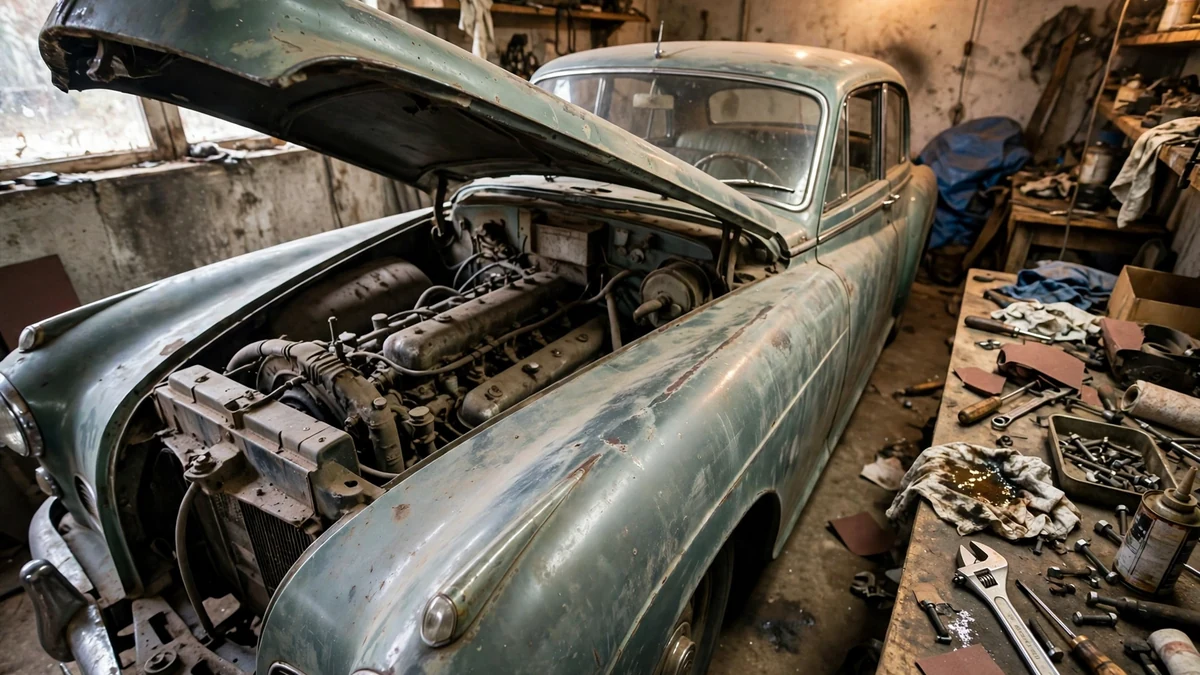
Restoration starts with careful dismantling. Every part is removed, labelled and photographed, from the smallest screw to the whole engine, so that each one can be put back in exactly the right place months later. The body is lifted off the chassis, the interior is taken out down to bare metal, and the wiring is unwound and mapped.
As the car comes apart, the restorer makes a list of what can be saved, what must be repaired and what must be remade from scratch. Original parts are precious, and even a worn badge or a cracked lens is kept if it can be restored, because originality is part of what makes a classic valuable.
Step 2: The body is repaired and shaped by hand
With the body bare, rust and old accident damage are cut out and new metal is welded in. On a classic car this is hand work: panels are shaped over wooden bucks and English wheels, hammered and smoothed until they match the original curves. There are no computer presses here, only skilled hands and the eye of a panel beater who knows the shape by heart.
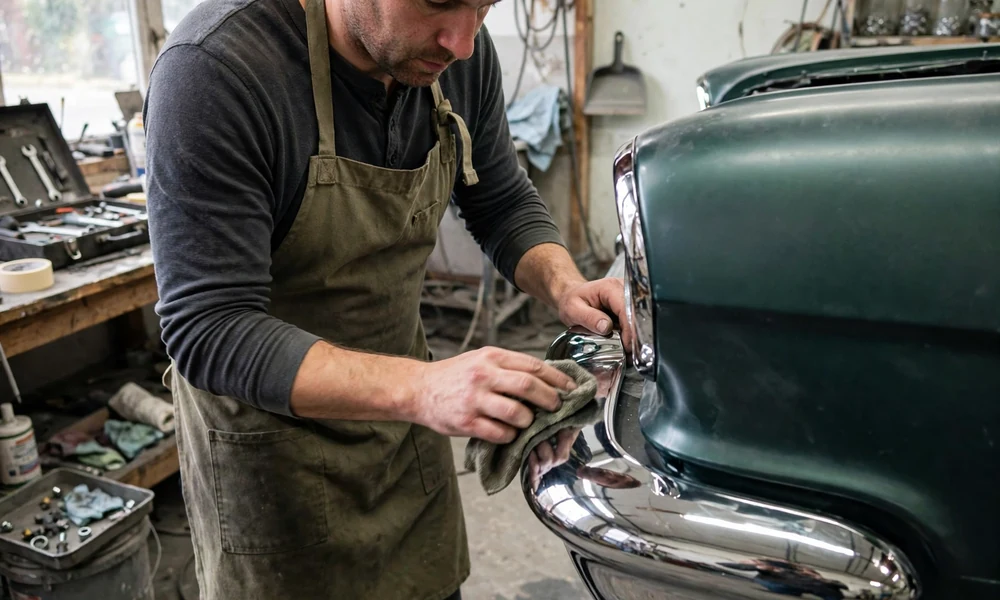
Once the metal is true, the body is primed and painted, often in the car’s original colour, mixed to match a sample from a hidden corner that the sun never reached. The paint is laid on in several coats and polished by hand, and the chrome is either re-plated or replaced. The open-top cars of the same era show the same hand shaping, as the guide to how a luxury roadster is made explains, and the closed classic follows the same slow path.
Step 3: The engine is rebuilt, not replaced
The engine is stripped to its last bolt and every part is measured. Worn cylinders are rebored, crankshafts are reground, and bearings and seals are replaced. Where an original part cannot be found, a new one is machined from drawings, or cast from an old part used as a pattern. The goal is an engine that looks original and runs better than it did when new.
Some builders go further and fit modern engineering inside the old shape: better brakes, electronic ignition or a stronger cooling system, hidden so the car still looks like itself. The high-powered muscle cars of the period took a different route to speed, as the guide to how a luxury muscle car is made shows, but the classic builder’s aim is smoothness and reliability, not raw noise.
Step 4: The chassis and suspension are restored
While the engine is away, the chassis is cleaned, repaired and painted. Suspension arms are checked for cracks, springs are tested or remade, and shock absorbers are rebuilt or replaced with modern units that look the same. Brakes are overhauled completely, because a classic that goes faster than it did when new must also stop better than it did.
Every bush, bolt and joint is replaced or restored, and the chassis is reassembled with the same care as the engine. A classic car should drive straight and true, not wander like an old machine, and that is decided here, on the bare chassis, long before the body goes back on.
Step 5: The interior is remade by hand
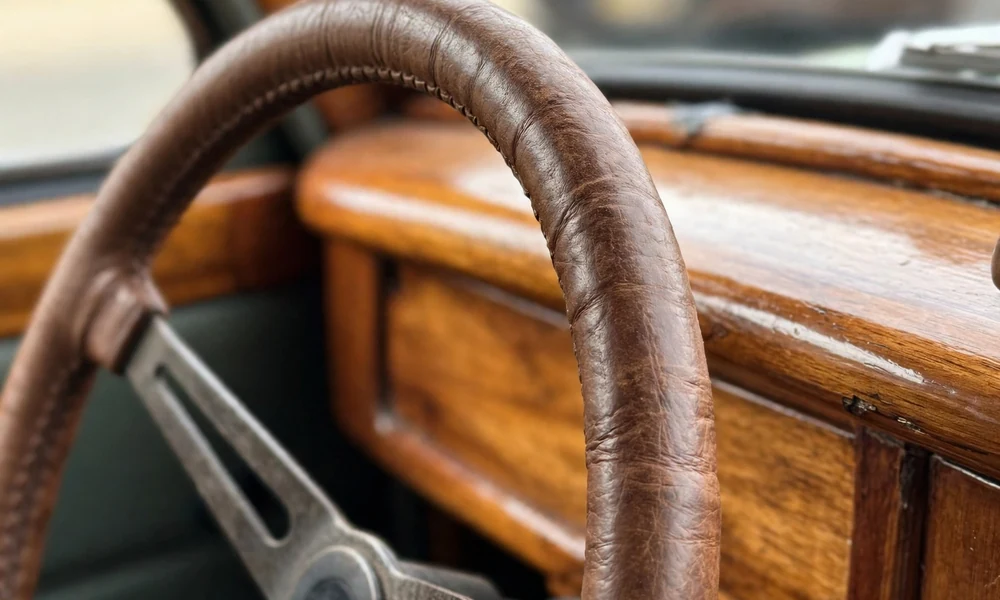
The cabin is where a classic shows its age most, and where restoration shows its craft most. Leather is cut and stitched to the original pattern, often from hides matched to the original colour and grain. Wood trim is stripped, repaired and re-polished, or cut new from the same species of timber, so the dashboard glows the way it did decades ago.
Carpets are woven to the original specification, headlinings are fitted by hand, and every switch and gauge is restored or rebuilt. The vintage cars of the same period share this approach to the cabin, as the guide to how a luxury vintage car is made explains, and the classic follows it stitch by stitch until the interior smells of leather and polish again.
Step 6: Reassembly, testing and final polish
Reassembly is the slowest part of all. The body goes back onto the chassis, the engine is lowered in, and every labelled part is fitted in the order the photographs recorded. Wiring is laid in fresh, the interior goes in last, and the car is filled with fluids and started for the first time, often after months or years of silence.
Then comes testing. The car is driven gently at first, then further and faster, while the restorer listens for noises and checks for leaks after every run. The engine is tuned, the brakes are bedded in, and the car is polished under bright lights. Only when it drives, stops and sounds right is it handed back, a car older than its owner in years and newer than most cars on the road in condition.
Specifications at a glance
| Feature | Typical luxury figure |
|---|---|
| Restoration time | About 12 to 24 months for a full rebuild |
| Engine | Original unit rebuilt, often 200 to 400 horsepower |
| Bodywork | Hand-shaped steel or aluminium, original colour |
| Interior | Hand-stitched leather, restored wood trim |
| Brakes | Rebuilt originals, sometimes with hidden modern parts |
| Weight | About 1,400 to 1,900 kilograms |
| Parts remade | Often hundreds, some machined from scratch |
What it costs
A full luxury classic restoration typically costs between about $150,000 and $500,000, and these are estimates, not fixed prices. The price depends on the car’s rarity, its condition at the start, and how much must be remade by hand. A rare model with missing parts costs far more than a common one with a sound body, and the value of the finished car can rise or fall with the market. Buyers pay for the craft and the history, and for a car that cannot be bought new at any price.
A rare fact
Some classic cars are worth more taken apart than whole, because a single original part, a badge, a steering wheel or a set of gauges, can be almost impossible to find. There are stories of a restoration waiting two years for one small brass fitting, while the rest of the car sat finished and waiting in the workshop.
From bare metal to polished chrome, a luxury classic car is made twice: once in its own era, and once again by the hands of a restorer. The second making is slower, more careful, and in the end it is what keeps the first one alive.