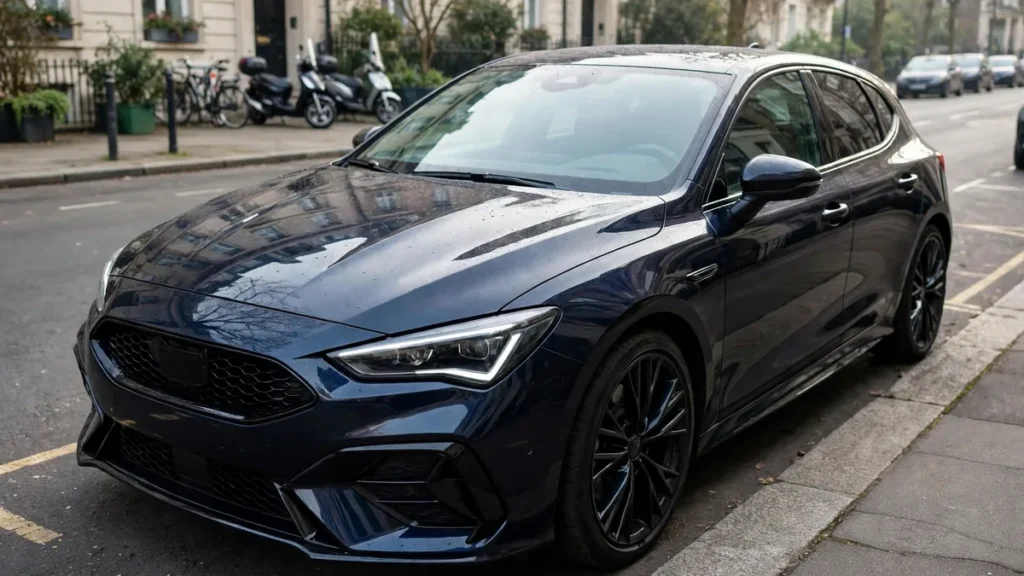
On a country road at dusk, a long car glides past, lower and longer than the hatchbacks around it, with a roofline that slopes all the way to the tail and a load area that opens like a van. The driver has a dog in the back, two suitcases, and a bicycle, and the car has swallowed them all without a roof box, without a trailer, without a fuss. The car is a luxury station wagon, the longest car its maker builds that is not a limousine, and it is built for people who want a fast car, a comfortable car and a useful car, all in the same shape.
This is how a luxury station wagon is made, in seven steps, from the first steel to the day the car is handed over to its owner: the body, the roof, the engine, the interior, the load area, the electronics and the testing that proves it all works.
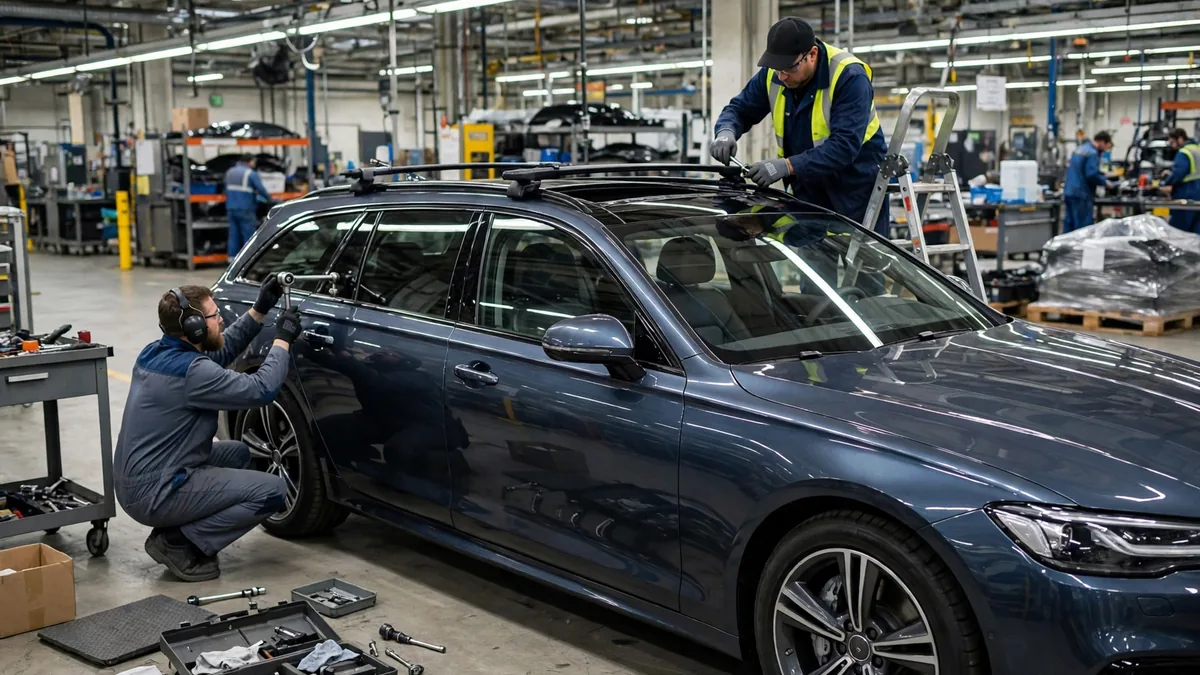
Step 1: Stretching a body without weakening it
Everything starts with the body, and a station wagon body is a saloon body stretched, which sounds simple and is not. The roof must run further back, the rear doors must be longer, and the whole structure must stay stiff, because a long car that flexes will rattle, and a rattling luxury car is a failed luxury car. The body is then dipped against rust, and the guide to how a luxury classic car is made follows an older kind of long body through the same factory, where the steel was thicker, the welding was done by hand, and the roof was the hardest panel to get right.
Step 2: Fitting a tailgate that is a door, a window and a roof
The tailgate of a station wagon is the most complicated panel on the car, because it must do three jobs: open the load area, carry the rear window, and seal against rain and noise. It is made from steel or aluminium, pressed and welded, and fitted with struts that hold it open while the owner loads, and a motor that closes it at the touch of a button.
Step 3: Fitting an engine that pulls a long, heavy car
A station wagon is heavier than the saloon it is based on, so its engine must pull harder, and most luxury wagons use a turbocharged six-cylinder, or a hybrid that adds an electric motor for low-speed pulling. The engine is lowered into the body from above, and the exhaust is routed under the load area, where it must be shielded from luggage, and the guide to luxury classic car specs, explained sets out the numbers for an older kind of engine, where the power was less, the noise was more, and the pulling was done by size rather than by turbocharging.
Step 4: Building an interior for four people and a dog
The interior of a luxury station wagon is built for people who travel with things, and the seats are shaped for long journeys, with leather that is stitched by hand and heating in both rows. The rear seats are wider than in a saloon, because the car is wider at the back, and they fold flat in sections, so the owner can carry a bicycle and a passenger at the same time. The interior is also quieter, because the load area is a great echoing box, and it is lined with sound-deadening material, so the car sounds like a saloon, not a van, even with the seats folded down.
Step 5: Engineering the load area like a room
The load area is the reason the wagon exists, and it is engineered like a room, not like a boot. The floor is flat, low and wide, so heavy things slide in without lifting, and it is covered in carpet that can be removed and washed, because dogs and bicycles are not clean. The sides carry nets, hooks and a rail, so luggage can be tied down, and the floor hides a spare wheel or a battery, and a compartment for the tools.
Step 6: Wiring the electronics that watch the road
Behind the dashboard, a luxury station wagon carries the same electronics as its saloon sister, and more besides. The wiring is fitted by hand, loom by loom, and the software is loaded and tested on the line, and the car is driven onto a rolling road, where the engine, the brakes and the electronics are tested at speed. The air suspension, fitted to many luxury wagons, is tested too, because it must keep the car level whether the load area is empty or full, and a wagon that sags at the back when it is loaded is a wagon that has failed its own purpose. The guide to how a luxury vintage car works follows an older car through the same test track, where the suspension is simpler, the ride is harder, and the driver feels every bump the modern wagon hides.
Step 7: Testing a long car on a short track
Before it leaves the factory, every luxury station wagon is tested on a track with bumps, potholes and a water trough, and it is checked for rattles, leaks and squeaks, with special attention to the tailgate, because a tailgate that rattles is the commonest fault on a wagon. The brakes are tested, the lights are tested, and the car is driven at speed, where a technician listens for wind noise around the long roof and the tailgate seals.

What it costs
A luxury station wagon typically costs an estimated $55,000 to $110,000, depending on its engine, its trim and the standard of its interior. The estimate covers the car alone, not the insurance, the servicing or the options, which are a real part of buying a long car with a big badge, and which can add thousands before the car ever leaves the showroom.

A rare fact
One detail few buyers ever learn is that the tailgate of a station wagon is tested by a machine that opens and closes it tens of thousands of times, more times than the car will ever be used in its life. The test runs day and night, and the tailgate must still close perfectly at the end, with the same millimetre gap it started with, because the tailgate is the door the owner uses most, and the door that must never fail, in rain, in cold, or with a dog waiting to get in. A tailgate that has survived the test has been opened and closed more times than most owners will manage in twenty years of Sundays.
Follow the seven steps in order, body first, then tailgate, engine, interior, load area, electronics and testing, and a luxury station wagon stops looking like a saloon with a big boot and starts looking like what it is: a car designed from the start to carry people and their lives, fast, quietly, and without ever asking them to leave anything behind.