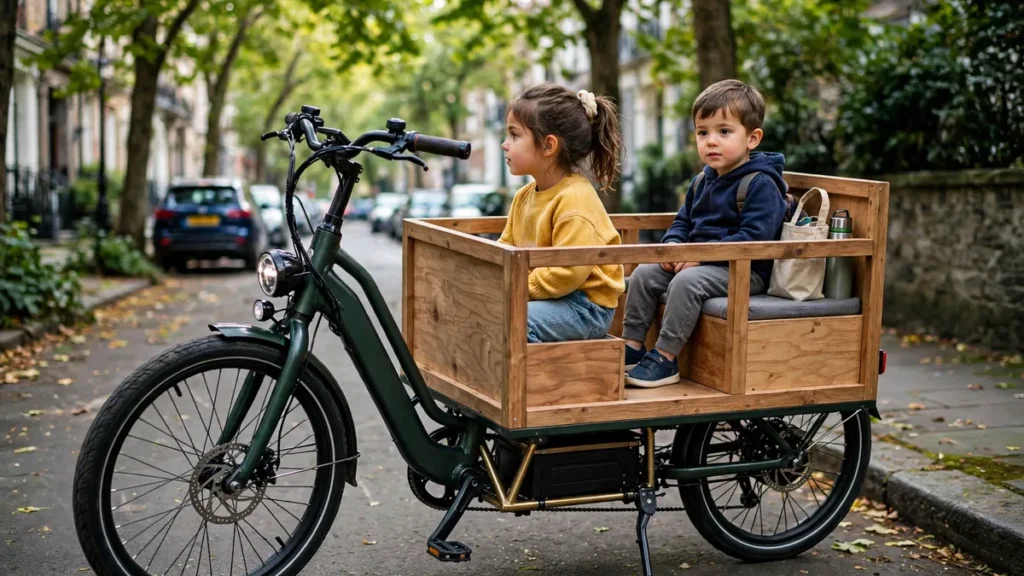
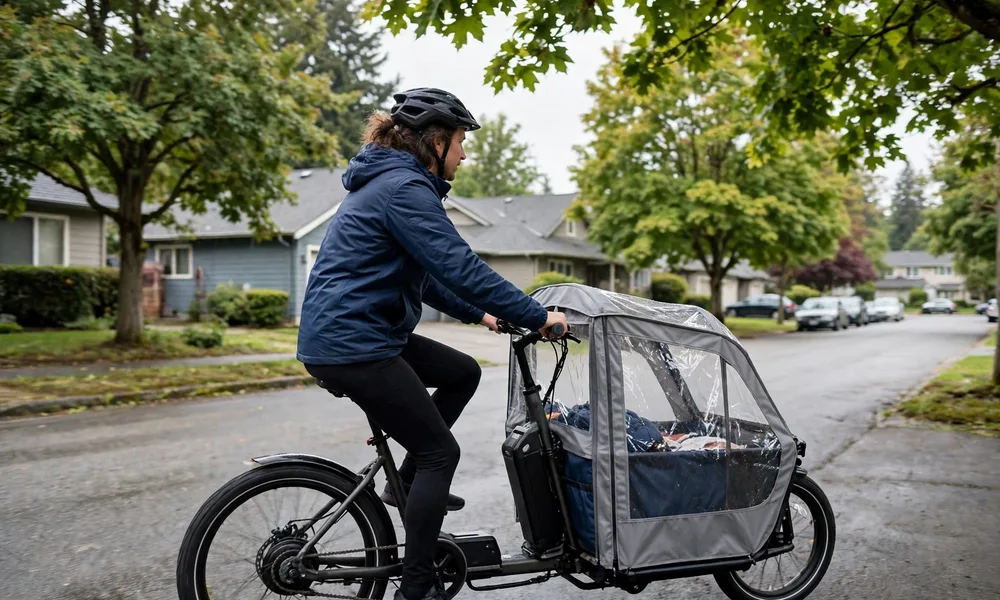
At the school gate on a rainy morning, the cars queue bumper to bumper while a parent glides past on something that looks like a bathtub on two wheels, two children laughing under a rain canopy in front, a week of shopping stacked behind. The luxury electric cargo bike has quietly become the second car for a growing number of families, and building one is closer to building a small vehicle than to building a bicycle. It has to carry the weight of two adults, stop safely in the wet, and survive being parked outside in all weathers.
The factories that make the best ones borrow as much from car manufacturing as from bike building: welded frames are checked on jigs, motors are tested under load, and every load box is sealed against rain. The result is a machine that can replace a car for most daily trips, and the build process explains why it costs as much as a good used hatchback. Here is how a luxury electric cargo bike is made, step by step.
How It’s Made
Step 1: A long, stiff frame is welded on a jig
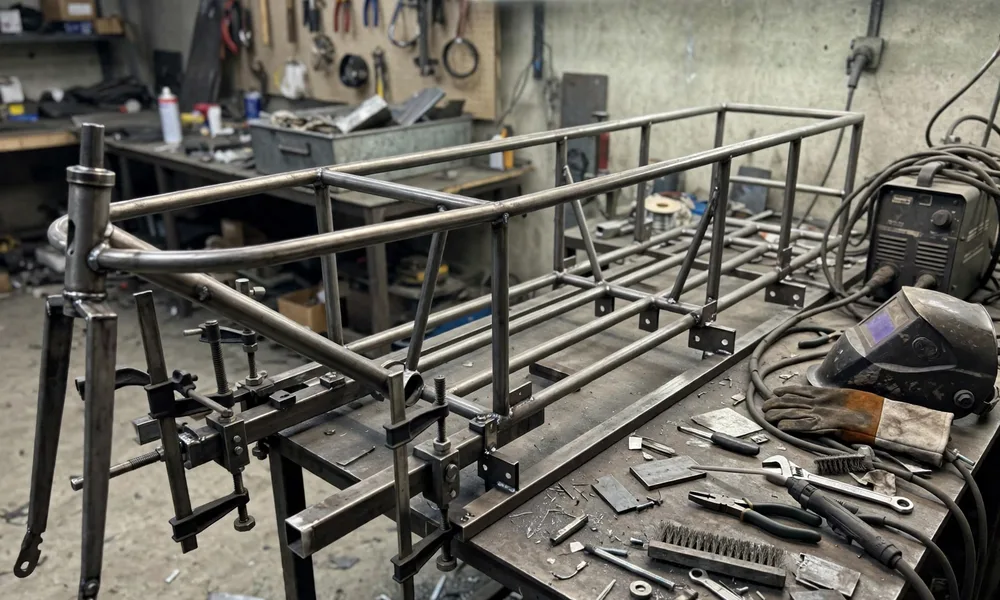
A cargo bike starts as a much longer frame than any normal bicycle, often two metres or more from end to end, because the load has to sit low and between the wheels rather than perched on a rack. The main tubes are oversized aluminium or steel, welded on a steel jig that holds every joint in exactly the right place while the welds cool, so the frame comes out straight. The head tube angle is slacker than on a road bike, which keeps the steering calm when the front box is fully loaded, and the rear triangle is reinforced to take a second battery or a child seat. Each frame is measured after welding, and any frame that is out by more than a millimetre is cut apart and redone.
Step 2: The load box or platform is built and sealed
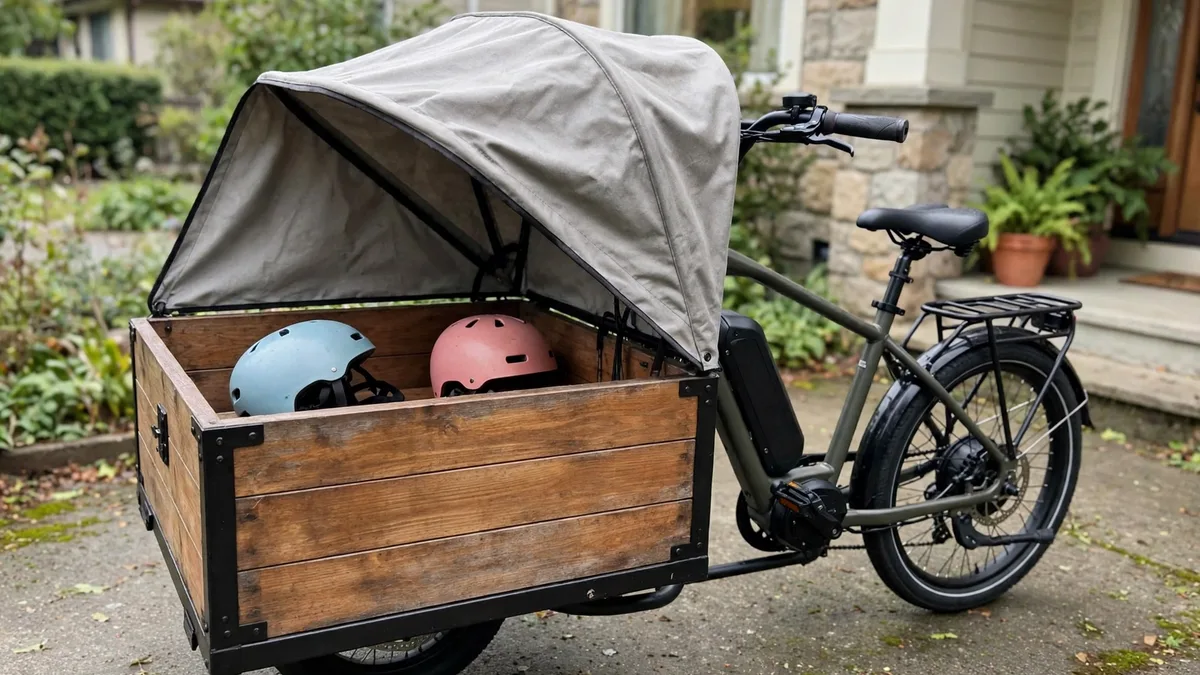
The box is the reason the bike exists, so it gets the attention a car boot would. On family models it is a deep box of marine plywood or moulded composite, lined with washable material and fitted with seat belts, padded benches and a rain canopy that folds away. On delivery models it is a flat platform with rails and straps. Every joint is sealed against rain, drainage holes are drilled in the floor, and the box is bolted to the frame through rubber mounts that absorb vibration. Builders fill the box with sandbags and ride it over bumps, checking that nothing rattles, leaks or works loose.
Step 3: A powerful mid-drive motor is fitted
Carrying 100 kilograms of children and shopping up a hill needs far more torque than a normal e-bike motor can give, so luxury cargo bikes use a mid-drive motor at the bottom bracket, typically rated at 250 watts but producing 85 newton-metres of torque or more. The motor drives the chain directly, which lets the gears multiply its effort on steep climbs, and a torque sensor measures how hard the rider is pedalling hundreds of times a second, adding assistance that feels natural rather than pushy. The motor is sealed against rain and dust, bolted to a reinforced mount, and tested on a bench under full load before it is allowed near a frame.
Step 4: Big batteries and careful wiring
Range matters more on a cargo bike than on any other e-bike, because running out of power with two children aboard is not an option. Most luxury models carry a large battery of 500 to 750 watt-hours, and many accept a second pack for a combined range of well over 100 kilometres. The packs are locked into the frame or under the load box, where their weight sits low and keeps the bike stable, and the wiring runs inside the tubes, protected from rain and from curious small hands. A smart charger and a battery management system watch every cell, and the display on the handlebars shows range, assistance level and remaining charge at a glance.
Step 5: Brakes, wheels and steering built for weight
Stopping a loaded cargo bike is a serious engineering task, so the brakes are four-piston hydraulic discs with large rotors, the kind of hardware more often seen on a motorbike. The wheels are built with thick spokes and wide, puncture-resistant tyres, and the front wheel on a two-wheel model is often smaller than the rear so the load box can sit lower. Steering gets special treatment too: a steering rod or cable links the handlebars to the front wheel on long models, and a steering damper stops the heavy front end from flopping at low speed. Every bolt on the steering is checked twice, because a failure here would be dangerous.
Step 6: Accessories, testing and the loaded road test
The final stage adds the details that make the bike usable every day: integrated lights powered by the main battery, a sturdy double-leg kickstand that holds the bike upright while children climb in, mudguards, a lock, and a rain canopy. Then the bike is loaded with sandbags to its maximum rated weight and ridden over a test course of bumps, corners and a steep hill, with a technician checking the brakes, the steering and the motor temperature. The gears are tuned under load, the box is wiped down, and the bike is delivered with its charger and a manual that explains the weight limits honestly.
Cargo E-Bike Specifications
| Specification | Typical luxury figure |
|---|---|
| Frame | Oversized aluminium or steel, extended wheelbase |
| Motor | 250 W mid-drive, about 85 Nm torque |
| Battery | 500–750 Wh, dual-battery option |
| Load capacity | About 100–180 kg including rider |
| Box | Marine plywood or composite, seats for two children |
| Range | About 60–120 km per charge (estimate) |
| Brakes | Four-piston hydraulic disc brakes |
| Weight | About 35–50 kg before loading |
How Much Does One Cost?
A luxury electric cargo bike typically costs between about $6,000 and $12,000, with fully equipped family models with a rain canopy, second battery and child seats reaching $14,000 or more. Those are estimates based on current premium models. It sounds like a lot for a bicycle, until it is compared with the running costs of a second car: no fuel, no insurance in most places, no parking fees, and servicing that costs a fraction of a car’s. For families who use it daily, the bike often pays for itself in two or three years.
A Rare Fact
The cargo bike is not a new idea that electric power invented — it is a revival. In the 1930s, delivery companies in Copenhagen and Amsterdam ran fleets of heavy cargo bikes, and the Danish postal service used them for decades. What changed is the motor: early cargo bikes needed a strong rider and flat ground, while a modern mid-drive lets an ordinary parent carry a load that would have needed a small van a century ago. The box, the long frame and the upright riding position are all older than the car itself.
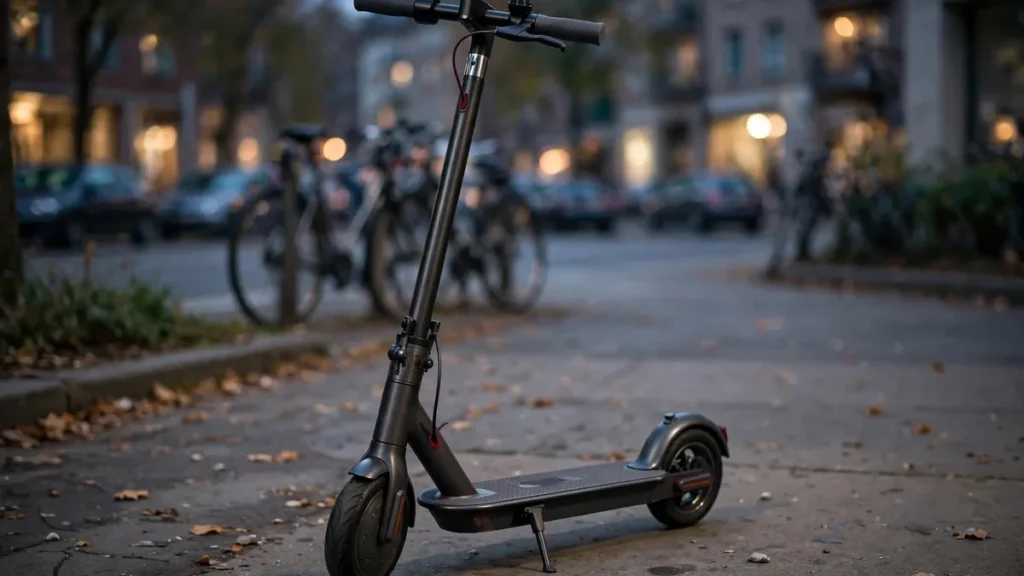
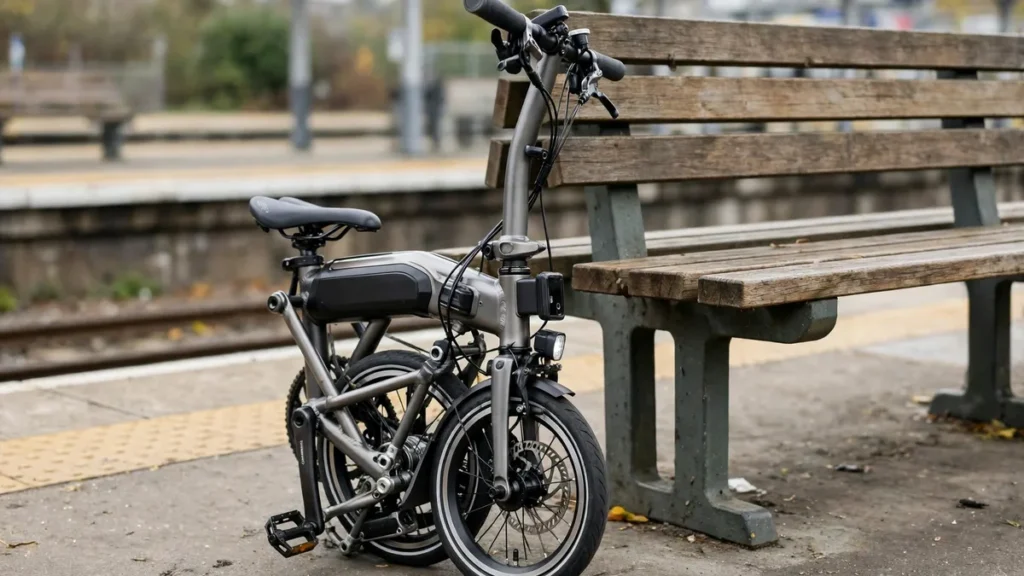
A cargo bike is, in the end, a small vehicle wearing a bicycle’s clothes, and its build borrows from both worlds. The motor technology is shared with a electric dirt bike, the weatherproofing and road manners owe something to a electric moped, and the stability thinking comes from the same place as a electric trike. What makes it special is not any single part but the way the parts are sized for a job no ordinary bike can do: carrying the family, the shopping and the school run, every day, without a drop of fuel.