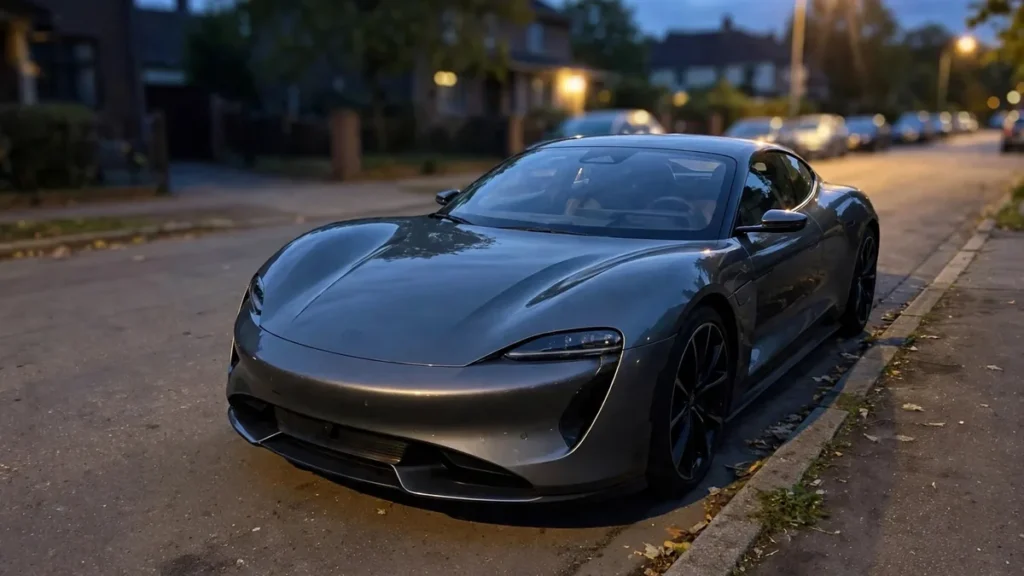
The light is still low over the test track when the car rolls out of the garage, and the first thing you notice is what you do not hear. The car simply glides forward, tyres whispering on cold asphalt, and then the driver presses the pedal and the whole scene changes. In a little over two seconds it is a shrinking shape at the far end of the straight.
That is the strange magic of a luxury electric sports car. It has to be two things at once: a machine fast enough to frighten you and a cabin calm enough to hold a quiet conversation at motorway speed. Almost every part, from the floor to the roofline, is shaped by the weight and the shape of the battery, and by the need to keep that weight low and centred.
Few cars on the road carry as much engineering in as little space. A single battery pack can weigh more than half a tonne, yet it must sit low enough that the car corners flat, strong enough to survive a crash, and cool enough to deliver full power again and again. This is how that car is made, step by step, from bare metal to the first silent launch.
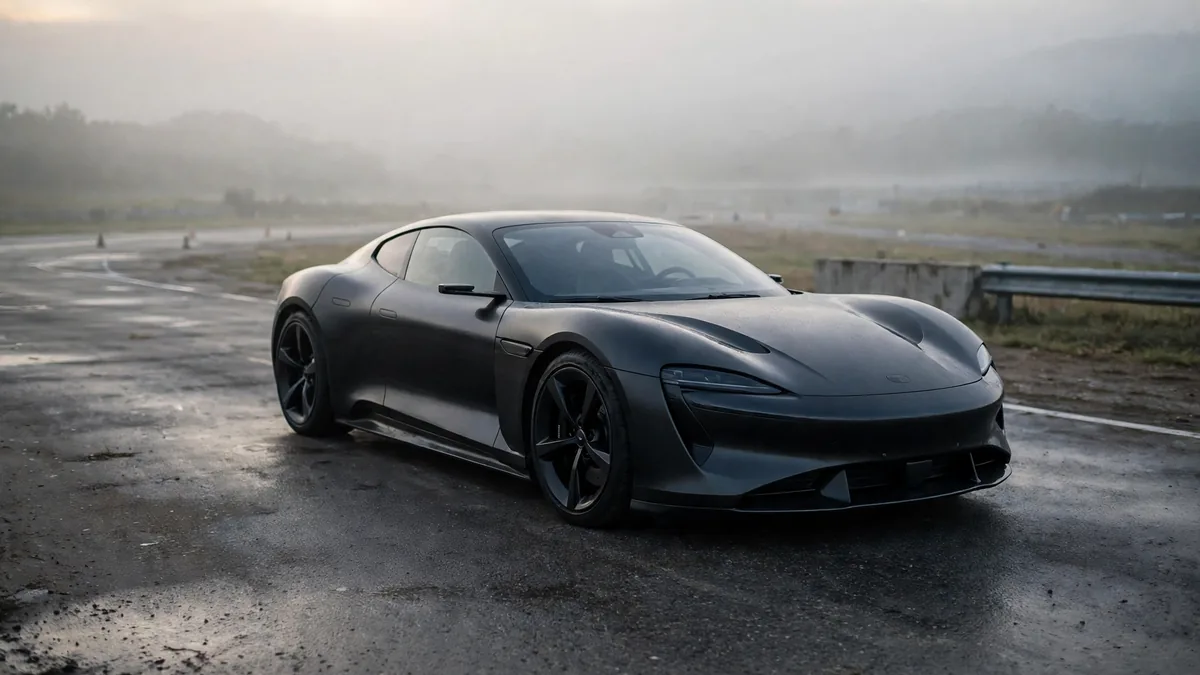
How a Luxury Electric Sports Car Is Made
Step 1: The battery pack comes first
Every luxury electric sports car starts with its battery, because the battery decides the shape of everything else. Thousands of cylindrical or pouch cells are grouped into modules, and the modules are bolted into a sealed metal tray that forms the floor of the car. The tray is usually made from extruded aluminium, with cooling channels running between the modules so that coolant can carry heat away during hard driving and fast charging. Once sealed, the pack is pressure-tested before the rest of the car grows around it.
Step 2: A chassis built around the floor
With the battery tray acting as the floor, engineers build the chassis up and out from it. Most luxury electric sports cars use an aluminium spaceframe, a skeleton of cast joints and extruded rails bonded and bolted together, while some mix in carbon fibre for the central tub to save weight where it matters most. The tray itself adds stiffness, turning the floor into a structural member that resists twisting when the car corners hard. Our guide to luxury sports car specs explains how those numbers translate into grip and speed on the road.
Step 3: Motors, one or two or three
The motors of an electric sports car are small enough to hold in your arms and strong enough to twist the tyres loose. Most luxury models use one motor on each axle, and the fastest add a second motor at the rear, giving three in total and true torque vectoring — the car can send more power to the outside rear wheel in a corner and pull itself around. The motors are bolted directly to the chassis and connected to the wheels through short driveshafts and single-speed gearboxes, which is why an electric sports car has no gear changes to interrupt its acceleration.
Step 4: Body panels shaped by hand
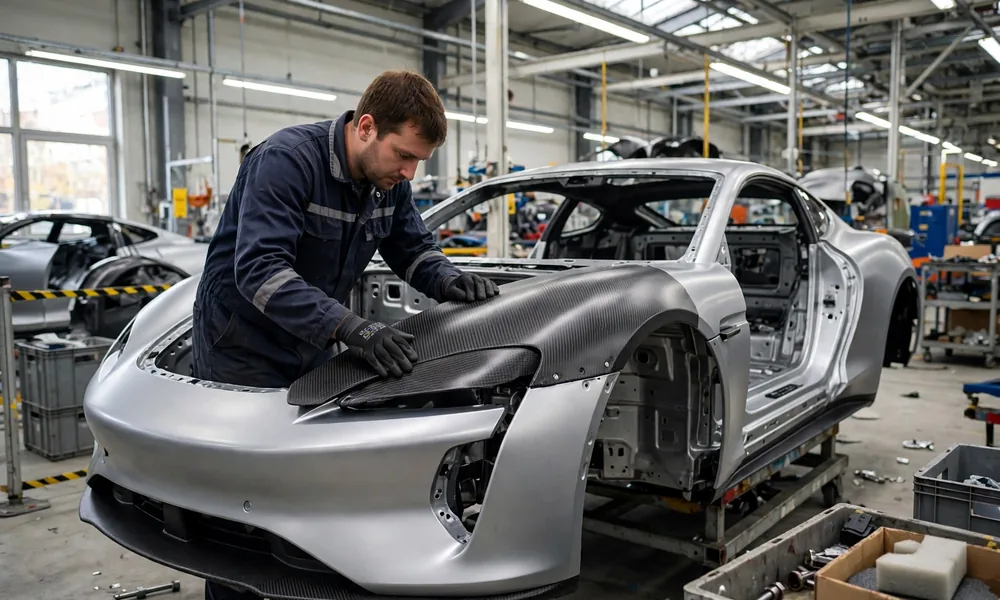
The body of a luxury electric sports car is where engineering meets sculpture. Panels are pressed from aluminium or laid up in carbon fibre, then fitted by hand, panel by panel, on the painted body shell. Because there is no exhaust or engine heat to manage, designers can seal the underside almost flat, smoothing the airflow beneath the car and cutting drag. A full battery is only useful if the body lets the car use it well, as our guide to how an EV battery pack is made shows in detail.
Step 5: The cabin, quiet by design
Inside, the cabin of a luxury electric sports car is built around silence. Without an engine to mask road and wind noise, every rattle becomes audible, so engineers fit acoustic laminated glass, dense insulation in the doors and floor, and specially tuned tyres that hum less at speed. The dashboard is a mix of stitched leather, brushed metal and one or two large screens, and the seats are shaped to hold a driver through hard cornering without feeling like a race harness. The result is a cabin that feels calm at a crawl and focused at full speed, two moods that a normal sports car rarely offers together.
Step 6: Software and the first power-on
Before the car ever moves under its own power, it is switched on and taught to be a car. Engineers load the software that controls the motors, the battery, the brakes and the steering, then calibrate each system against the others. The regenerative braking is tuned so that lifting off the pedal slows the car smoothly and feeds energy back into the battery. This first power-on takes hours, and it ends with the car rolling slowly down a line of test rigs that check every light, sensor and warning chime. Battery size alone does not decide range or speed, and our guide to luxury hypercar battery specs explains which figures actually matter.
Step 7: Testing, tuning and the final sign-off
The finished car goes to the track, where test drivers push it through the same corners again and again, reporting on steering feel, brake bite and how the car behaves when the battery is hot and nearly empty. Engineers adjust the suspension, the software and even the tyre pressures between runs, chasing a car that is fast without being nervous. Only when the test sheets are clean does the car get its final polish, its badges and its keys. From bare tray to signed-off car, the build has taken weeks of hand work, and the result is a machine that can outrun almost anything on the road without making a sound about it.
Luxury Electric Sports Car Specs
| Specification | Typical range |
|---|---|
| Battery capacity | About 70 to 100 kWh |
| Power output | About 450 to 750 kW |
| 0 to 100 km/h | About 2.5 to 3.5 seconds |
| Motors | Two or three, one per axle plus a second rear motor |
| Chassis | Aluminium spaceframe, often with a carbon fibre tub |
| Range | About 400 to 550 km |
| Kerb weight | About 1,800 to 2,200 kg |
| Top speed | About 250 to 320 km/h |
What Does a Luxury Electric Sports Car Cost?
A luxury electric sports car is estimated to cost roughly $150,000 to $250,000 for a two-motor model, while a three-motor flagship is estimated at $250,000 to $400,000 or more. Prices are estimates only and vary by battery size, power, materials and options.
A Rare Fact
Some luxury electric sports cars are quieter inside at full throttle than a normal family car is at idle. The silence that makes the car feel luxurious also makes it the hardest car in the factory to keep quiet.

A luxury electric sports car is a contradiction built by hand: a silent car that is violent off the line, a heavy battery that makes the handling sharper, a cabin that is both a calm room and a cockpit. The next time one passes you without a sound, remember what went into it — a floor full of cells, a skeleton of aluminium and carbon, and weeks of work spent making all of it disappear behind a single press of the pedal.