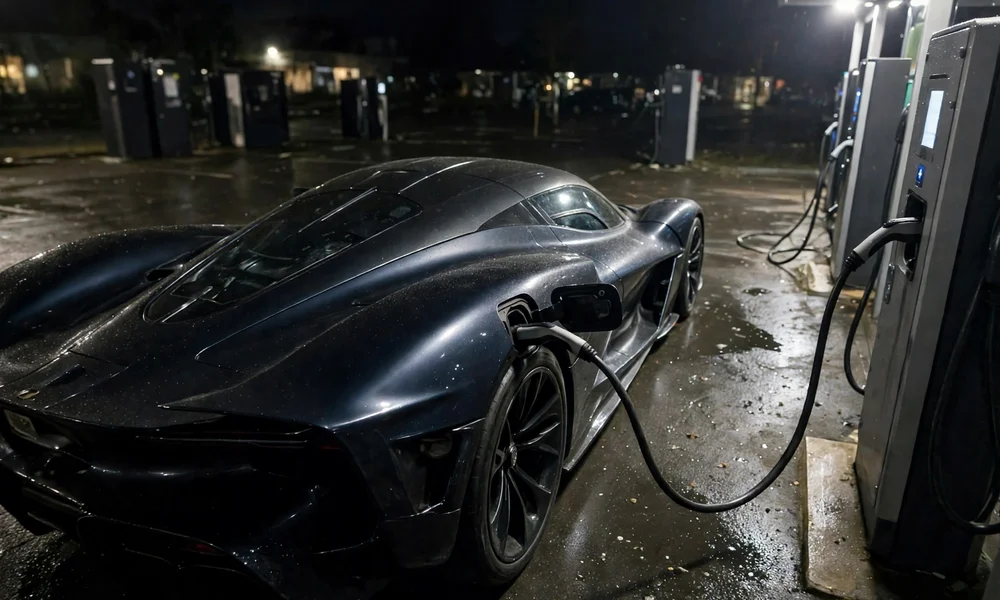
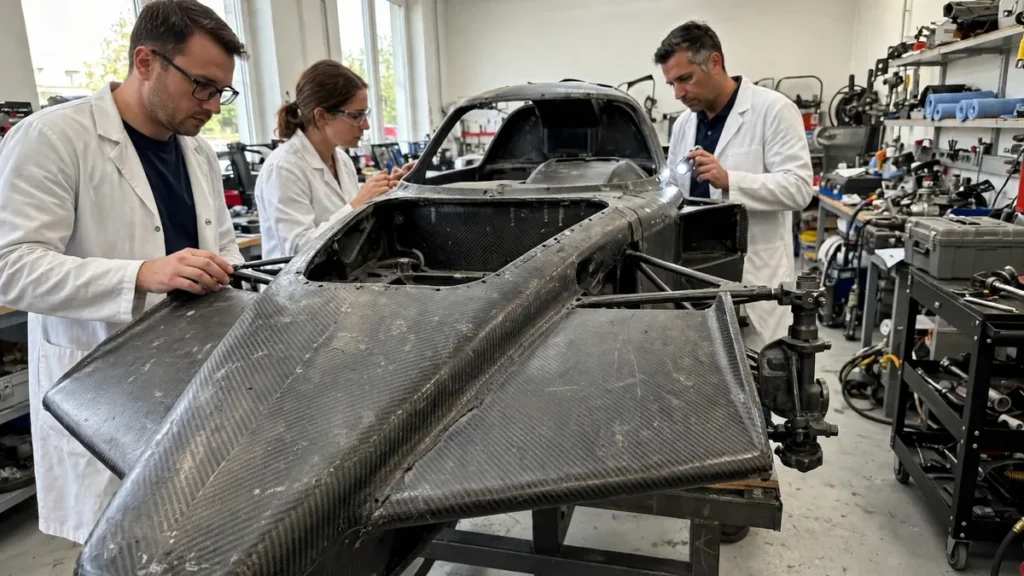
A hypercar battery is not a bigger version of the battery in an electric family car. It is a structural, armoured, liquid-cooled energy store that must deliver a thousand horsepower in bursts, survive the heat of a racetrack, protect its occupants in a crash, and still leave room for a driver to sit low in a car shaped like a wing. The spec sheet is the only honest way to compare them, because two hypercars with the same headline power can behave completely differently once the battery is involved.
The confusion starts with capacity. A hypercar battery is often small — sometimes under 20 kilowatt-hours — which looks unimpressive next to a family electric car with three times the storage. But a hypercar battery is built for power, not range: it is designed to dump its energy in seconds and take it back just as fast under braking. The numbers that decide a lap time are discharge rate, cooling capacity and weight, and they are the numbers most brochures bury.
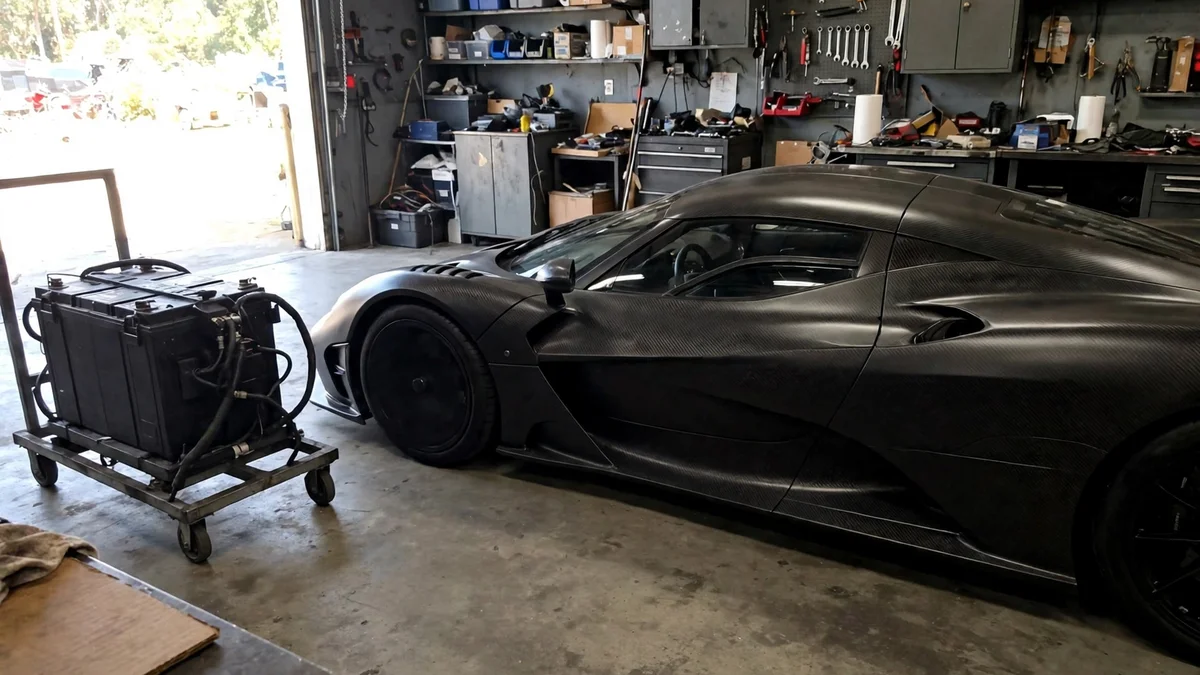
Full specifications
| Specification | Typical figure |
|---|---|
| Battery chemistry | Lithium-ion, high-power NMC or LFP cells |
| Capacity | 8–25 kWh usable |
| Nominal voltage | 800–900 V architecture |
| Peak discharge power | 500–1,000 kW |
| Continuous discharge power | 200–400 kW |
| Peak charging power | 200–350 kW DC |
| Cell cooling | Liquid cooling, direct or cold-plate |
| Pack weight | 120–350 kg |
| Energy density (pack level) | 150–250 Wh/kg |
| 0–100 km/h (car) | 2.3–2.8 seconds |
| Electric-only range | 20–60 km |
| Pack structure | Carbon fibre or aluminium enclosure, structural member |
| Crash protection | Armoured casing, pyrotechnic disconnect |
| Operating temperature | 15–45°C, actively managed |
| Cycle life | 1,000–2,000 full cycles |
What each key spec means in practice
Capacity is the number everyone asks about first and the one that matters least for performance. Eight to twenty-five kilowatt-hours is a small tank by electric-car standards, but a hypercar does not need to drive far on battery power alone; it needs to deliver enormous power for short periods. A small, high-power pack can push out a thousand kilowatts for a few seconds, which is what launches the car and fills the gaps in the engine’s power delivery. The hypercar hybrid specs explained shows the same logic from the drivetrain side: the battery is a booster, not a fuel tank, and its size is chosen for the job.
Peak discharge power is the number that actually decides acceleration. Five hundred to a thousand kilowatts is the rate at which the pack can release energy, and it is limited by the cells, the busbars, the cooling and the inverters working together. A pack that can sustain its peak for ten seconds will feel violently fast; a pack that can only hold it for two seconds before the software pulls back will feel fast once and then ordinary. The gap between peak and continuous discharge power — the second figure on the sheet — is the honest measure of a hypercar battery, because it tells you how long the car can keep its full performance on a track.
Voltage is the quiet revolution in the spec sheet. An 800- or 900-volt architecture lets the car move the same power with less current, which means thinner cables, less heat and faster charging. It is also what makes the 200–350 kW DC charging figure possible: at 400 volts the same power would need double the current and far more cooling. The way electric supercar battery cooling works explains why voltage and cooling are inseparable — the faster you charge or discharge, the more heat you make, and the cooling system is what sets the real limit.
Pack weight is the spec that shapes the whole car. At 120 to 350 kilos, the battery is one of the heaviest single components, and where it sits decides the car’s balance. Most hypercars mount the pack low and central, often behind the seats or along the spine of the chassis, so the weight helps rather than hurts handling. Some packs are structural, meaning the battery enclosure itself carries chassis loads, which saves the weight of a separate frame. A heavy pack is not automatically a bad pack — a well-placed 300 kilos can be better than a poorly placed 150 — but every kilo costs acceleration, braking and tyre life. Engineers also use the pack as ballast: on some cars the battery is deliberately placed to move the centre of gravity rearward, improving traction under acceleration.
Cooling is the difference between a hypercar battery and a road-car battery. Liquid cooling, often with a cold plate under every module or even direct immersion of the cells, keeps the pack inside a narrow temperature window while it is being charged and discharged at extreme rates. Without it, the pack would overheat within a lap and the software would cut power to protect the cells. The solid-state supercapacitor explained points to one possible future here: devices that can absorb and release energy even faster than today’s cells, though they remain experimental in hypercars for now.
Cycle life is the number owners discover late. One thousand to two thousand full cycles sounds generous, but a track-day hypercar can cycle its small pack several times in a single day, so the battery ages faster than the battery in a family electric car. Manufacturers manage this with careful thermal control and by keeping the pack away from full charge and full discharge, using only the middle of its capacity most of the time. A replacement pack is one of the most expensive parts on the car, which is why a hypercar’s battery health report has become a standard part of any pre-purchase inspection.
What it costs
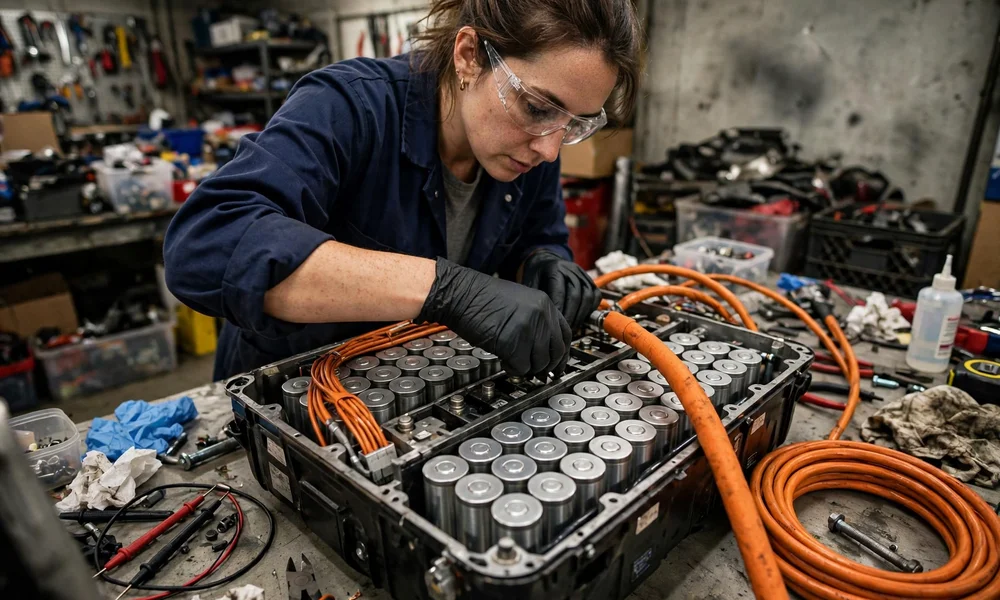
Estimates put a replacement hypercar battery pack at roughly $50,000–$200,000 depending on the car, which is why the pack is usually covered by a long warranty and why battery health dominates the used market. The car itself typically costs $2–4 million, so the battery is a small share of the purchase price but a large share of the running risk. Charging is cheap by comparison: a full charge at home costs a few dollars, and even DC fast charging is a rounding error next to tyres and brakes. The real cost of a hypercar battery is not the electricity — it is the eventual replacement, and the care needed to delay it. Some owners budget for a battery health check at every service, since a clean report can be worth tens of thousands when the car is sold.
A rare fact
Some hypercar battery packs are so precisely built that the cells are matched by hand: technicians measure every cell’s internal resistance and capacity, then group cells with near-identical behaviour into the same module. A single weak cell would limit the whole pack, so the matching process is closer to watchmaking than to car assembly. It is one reason a hypercar battery takes far longer to build than the battery in a mass-market electric car, and why two cars that look identical on a spec sheet can feel different on the road.