The lights go green and the car does not so much accelerate as detonate. There is no build-up, no waiting for revs, no gear change to break the push — just a single, unbroken surge that pins you to the seat while the world outside turns to streaks. A luxury electric supercar does in two seconds what the fastest petrol cars need a runway to attempt, and it does it without raising its voice.
The secret is not one part but the way the parts talk to each other. A battery that can pour out enormous power, motors that answer in milliseconds, software that decides how much grip each wheel gets, and cooling that keeps it all alive lap after lap.
Understanding it means following the power from the battery to the road, and watching what happens along the way. This is how a luxury electric supercar works, system by system, from the first press of the pedal to the last corner of the lap.
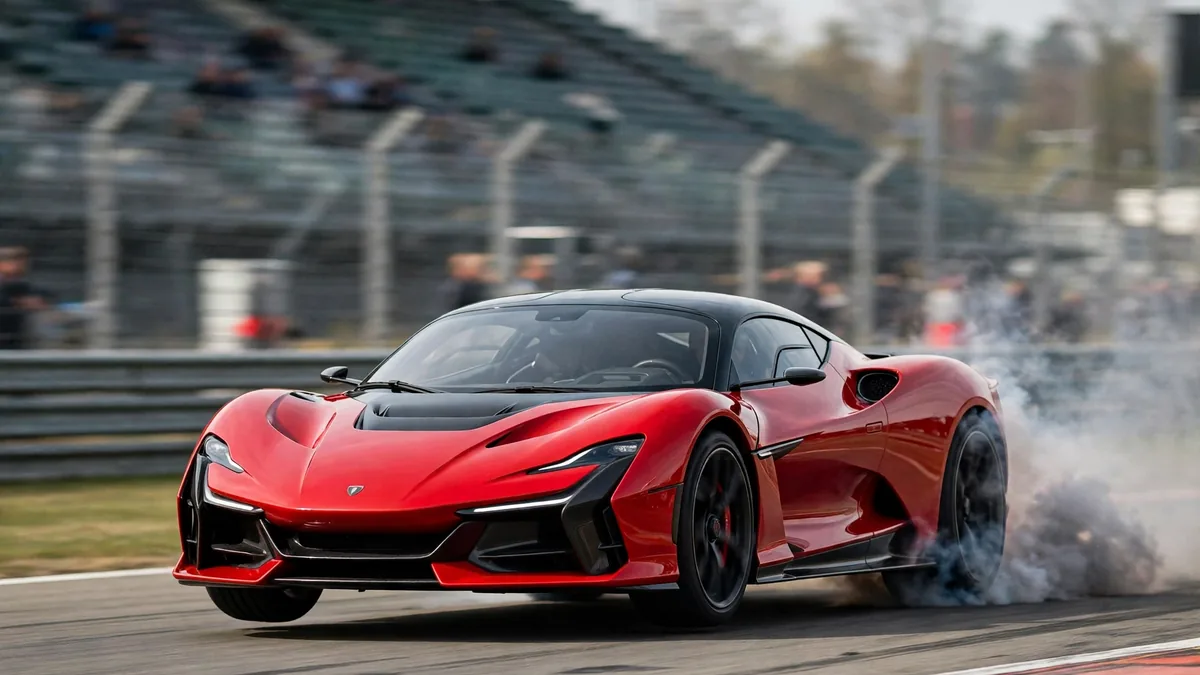
How a Luxury Electric Supercar Works
Step 1: The battery delivers the surge
Everything starts in the battery pack, a sealed tray of thousands of cells that forms the floor of the car. When the driver presses the pedal, the battery releases direct current at hundreds of volts, and it can do so at an enormous rate — far more power than a family electric car could ever draw. The cells are arranged to keep voltage high and resistance low, and coolant flows between the modules to carry heat away before it can build up. A battery management system watches every group of cells, balancing their charge and cutting power if any group runs too hot.
Step 2: The inverter turns power into spin
Electric motors run on alternating current, but the battery stores direct current, so an inverter sits between them and does the translation thousands of times a second. It switches the current on and off in a precise pattern, shaping it into the waveform each motor needs at that exact moment. The inverter is the translator of the whole car, and its speed decides how sharp the car feels. Our guide to how an EV inverter works explains this device in full.
Step 3: Three motors, each with a job
Most luxury electric supercars carry three motors: one driving the front axle and two at the rear, one for each rear wheel. The front motor handles traction and stability, while the two rear motors do the heavy work of acceleration and, crucially, torque vectoring — sending more power to the outside rear wheel in a corner so the car rotates instead of pushing wide. Each motor is a compact unit of copper windings and permanent magnets, cooled by oil and spinning at speeds a petrol engine could never reach.
Step 4: Torque vectoring steers with power
Torque vectoring is what makes an electric supercar corner like nothing else on the road. Sensors read steering angle, speed, grip and yaw a hundred times a second, and software decides how much torque each wheel should get. In a fast corner the outside rear wheel gets more power, pulling the car around the bend, while the inside wheel gets less, and the brakes can add a touch of drag to sharpen the turn further. The driver feels none of this calculation — only a car that goes exactly where the wheel points, lap after lap.

Step 5: Cooling keeps the power coming
Power makes heat, and heat is the enemy of a fast lap. A luxury electric supercar carries several cooling loops at once: one for the battery, one for the motors and inverters, and one for the brakes. Radiators sit in the nose and along the sides, fed by ducts that open wider as the car goes faster, and pumps push coolant through the battery tray even when the car is charging. The fastest electric supercars are not the ones with the biggest batteries, but the ones that can stay cool the longest, and our guide to luxury supercar specs shows which figures tell that story.
Step 6: Braking that charges the battery
When the driver lifts off or touches the brake, the motors run in reverse as generators, turning the car’s speed back into electricity and feeding it into the battery. This regenerative braking handles most everyday slowing, and the friction brakes only join in for hard stops. The blend between the two is tuned so the pedal feels the same every time, whether the battery is full or nearly empty, hot or cold. It is the only braking system that pays you back for using it.
Step 7: Software ties it all together
None of these systems works alone. A central controller reads the pedal, the steering, the grip at each wheel and the temperature of every major part, then decides in milliseconds how the car should respond. Drive modes change the whole character: one mode softens everything for the road, another sharpens the throttle and loosens the stability control for the track. Updates can arrive over the air, refining the tuning long after the car leaves the factory. That is the newest trick of the electric supercar, and it is why two cars with the same battery can feel completely different — as our guide to how a luxury supercar is made shows, the build is only half the story.
Luxury Electric Supercar Specs
| Specification | Typical range |
|---|---|
| Battery capacity | About 90 to 120 kWh |
| Power output | About 750 to 1,400 kW |
| 0 to 100 km/h | About 1.9 to 2.5 seconds |
| Motors | Three, one front and two rear |
| Top speed | About 320 to 350 km/h |
| Range | About 400 to 500 km |
| Kerb weight | About 2,000 to 2,300 kg |
| Charging | About 10 to 80 percent in 20 to 30 minutes |
What Does a Luxury Electric Supercar Cost?
A luxury electric supercar is estimated to cost roughly $300,000 to $500,000, while the fastest three-motor flagships are estimated at $1,000,000 to $2,500,000 or more. Limited editions with bespoke interiors and carbon bodywork can pass those figures quickly. Prices are estimates only and vary by power, battery and options.
A Rare Fact
An electric supercar can change its handling without touching a single bolt. Because torque vectoring is software, engineers can send an update that makes the car rotate more eagerly into corners or hold a steadier line at speed, and owners wake up to a car that drives differently from the one they parked. No petrol supercar in history could be retuned overnight while sitting in a garage.
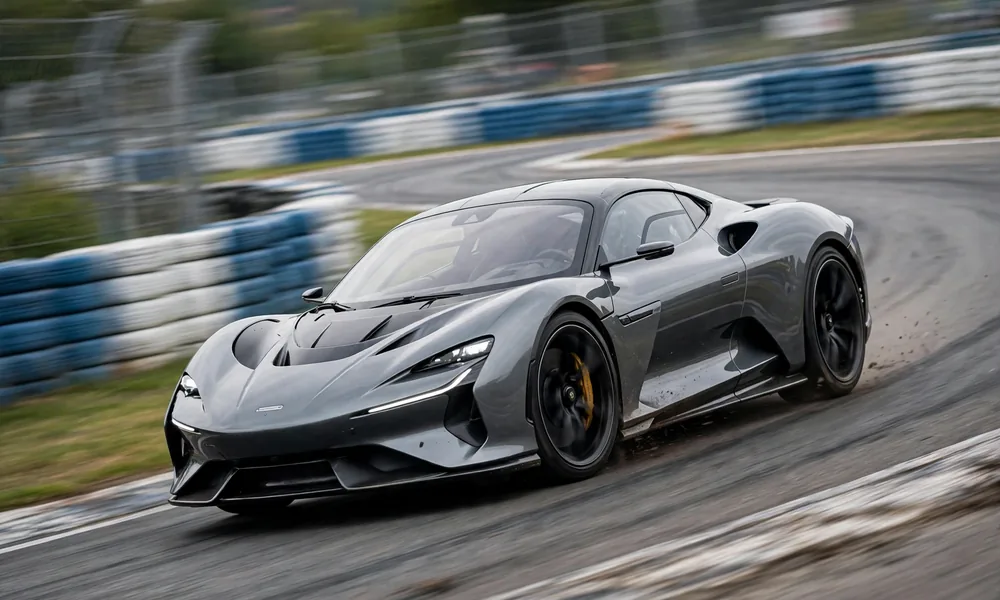
A luxury electric supercar works by turning electricity into decisions. The battery provides the force, the inverter shapes it, the motors place it exactly where it is needed, and the software decides it all faster than any driver could. It is a car with fewer moving parts than a petrol supercar and far more thinking, and that is why it can be both the fastest thing on the road and the easiest to drive. Press the pedal and the whole machine answers as one — silently, instantly, and again and again.


