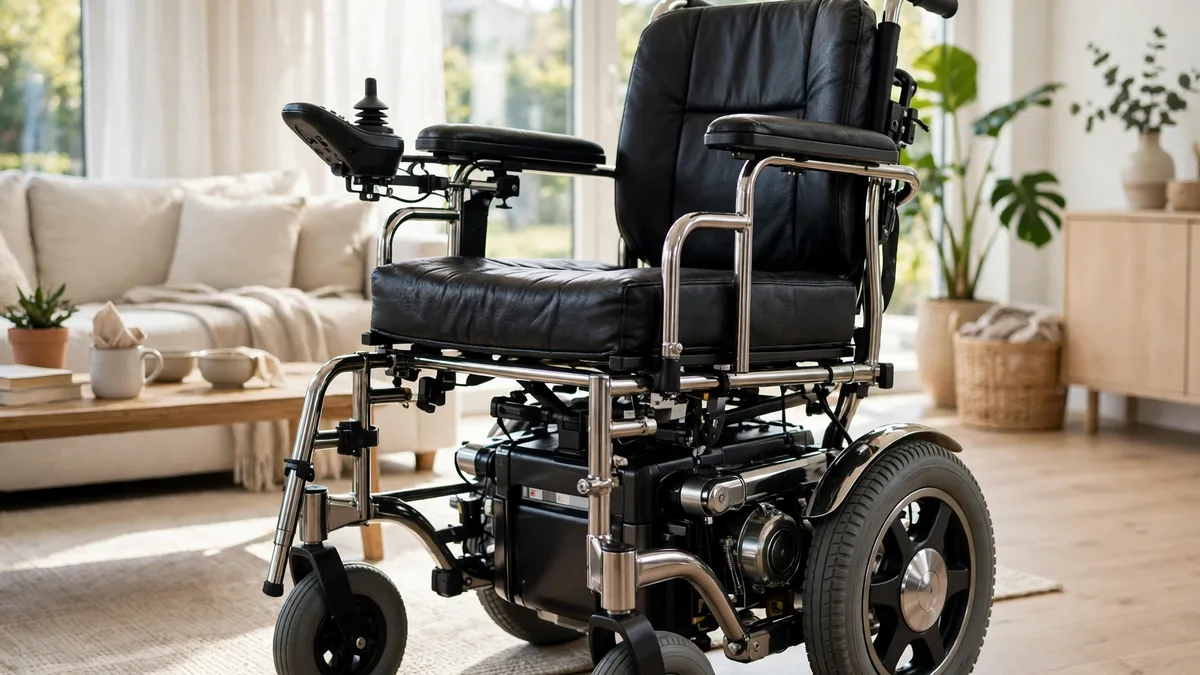
A luxury electric wheelchair is not really about wheels at all. It is about a morning that starts when its owner decides it starts, a trip to the shops without asking for a lift, and a garden path that is no longer a barrier. The chair carries a person through a day that other people take for granted, and it does it quietly, smoothly and without fuss, which is exactly what its owner wants from it.
Behind that quiet ride is a small electric vehicle in its own right, with motors, a battery, a controller and a seat built like a good armchair. This is how a luxury electric wheelchair is made, from a welded metal frame to the joystick that puts the whole machine under one thumb.
How It’s Made
Step 1: The frame is welded and shaped
Every chair begins as a frame of steel or aluminium tube, cut to length, bent to shape and welded by hand on a jig that holds every joint in exactly the right place. The frame must be strong enough to carry its rider over kerbs and rough paths, yet light enough to lift into a car, so the tubes are thin-walled and the welds are kept small and neat. A frame that flexes would make the chair feel loose and tired, so each joint is checked by eye and by hand before the next tube is added.
Once welded, the frame is cleaned, painted or powder coated, and fitted with mounting points for the seat, the motors and the battery box. The coating matters more than it looks, because the chair lives outdoors in rain and sun, and a chip in the paint would soon turn into rust on a steel frame. The finished frame is left to cure, then wiped down and sent to the assembly bench.
Step 2: The drive motors are fitted
Two electric motors drive the chair, one for each rear wheel, and they are bolted to the frame with their gearboxes already attached. Each motor is a compact unit that turns slowly but with great force, so the chair can climb a slope from a standing start without jerking. The gearboxes are filled with grease and sealed, because a motor that whines or leaks would be heard and felt on every trip.
Step 3: The battery is built and fitted
The battery is a pack of lithium cells in a sealed case, slotted low under the seat where its weight keeps the chair steady on slopes. The cells are matched before assembly and watched by a management board that balances them as they charge, so no single cell is overworked. The case is vented just enough to stay cool, and the terminals are covered so nothing metal can short them by accident.
Once fitted, the pack is charged fully and the chair is driven around a test yard until the battery is low, to prove the range the maker claims. The charging socket is placed where the rider can reach it easily, and the charger itself is a quiet box that plugs into a wall socket at home, with a light that turns green when the pack is full.
Step 4: The seat is built and upholstered
The seat is where luxury shows most. A moulded base is covered with thick foam, shaped to support the rider’s back and legs through a long day, and then covered in leather or a tough woven fabric that wipes clean. The armrests are padded and adjustable, the footrests swing away for getting in and out, and the backrest tilts so the rider can rest on a long afternoon.
Each seat is stitched and fitted by hand, and the seams are checked for any hard edge that would press against the rider. A seat that looks fine but pinches after an hour is a failed seat, so the finished chair is sat in for a long test, with the rider’s weight shifting from side to side, before the upholstery is signed off.
Step 5: The joystick and controller are fitted
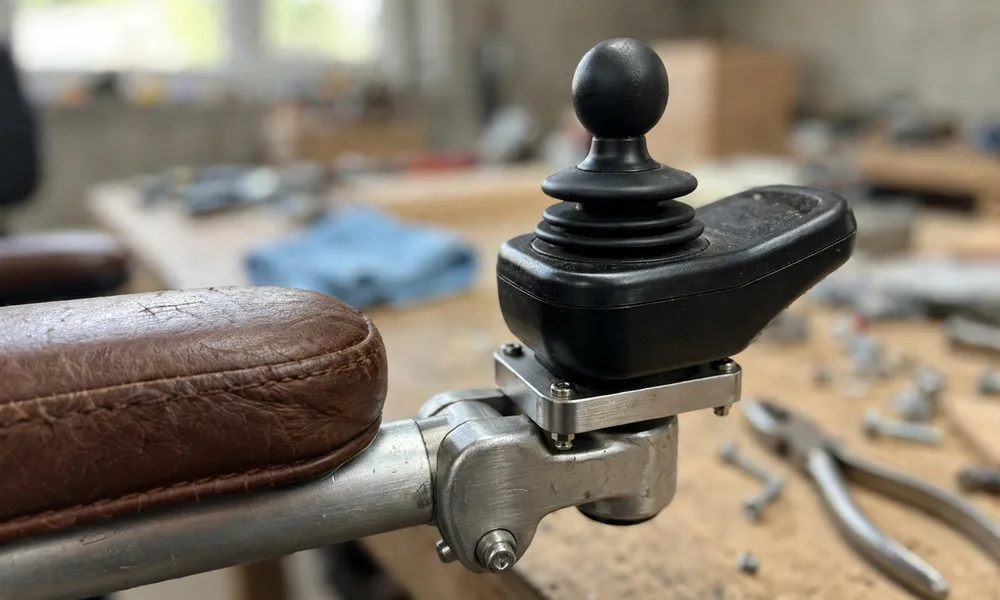
The joystick is a small stick on the armrest, and it is the whole driving experience in one hand. Pushed forward the chair moves forward, pushed sideways it turns, and released it springs back to centre and the chair stops. Inside the controller, a circuit board reads the stick’s position many times a second and tells each motor exactly how fast to turn, so a gentle push gives a gentle crawl and a firm push gives a brisk pace.
The controller is programmed for its rider, with top speed, acceleration and turning sharpness all set to suit the person who will use it. A nervous first-time rider gets a soft, slow setup, while a confident rider gets a livelier one, and both can be changed later as the rider gets used to the chair.
Step 6: The chair is driven, tested and checked
The last step is a full day of testing in miniature. The chair is driven over kerbs, up ramps and across grass, the brakes are tested on a slope, and the battery is run flat and charged again. The lights are checked, the horn is tried, and every bolt is tightened once more after the test drive, because a new machine settles in its first miles and a bolt that was tight in the workshop can work loose on the road.
| Spec | Detail |
|---|---|
| Frame | Welded steel or aluminium tube, powder coated against rain and rust |
| Motors | Two geared drive motors, one per rear wheel, for smooth low-speed power |
| Battery | Sealed lithium pack under the seat, with a balancing management board |
| Seat | Moulded base, thick foam and leather or wipe-clean fabric, tilting backrest |
| Controls | Joystick on the armrest, programmed for the rider’s speed and turning |
| Range | Roughly 15 to 25 miles per charge, depending on battery size and terrain |
What One Costs
A luxury electric wheelchair typically costs an estimated 4,000 to 15,000 dollars, set mostly by the motors, the size of the battery and the quality of the seat and upholstery. A simple chair with a small battery sits near the bottom, while a long-range chair with a tilting leather seat, lights and suspension costs far more. The battery is the heart of the price, and the way an e-bike battery is made shows how lithium cells are packed and protected, while how an EV battery pack is made explains the same idea at a much larger scale.
A Rare Fact
Some luxury wheelchairs can raise their rider to standing height at the touch of a button. The seat lifts smoothly until the rider is eye to eye with the people around them, able to reach a high shelf or talk face to face, and then lowers again just as gently when the moment has passed.
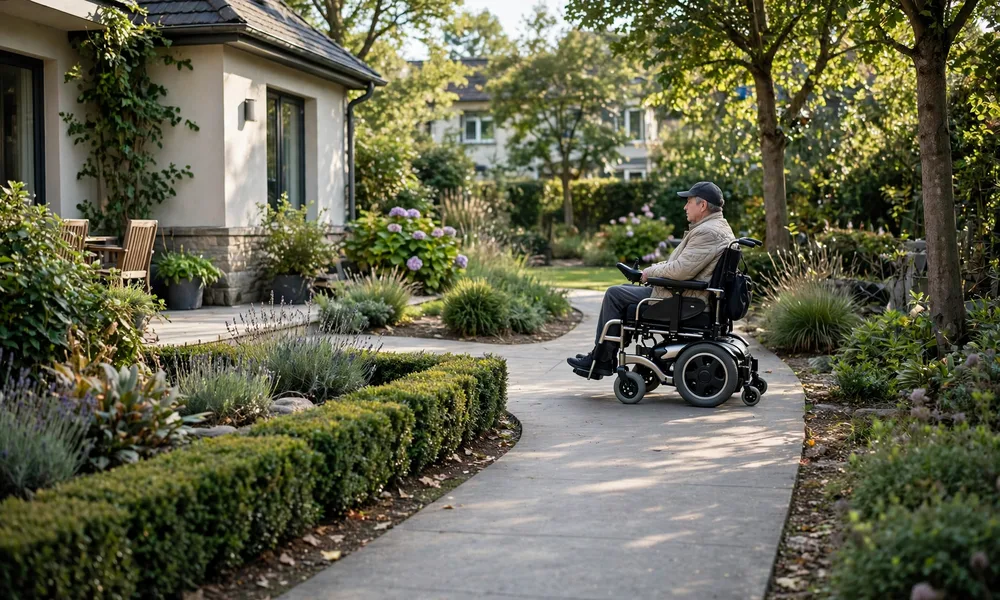
A luxury electric wheelchair is made to give a day back to its owner: a welded frame, two quiet motors, a battery that lasts the day, a seat built for hours and a joystick that puts it all under one thumb. It is a small vehicle with a large job, carrying a person through ordinary life without fuss. The same folding and fitting craft runs through other small electric rides, and the way a foldable electric bike is made shows how a frame can be built to fold away just as neatly.