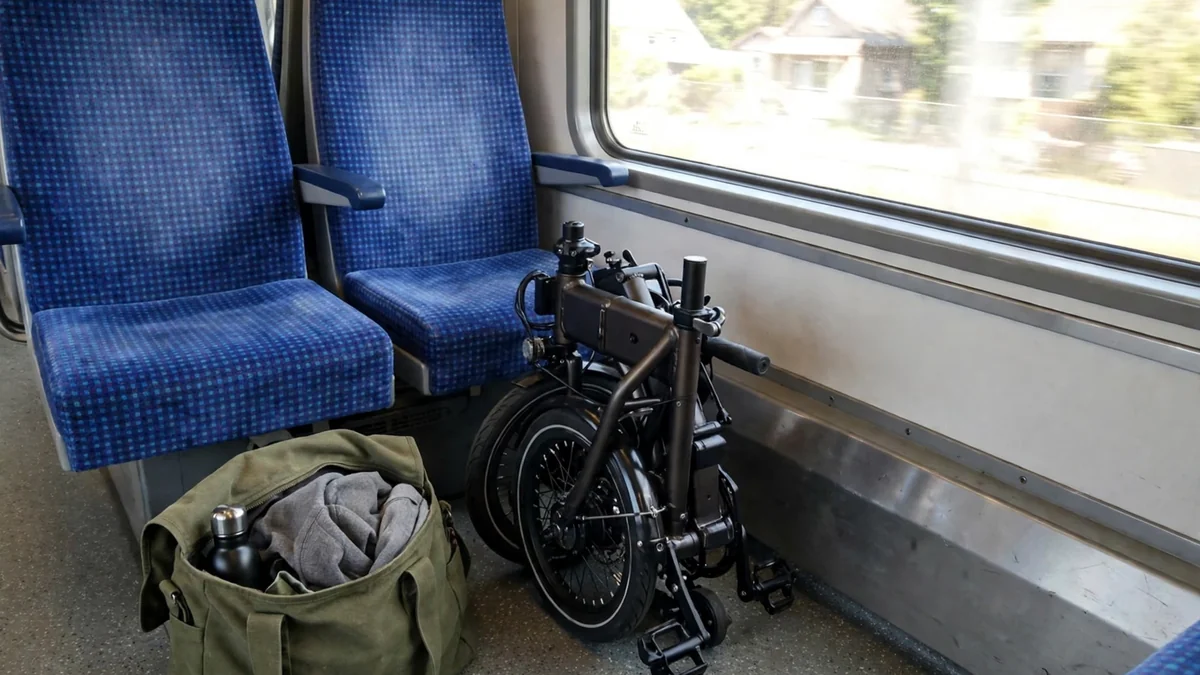
The commuter folded her bike in the train doorway, and nobody around her even looked up. One latch, a swing of the handlebar, a fold of the pedals, and a full-sized electric bike became a package small enough to stand beside her seat. Thirty seconds earlier it had been carrying her up a hill at twenty miles an hour with a motor doing half the work. That trick, a bike that is both a proper ride and a piece of luggage, is the hardest thing about building a foldable e-bike. Every part has to do two jobs at once: be strong enough to ride, and small enough to fold.
A foldable e-bike is not a normal bike with a hinge bolted on. The frame, the battery, the motor, and even the cables all have to be designed around the fold from the very first sketch. If any one of them is wrong, the bike either rides badly or folds badly, and usually both.
How a Foldable Electric Bike Is Made
The build takes place in a bicycle factory, but the process has more in common with making a folding chair than a normal bike. The frame is the star of the show, and everything else is fitted around the points where it bends.
Step 1: Cutting and forming the frame tubes
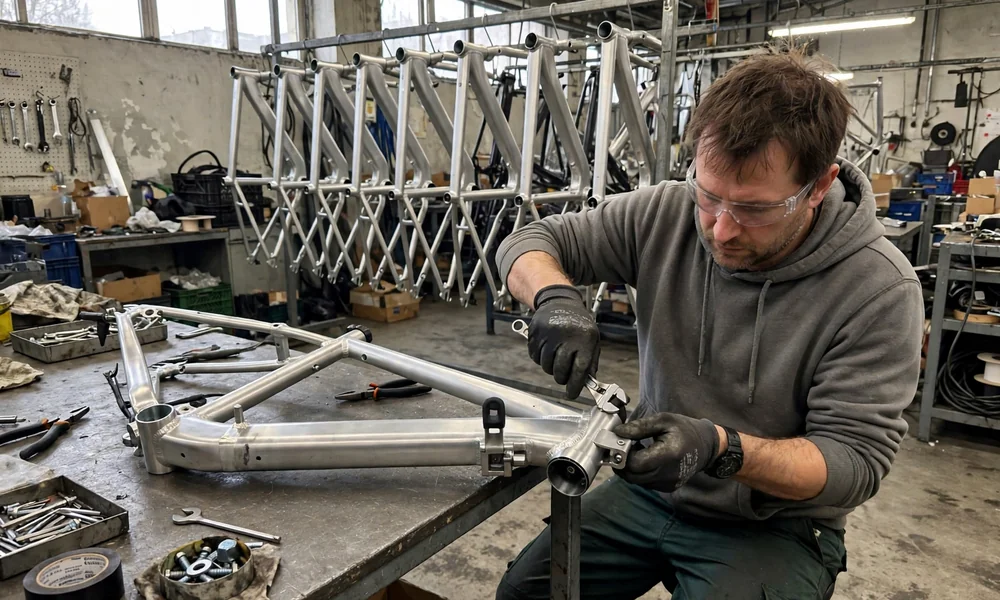
It starts with aluminium alloy tubing, usually 6061 or 7005 grade, cut to length and shaped on bending machines. The top tube and down tube are the critical pieces, because the main folding hinge sits in the middle of the frame. Unlike a normal bike, the tubes here are thicker-walled and often oval in section, trading a little weight for the stiffness a folding joint needs. The tubes are cleaned and prepared for welding, and any tube that will carry a cable inside gets its holes drilled before it is joined.
Step 2: Welding the frame and fitting the hinge
Skilled welders join the tubes into the two halves of the frame, front and rear, using TIG welding for clean, strong joints. Then comes the part that makes or breaks the bike: the folding hinge. This is a machined aluminium or steel assembly with a quick-release latch, a safety catch, and a brass or nylon bushing that keeps the joint from rattling. It is bolted and pinned to the frame halves and tested by folding and unfolding it hundreds of times. A good hinge should lock with a solid click and show no play at all when you try to twist the frame by hand.
Step 3: Adding the folding stem, seat post, and pedals
The handlebar stem gets its own hinge, so the bars can fold flat against the frame, and the seat post is made extra long so it drops deep into the frame for storage. The pedals are folding too, with a small button that lets each one swing back against the crank. Every folding point has a secondary safety catch, because a latch that opens while you are riding is the one failure a folding bike can never have. The frame is then painted or powder-coated, which also seals the metal against rain and road salt.
Step 4: Fitting the motor and drivetrain
Most foldable e-bikes use a rear hub motor, a compact unit built into the back wheel, because it keeps the folding frame clear and the wiring simple. The motor is laced into a small 16- or 20-inch rim, and the wheel is trued by hand until it spins without a wobble. The chain, gears, and derailleur go on next, usually a simple seven- or eight-speed setup, because a commuter bike needs reliability more than racing gears. Electric bike motor specs decide how much help the rider gets, and on a folding bike the motor is usually rated between 250 and 500 watts, enough for hills without making the bike heavy.
Step 5: Installing the battery and electronics
The battery is the heaviest single part, so where it sits matters. On most folding e-bikes it slides into the seat post tube or locks onto the rear rack, keeping the weight low and centred and leaving the fold unobstructed. The battery is a pack of lithium-ion cells in a sealed aluminium case, with its own management system that watches temperature and charge. The display, the controller, and the wiring go on next, with cables routed through the frame where possible so they cannot snag when the bike folds. The torque sensor, which tells the motor how hard you are pedalling, is fitted at the crank; how an e-bike torque sensor works is what makes the assistance feel natural instead of jerky.
Step 6: Assembly, testing, and the fold test
Finally the bike is fully assembled: brakes, lights, mudguards, tyres, and the folding latch covers. Then it goes through a test routine that a normal bike never faces. A technician rides it, brakes hard, climbs a ramp, and then folds and unfolds it dozens of times, checking that every latch still locks and nothing rubs. The frame itself has already survived a separate torture test, and how a folding e-bike frame is made shows why that single joint carries so much of the bike’s reputation. Only when the bike folds cleanly, locks solidly, and rides without a creak does it get boxed and shipped.
Foldable Electric Bike Specs
| Specification | Typical figure |
|---|---|
| Wheel size | 16–20 inches |
| Motor | 250–500 W rear hub |
| Battery | 36 V, 7–14 Ah |
| Range | 25–50 miles per charge |
| Weight | 18–25 kg |
| Folded size | approx. 80 × 65 × 40 cm |
| Fold time | 15–30 seconds |
| Frame | 6061 aluminium alloy |
Small wheels are the secret to the whole design. A 20-inch wheel folds into a much smaller package than a 26-inch one, and the motor’s torque makes up for the gearing disadvantage on hills. The trade-off is ride comfort, which is why most folding e-bikes add a suspension seat post or a slightly wider tyre.
How Much Does a Foldable Electric Bike Cost?
A decent foldable e-bike typically costs an estimated $900–$2,500, with premium models reaching an estimated $3,500 or more. Budget models cut costs with smaller batteries and simpler hinges, while the expensive end buys a lighter frame, a bigger battery, hydraulic brakes, and a hinge that still feels new after thousands of folds. Replacement batteries cost an estimated $200–$500, and a worn hinge bushing is usually an estimated $20–$40 part, though it needs a careful fitting.
For a commuter who mixes a train and a bike, the maths is simple: the bike replaces a second car trip or a bus pass, and it folds away under a desk at work. It is not the cheapest e-bike you can buy, and it is not the fastest, but it is the only kind you can carry up a flight of stairs with one hand.
A Rare Fact
The first folding bicycles appeared in the 1890s, built for soldiers who needed a bike they could carry into battle. The British army even issued a folding bike to its troops in the First World War. It took another century, a lithium battery, and a hub motor to turn that military curiosity into a commuter’s everyday tool, but the hinge at the heart of it works on exactly the same idea.
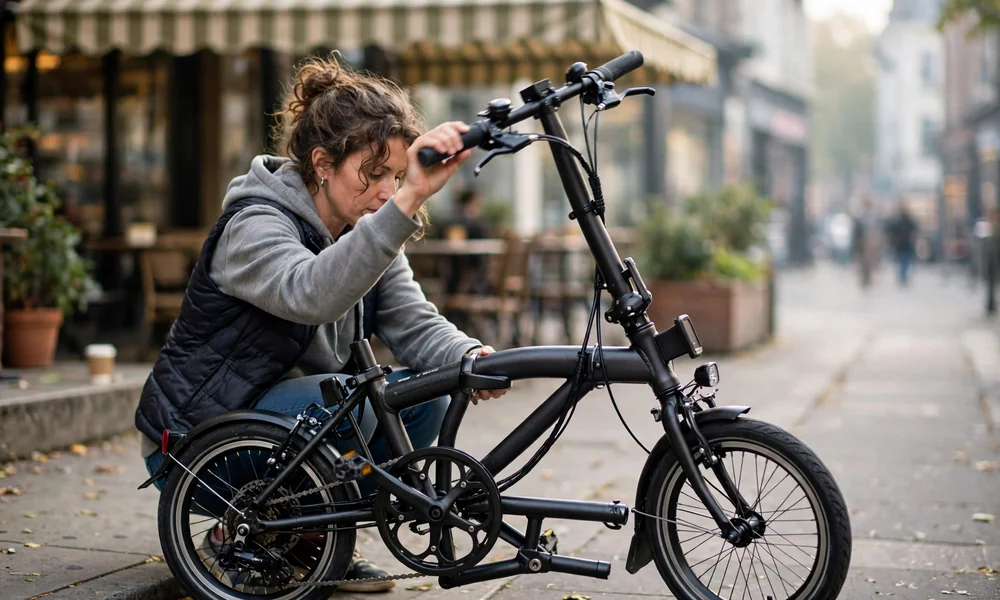
That is what a foldable e-bike really is: a century-old idea, rebuilt with modern materials and a motor. The frame folds, the battery hides, and the bike disappears into the corner of a train carriage, until the moment its rider needs it again and, with one click, it is a bike once more.