The harbour master had seen plenty of yachts, but he had never seen one arrive like this. The white hull slid across the water without touching it, held up by two slim wings he could barely see, and it slowed to a stop as gently as a car pulling into a driveway. Then, as the crew raised the foils, the yacht settled back into the water like any other boat. He stood on the dock for a long time afterwards, trying to work out what he had just watched.
He had watched a luxury foiling yacht come home. These boats are built to fly above the sea at speed and behave like ordinary yachts at rest, and that double life shapes every decision in the yard. This is how one is made, from the first design meeting to the day it lifts off for the first time.
Step 1: Designing One Hull to Do Two Jobs
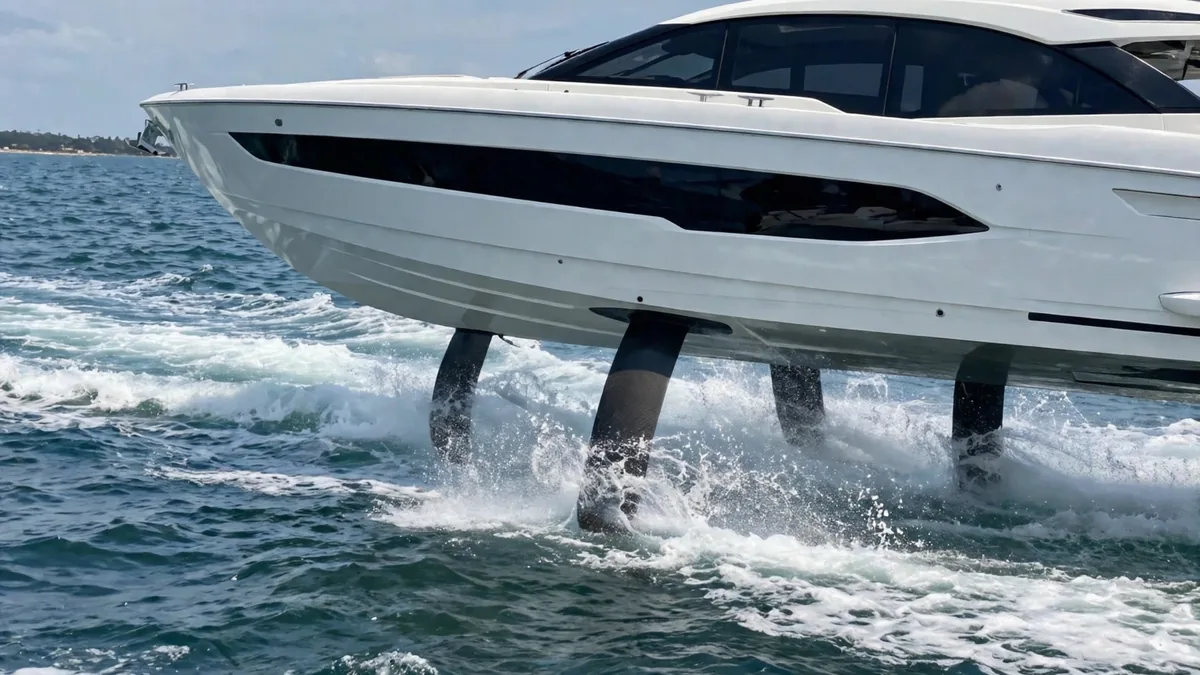
The design starts with a contradiction. The hull must float a heavy luxury yacht at rest, yet it must also get out of the way the moment the foils take over. Naval architects draw a long, narrow hull with a fine bow and a flat run aft, so it slips through the water easily at low speed and leaves the water cleanly when it lifts. The team models the whole boat in software, testing how it behaves in gusts, in waves, and in a sudden lull. The numbers in the finished boat tell the story, and the specifications of a luxury foiling yacht show what that balancing act produces.
Step 2: Moulding the Carbon Hull
The hull is built in a female mould, laid up by hand from carbon fibre cloth and epoxy resin. Workers place each layer to a pattern, working from the keel outward, and a vacuum bag presses the stack tight while it cures under heat. Carbon is used because the foils must lift everything the yacht carries, and a heavy hull would need bigger foils, which would need more power, which would need more weight. Bulkheads are bonded in as the hull cures, so the structure grows as one piece rather than a shell with parts added later.
Step 3: Shaping the Foils and the Rudder
The foils are built like aircraft wings, in their own moulds, from carbon laid up with the fibres running in directions chosen by the engineers. The surface is sanded and polished until it is almost perfectly smooth, because rough patches on a foil cause drag and vibration at speed. The main foil sits on a strut under the hull, and a smaller foil on the rudder keeps the stern level, so the boat flies flat rather than nose-up or nose-down. The crew treats these parts with unusual respect, because they are the difference between a yacht and a flying machine.
Step 4: Fitting the Deck, Rig, and Cabin Structure
With the hull cured, the deck is bonded on and the cabin structure goes in. The mast is stepped on a reinforced section of the deck, because a foiling yacht carries its sail plan while flying, and the loads from the rig are high. The deck layout is kept clean and low, with the sail controls led back to the helm so a small crew can handle the boat alone. The work is familiar to any yacht builder, and how a luxury yacht is made covers the same craft in its classic form.

Step 5: Installing the Flight Controls
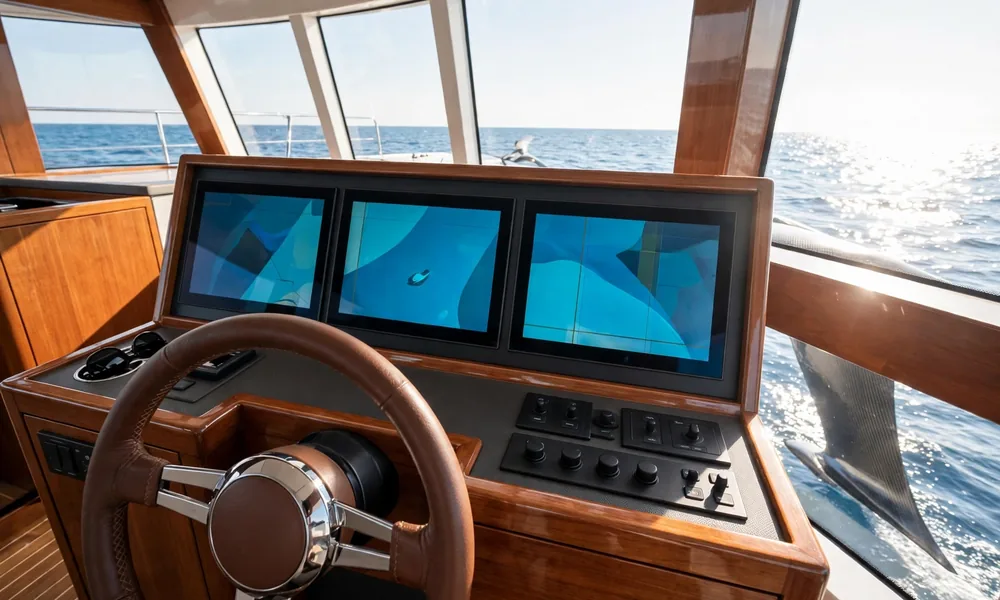
No crew can adjust foils fast enough by hand, so the yacht gets a control system that does it for them. Sensors on the hull measure ride height and heel, and a small computer tells hydraulic rams how to tilt the foils, many times a second. The helm has a simple display where the crew sets the height they want to fly at, and the system holds it through gusts and lulls. The team tests the whole system ashore first, moving the foils through their full range and checking that each sensor reading matches the real angle. A wrong reading would be worse than no reading at all.
Step 6: Fitting Out the Interior
The interior is where the word luxury earns its place. The yard fits pale wood panelling, soft leather seating, and a galley with a proper stove and fridge, but every piece is chosen with a scale in mind. The cabins get real beds with good mattresses, and the heads are fitted with proper showers. The result is a cabin that feels generous, even though the whole fit-out weighs far less than it looks.
Step 7: Launch, Tuning, and the First Flight
Launch day is quiet and careful. The yacht is floated, the foils are lowered, and the crew motors out to open water for the first trials. They start by sailing it as an ordinary yacht, checking the rig, the steering, and the engine. Then, on a calm morning, they bear away and build speed. The moment the hull leaves the water is unmistakable: the motion smooths, the noise fades, and the speed climbs sharply. The team spends days tuning the system, adjusting the foil angles and the ride height until the yacht flies level and settles gently when the wind drops. Only when the boat takes off cleanly and lands softly, time after time, does the yard hand over the keys.
| Specification | Typical figure |
|---|---|
| Length overall | 12 to 20 metres |
| Hull material | Carbon fibre with foam core |
| Foils | Main foil plus rudder foil |
| Take-off speed | Around 10 to 14 knots |
| Cruising speed foiling | 18 to 30 knots |
| Cabins | 2 to 4 double cabins |
| Rig | Carbon mast, single or twin sails |
| Build time | 12 to 20 months |
What One Costs
A luxury foiling yacht is priced like the specialist machine it is. As an estimate, a new build of this size typically costs between one and a half and six million dollars, depending on length, interior finish, and the sophistication of the foil controls. The carbon hull and the foil system account for a large share of the price, and both take far more skilled labour than a conventional build. What the money buys is a yacht that sails faster than the wind that drives it, and does so in near silence.
A Rare Fact
Here is something few people know: a foiling yacht can sail faster than the wind pushing it, because its apparent wind grows as it accelerates. The sails fill harder the faster the boat goes, which pushes it faster still, until the drag of the foils sets the limit. The same physics makes bigger boats interesting too, and how a luxury superyacht is made shows how the largest yachts are built to a very different set of rules.
Making a luxury foiling yacht means building two boats at once: a comfortable cruising yacht and a flying machine that happens to float. When the yard gets both right, the owner gets something no ordinary yacht can offer. The sea stays below, the wind does the work, and the boat simply flies.


