The lights in the listening room are low, the record is already spinning, and a woman settles into an armchair and pulls a pair of heavy black headphones over her ears. The first thing she hears is not music. It is the breath a singer takes before the first note, a tiny sound most speakers lose entirely. She closes her eyes and smiles, because the room has gone away and only the music is left. That is what a luxury pair of headphones is for: not to be loud, but to be honest, and to carry every small detail of a recording straight to the ear without adding anything of its own.
A cheap pair of headphones is assembled in seconds from moulded plastic and a driver the size of a coin. A luxury pair is a different kind of object. It is built slowly, by hand, from metal, leather and carefully tuned parts, and it is listened to at every stage by people whose job is to hear what most of us cannot. The drivers are matched in pairs, the earcups are machined to fractions of a millimetre, and the headband is shaped so the headphones disappear on the head after a few minutes. This is how luxury headphones are made, from the first coil of wire to the final listening test.
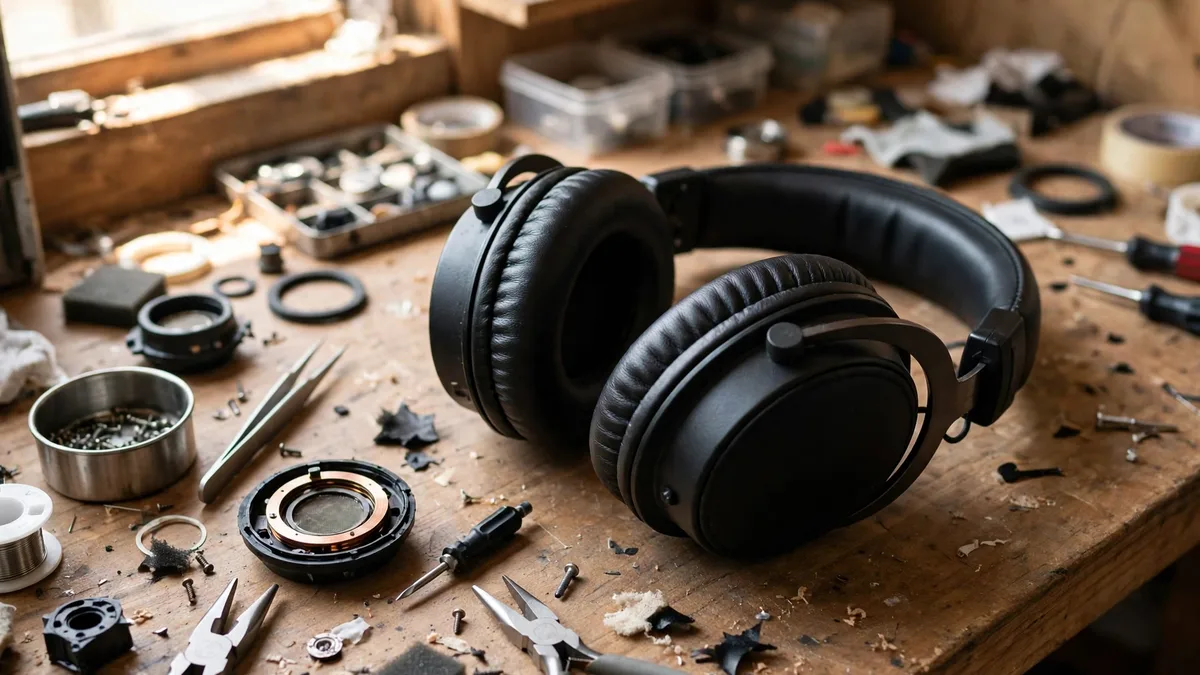
Step 1: The driver is wound, glued and tuned by hand
At the heart of every headphone is the driver, a small loudspeaker that turns an electrical signal into sound. In a luxury pair the driver is usually a dynamic unit about forty millimetres across, built around a thin diaphragm, a voice coil wound from copper wire finer than a human hair, and a powerful magnet. The diaphragm is the part that actually moves the air, and makers choose it with great care: some use a coated paper, others use a synthetic film or a metal alloy, because each material colours the sound in its own way.
Step 2: The earcup is machined from metal, not moulded from plastic
Inside the cup, the maker fits acoustic damping: small pieces of felt, foam or fine mesh placed exactly where the sound waves need taming. A few millimetres of felt in the wrong place can make the bass boomy or the treble harsh, so the damping is tuned by listening, not by formula alone. The driver is then mounted into the cup on a soft gasket, sealed so that air cannot leak around its edges, and wired to a small socket that lets the cable be replaced. The way a sealed cup shapes sound is the same idea that makes noise-cancelling headphones work, where the enclosed space around the ear is controlled with great precision.

Step 3: The headband and cushions are made to disappear
A pair of headphones can sound wonderful and still be unwearable if it squeezes the head or pinches the ears, so the headband gets as much attention as the driver. Luxury makers use a spring-steel band, bent to a curve that spreads the weight evenly, and cover it in leather stitched by hand. The band is adjusted so the headphones grip just enough to stay put without pressing, and the ear cushions are filled with memory foam that slowly moulds itself to the shape of the head.
Step 4: The cable and connectors are built to last a decade
The connectors are machined from metal and plated in gold, not because gold sounds better, but because it does not corrode, and a corroded contact crackles. Many luxury headphones use a detachable cable, so a worn cable can be replaced in seconds instead of sending the whole pair away for repair. The same care for lasting, replaceable parts shows up in how a luxury car sound system is made, where every speaker and wire is built to survive years of heat, cold and vibration.
Step 5: The pair is assembled, measured and listened to
With the drivers matched, the cups machined and the headband fitted, the headphones are assembled on a bench by a single worker who follows the pair from start to finish. Screws are tightened by hand to a set torque, the cushions are pressed into place, and the cable is plugged in and tested for continuity. A misaligned screw or a pinched wire at this stage can spoil everything that came before, so the assembler checks the work twice before the pair moves on.
Step 6: The final listening test and the box
When a pair passes, it is cleaned, polished and packed in a case that is itself made to last: a hard shell lined with felt, with a pocket for the spare cable and a cloth for the leather. The serial number is recorded, the measurement sheet is filed, and the headphones are ready to leave the workshop. The listening test is also what separates a luxury speaker from an ordinary one, as the guide to how a luxury smart speaker works shows, where the final tuning is done by ear in a real room rather than by numbers alone.
At a glance
| Part | Typical luxury build | Why it matters |
|---|---|---|
| Driver | 40 mm dynamic, hand-matched pair | Both ears hear the same sound |
| Earcup | Machined aluminium or wood | Stiff, so the sound stays clean |
| Cushions | Memory foam, leather or velour | Comfort and a seal that keeps the bass in |
| Cable | Detachable, braided, gold-plated | Replaceable, and it does not crackle |
| Weight | About 300 to 450 grams | Heavy enough to feel solid, light enough to wear |
| Testing | Measured, then listened to by ear | Numbers checked, music judged by a human |
A luxury pair of headphones typically costs an estimated $800 to $3,000, and some handmade models cost far more. The price is not mostly in the materials, which are modest, but in the hours: the hand-wound drivers, the matched pairs, the machined cups and the listening tests that reject good parts for being merely good. A maker who sells a few thousand pairs a year cannot spread those hours across millions of buyers, so each pair carries its share of the workshop.
A rare fact: some luxury headphone makers keep a library of old recordings and a single pair of ears on staff whose only job is listening. One famous workshop employs a listener who has tested every pair it has made for more than twenty years, and the company says no pair ships until it passes her ears. The measurement machines are there to catch mistakes, but the final word belongs to a person, and that is the point of the whole exercise: headphones are made for ears, not for graphs.
So the next time you put on a fine pair of headphones and hear a singer breathe before the first note, remember the bench, the microscope, the felt, the leather and the listener in the quiet room. None of it shows in the music, and that is exactly why it is there. A luxury headphone is not built to impress you with its parts. It is built to disappear, and to leave only the sound behind.


