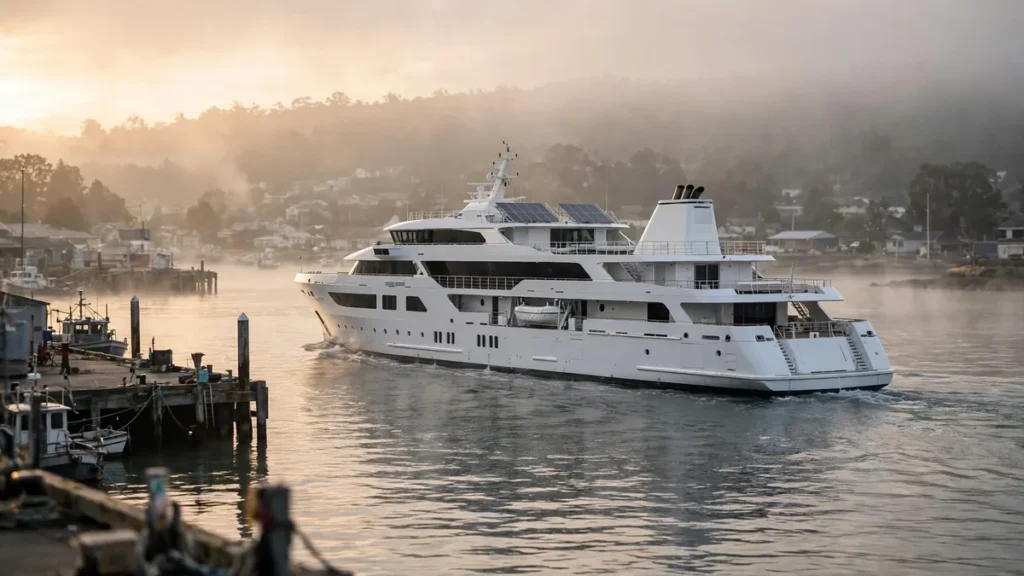
The ferry leaves the dock at dawn, and the passengers barely look up from their coffee. There is no shudder as the engines engage, no diesel haze drifting over the car deck, and no vibration rattling the windows. The boat simply moves, quietly, across water the colour of steel. It looks like any other modern ferry, and then you learn what it cost to build, and the number is large enough to make even a harbour master pause. A luxury electric ferry can cost many times more than a diesel ferry of the same size, and the reasons are all hidden below the waterline and inside the shore.
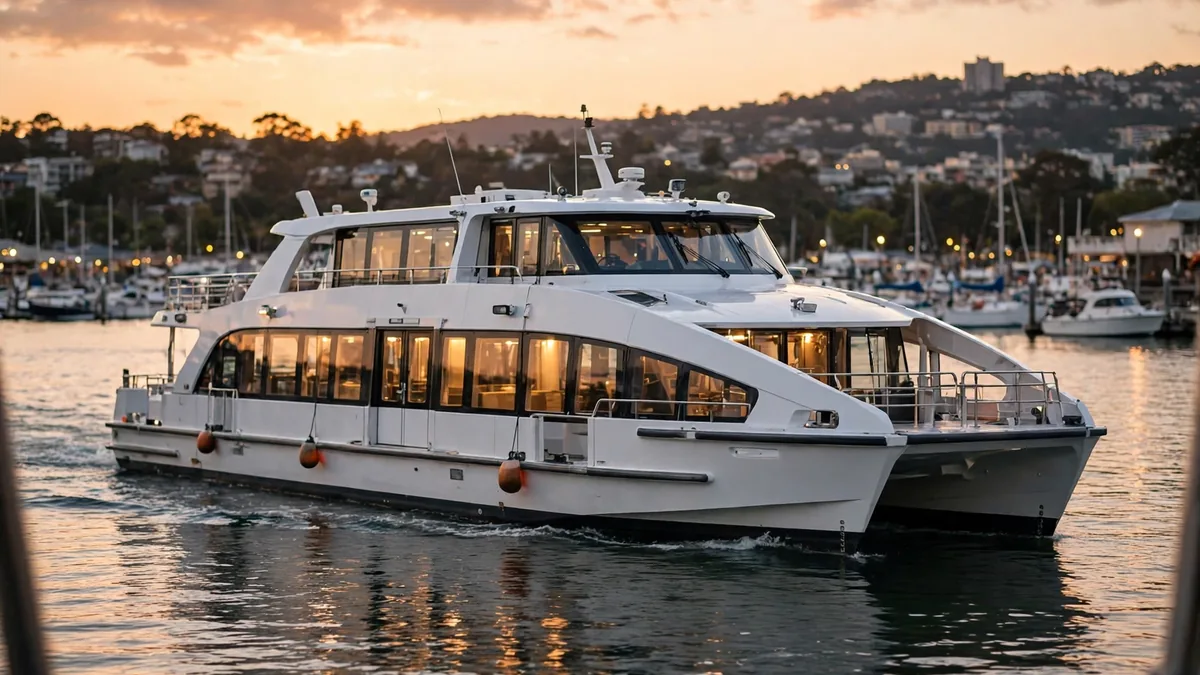
The battery bank dwarfs everything else
The largest single cost on a luxury electric ferry is the battery bank, and it is large in a way that surprises even engineers from other industries. A ferry crossing a wide harbour or a short sea route can need several megawatt-hours of storage, which is hundreds of times the battery in a family electric car. The cells are the best grade available, built to survive thousands of deep charge cycles, and they are packed into fireproof, ventilated compartments with cooling systems that run day and night.
The batteries also have to be replaced. A car battery might last the life of the car, but a ferry battery is cycled hard several times a day, and even the best cells wear out after a decade or so of that treatment. The guide to luxury electric ferry specs explained breaks down what the battery figures mean, and the megawatt-hour number on that page is the figure that drives the price hardest.
The charging station on the shore
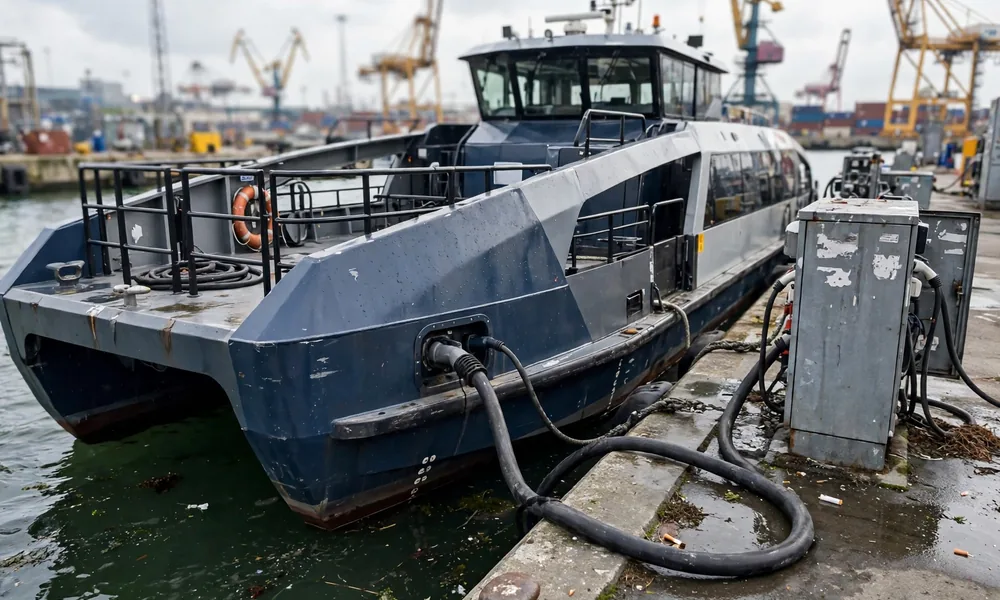
The second great cost is not on the boat at all. It is on the shore. An electric ferry that crosses in twenty minutes and turns around in ten needs to take on an enormous amount of energy in a very short time, and that means a charging station that can deliver megawatts, not the kilowatts of a car charger. The dock needs its own substation, thick cables, automated connectors that can plug the boat in without a crew member handling high-voltage equipment, and a grid connection strong enough to feed it all.
The charging system also has to be safe enough for passengers to walk past it every day, and reliable enough that a missed charge does not strand a boat full of people. The guide to how a luxury electric ferry is made follows the boat from the hull to the sea trial, and the shore charging described there is the part of the project that most often surprises a first-time buyer.
The hull, the motors and the weight
The hull of an electric ferry is a cost driver of its own, because the batteries are heavy and the boat has to carry them without becoming slow or unstable. Designers use aluminium or advanced composites to keep the structure light, and the hull form is tuned to slip through the water with as little drag as possible, because every extra knot of drag is energy the batteries have to supply.
The motors are quiet and clean, but they are not cheap. A ferry needs several large electric motors, often in pods below the hull, each with its own power electronics and cooling. The guide to how a luxury electric ferry works follows the power from the battery to the propellers, and the podded motors described there are the reason the boat can turn in its own length at the dock.
The luxury fit-out and the safety case
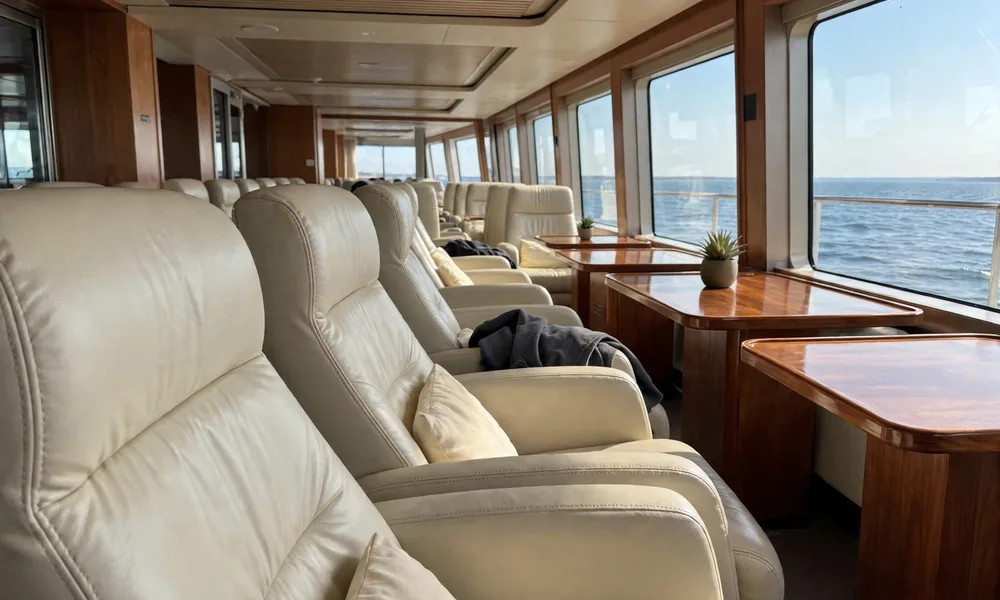
On a luxury ferry, the passenger spaces are fitted to a standard closer to a boutique hotel than a bus. The seats are wide leather, the tables are polished wood, the lighting is soft, and the windows are large enough to make the crossing feel like part of the journey rather than a chore. A luxury fit-out on a boat this size costs far more than the same finish on land, because every fitting has to be fixed against the motion of the sea.
Safety adds another layer of cost that a yacht never faces. A ferry carries the public, so it must meet strict rules for fire protection, evacuation, stability and redundancy, and every system has to be proven to a classification society before the boat can carry a single passenger. The paperwork, the testing and the certification run for months and cost a large share of the build budget.
Low volume and a long life
The last cost driver is volume. A car factory builds millions of vehicles a year, and a ferry yard builds a handful. The design of an electric ferry, the tooling for its hull, the testing of its charging system and the certification of its batteries are all paid for by a small number of boats, so each one carries a large share of the development bill.
Against that, the ferry is built to last for decades, and its running costs are lower than a diesel ferry’s. Electricity is cheaper than marine diesel, the motors need far less servicing than diesel engines, and there are no exhaust emissions to manage.
The spec sheet at a glance
| Cost driver | What a luxury build needs | Why it costs more |
|---|---|---|
| Battery bank | Several megawatt-hours, best-grade cells | Huge capacity, fireproof housing, eventual replacement |
| Shore charging | Megawatt charger, substation, grid upgrade | Built in small numbers, certified to marine standards |
| Hull | Light aluminium or composite, low drag | Specialist yard, small numbers, high finish |
| Motors | Several large podded motors, power electronics | Megawatt-scale, cooled, redundant |
| Passenger fit-out | Leather, wood, glass, hotel standard | Hand finished, fixed against sea motion |
| Safety and certification | Fire suppression, evacuation, redundancy | Months of testing by a classification society |
| Volume | A handful of boats per design | Development cost spread over very few hulls |
| Running costs | Electricity cheaper than diesel, less servicing | The payback comes over decades, not months |
What it costs
A luxury electric ferry typically costs an estimated $15 million to $60 million, depending on its size, its passenger and vehicle capacity, the size of its battery bank and the scale of the shore charging it needs. The estimate covers the boat alone, not the dock works, the grid upgrade or the crew. The largest ferries, with the biggest batteries and the most lavish passenger spaces, sit at the top of that range, and a small harbour ferry with a short crossing can cost far less. The running costs are lower than a diesel ferry of the same size, but the upfront bill is the price of building a power station that also happens to float.
A rare fact
One detail few passengers ever learn is that an electric ferry can charge faster than a car ever will, not because its batteries are better, but because the dock does the hard work. The charger on the shore is often more powerful than the entire electrical supply of a small town, and it can push a whole crossing’s worth of energy into the boat in the ten minutes it takes to load the cars. The boat is the quiet part of the system. The loud, expensive, extraordinary part is the plug on the dock.