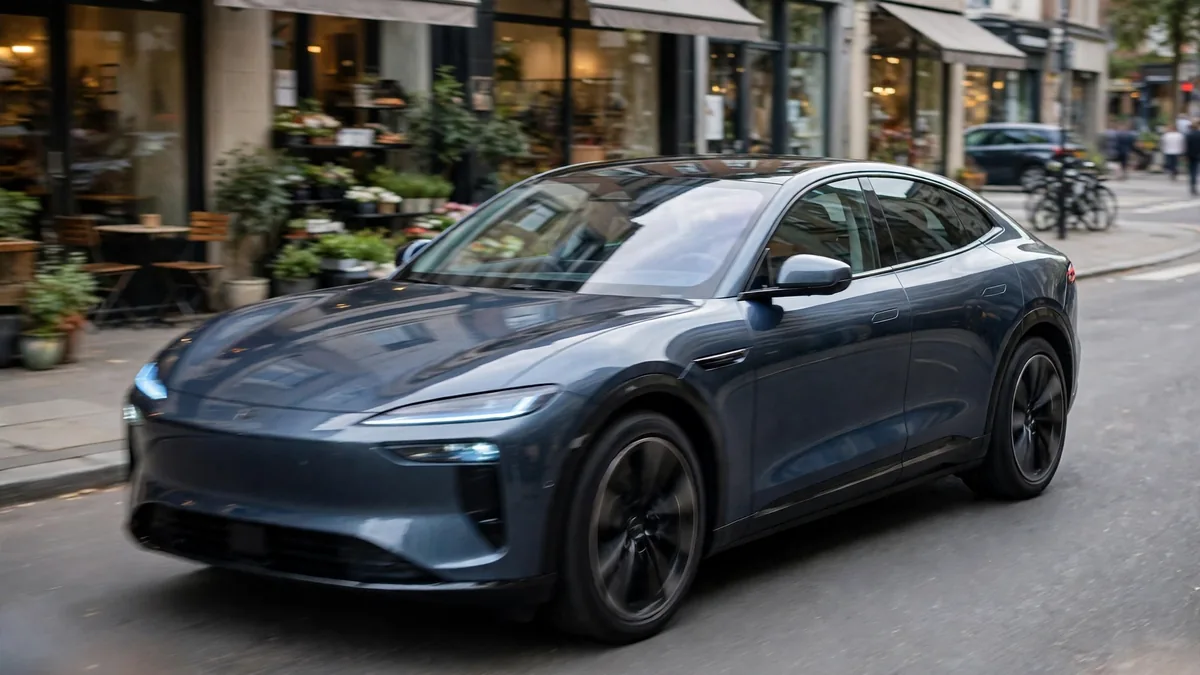
The traffic light turned green, and the big saloon moved away without a sound. No engine note, no vibration through the steering wheel, just a smooth, silent glide that made the cars around it seem suddenly old-fashioned. A few seconds later, as the road opened up, the petrol engine woke with a soft hum and took over, and the car settled into a quiet cruise that felt like any other luxury car, only calmer.
That silent start is the signature of a luxury hybrid car, and it is the result of two power sources working together so smoothly that the driver barely notices the handover. A petrol engine and an electric motor, a battery and a clever gearbox, all managed by software that decides, many times a second, which source should do the work.
A Luxury Hybrid Car, Explained From the Inside
A hybrid car carries two ways of making power and one way of using it well. The petrol engine is efficient at steady speed on the open road; the electric motor is efficient at low speed, in traffic, and when pulling away. The battery stores energy recovered from braking, and the control system blends the two sources to keep the engine in its most efficient range.
Step 1: The Petrol Engine
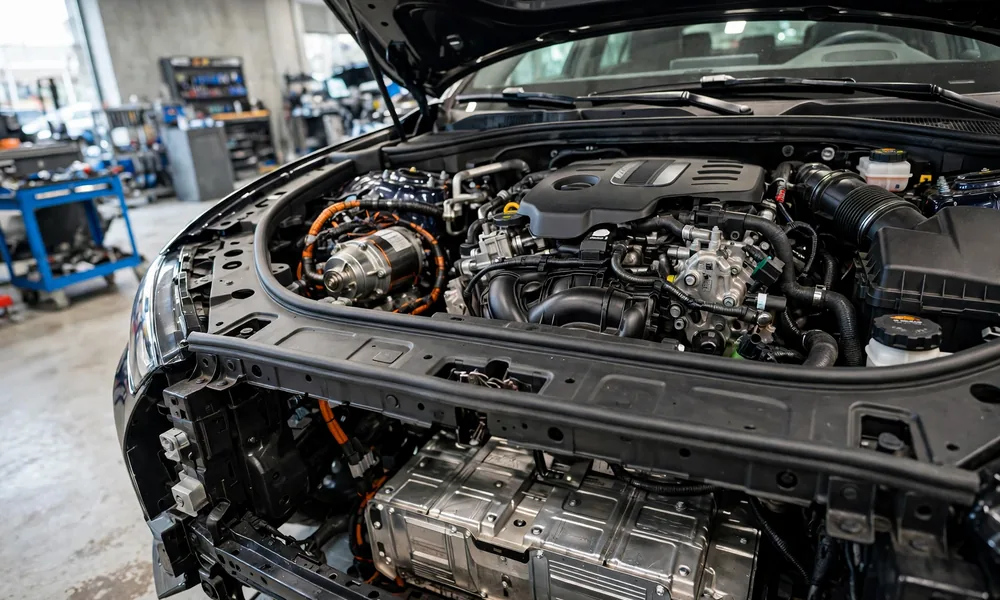
The petrol engine in a luxury hybrid is usually a smaller, more efficient unit than the engine in a comparable non-hybrid car, often a four-cylinder or a V6 running on the Atkinson cycle, a design that trades a little low-speed power for better fuel economy. It is tuned for smooth, quiet running rather than outright performance, because the electric motor covers the low-speed torque. The engine is mounted on soft, active mounts that absorb vibration, and it is insulated so that when it does start, the cabin stays calm.
Step 2: The Electric Motor and Battery
The electric motor sits between the engine and the gearbox, or is built into the transmission itself, and it can drive the car on its own at low speed, assist the engine under acceleration, or act as a generator when the car slows down. The battery is a lithium-ion pack, usually of 1 to 2 kilowatt-hours in a standard hybrid, or 10 to 18 kilowatt-hours in a plug-in hybrid. It lives under the rear seats or in the floor, where its weight sits low and central, and it is cooled to keep its temperature steady. The battery management system never lets the pack run fully flat or fully full, which is why hybrid batteries often last the life of the car. The principles of the battery and motor are shared with pure electric cars, as how an EV battery pack works explains.
Step 3: The Power Split and Gearbox
The clever part of a hybrid is the way the two power sources are combined. Many luxury hybrids use a power-split device, a planetary gear set that lets the engine, the motor and the wheels all turn at different speeds, blending their power seamlessly. Others use a multi-speed automatic gearbox with the motor built in. Either way, there is no clutch pedal and no lurch between electric and petrol power. The driver feels only a smooth, continuous pull, whether the car is creeping in traffic or overtaking on a motorway.
Step 4: Regenerative Braking
Every time the driver lifts off the throttle or presses the brake, the electric motor reverses its role and becomes a generator, turning the car’s momentum back into electricity and storing it in the battery. The brake pedal blends this regenerative braking with the conventional friction brakes, so the car slows smoothly. In city driving, regenerative braking recovers a large share of the energy that a petrol car would waste as heat, and it also means the brake pads last far longer.
Step 5: The Control System
The hybrid control unit is the brain of the car, and it makes decisions the driver never sees. It watches the battery charge, the road speed, the throttle position and even the navigation route, and it chooses the most efficient combination of engine and motor for the next few seconds. If the route ahead includes a downhill stretch, it may use more battery now, knowing it can recharge on the way down. If the driver asks for full acceleration, it will use both sources at once. The system also decides when to start and stop the engine, so smoothly that many drivers only notice when they look at the dashboard display.
Step 6: Driving Modes and the Cabin
Luxury hybrids offer driving modes that let the owner shape the car’s character. An eco mode favours electric driving and gentle throttle response; a comfort mode balances the two sources for the quietest ride; a sport mode keeps the engine ready and sharpens the throttle; and a plug-in hybrid adds an electric-only mode that can cover a daily commute without using any petrol at all. Inside, the cabin is insulated against road and engine noise, and the displays show the flow of energy between engine, motor, battery and wheels in real time. The build of the car is covered in how a luxury hybrid car is made.
Key Specifications
| Feature | Typical Range |
|---|---|
| Petrol engine | 2.0 to 3.5 litres, four-cylinder or V6 |
| Electric motor | 80 to 150 kW |
| Combined power | 250 to 450 hp |
| Battery (standard hybrid) | 1 to 2 kWh |
| Battery (plug-in hybrid) | 10 to 18 kWh |
| Electric-only range (plug-in) | 40 to 80 km |
| Fuel use | 4 to 6 litres per 100 km |
| 0 to 100 km/h | 5 to 7 seconds |
These are typical ranges for current luxury hybrids, and they vary by model and by whether the car is a standard hybrid or a plug-in. A plug-in will use almost no petrol on a short commute if it is charged regularly. The figures are not the whole story, though: the quietness, the smoothness and the low-speed refinement are what owners notice first.
What a Luxury Hybrid Car Costs
Prices depend on brand, size and specification, so treat these as estimates. A luxury hybrid saloon typically starts at an estimated $60,000 to $90,000, a larger hybrid SUV or saloon can cost $90,000 to $140,000, and a flagship plug-in hybrid can pass $150,000 with options. The hybrid premium over a petrol-only equivalent is usually an estimated $5,000 to $15,000, and much of that is recovered in fuel savings over several years. Servicing is similar to a petrol car, with the addition of a battery health check, and the battery is usually covered by a long warranty, often eight to ten years. The reasons a luxury hybrid car is so expensive explain why the technology adds to the price.
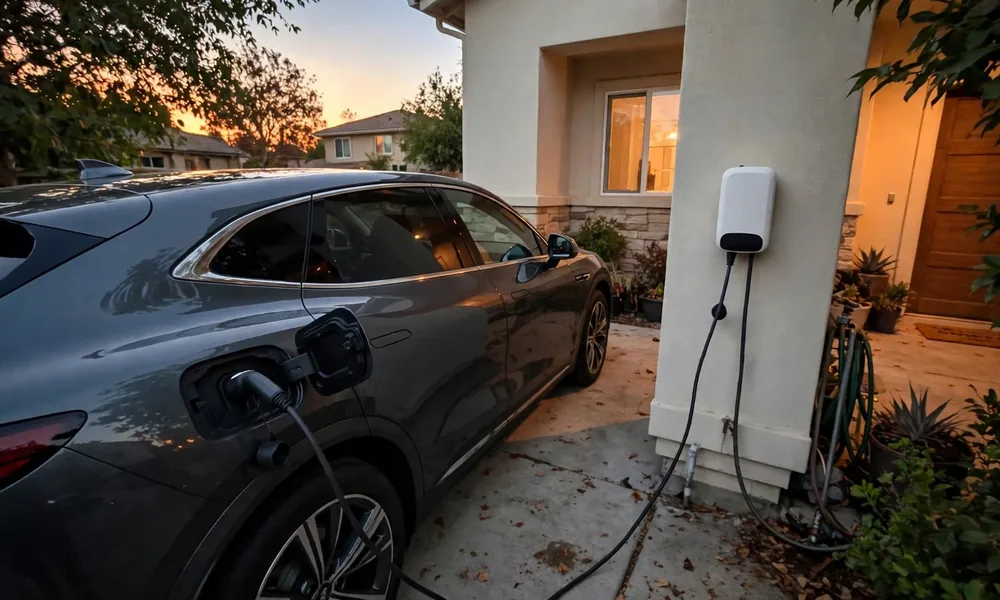
Charging a plug-in hybrid is simple: a home wall box will charge it overnight. A standard hybrid needs no charging at all, since it charges itself from the engine and from braking. That difference matters for buyers without a driveway or a garage.
A Rare Fact
The first mass-market hybrid was launched more than twenty-five years ago, and many of those early cars are still on the road with their original batteries. Taxi fleets have run hybrids to very high mileages, and the batteries have proved far more durable than early sceptics predicted.
A luxury hybrid car is at its best in the everyday driving that makes up most of a car’s life: the school run, the commute, the slow crawl through town. It is quiet when it should be quiet, quick when it needs to be quick, and frugal without asking the driver to think about it.


