Pick up a luxury mechanical keyboard and the first thing you notice is its weight. It does not slide across the desk or flex when you press a key. It sits there, solid and cool to the touch, and every keystroke lands with a soft, deliberate click that sounds more like a well-made watch than a computer accessory. Typing on it feels less like work and more like playing a small, precise instrument.
That feeling is not an accident. A luxury keyboard is built the way fine objects have always been built: from heavy materials, in small batches, by people who check each part by hand. The case is machined from a solid block of metal, the switches are chosen one by one, and the keys are made to survive decades of daily use without losing their colour or their feel.
This is how a luxury mechanical keyboard comes together, from a block of raw aluminium to the finished board on your desk.
How It’s Made
Step 1: Machining the case from solid metal
Every luxury keyboard starts as a solid block of aluminium, brass or, in the rarest boards, titanium. A computer-controlled mill carves the block into a case, cutting the tray, the rim and the mounting points for the plate inside. The work is slow, because the metal must be cut in thin passes so it does not warp under the heat of the cutter.
Once the shape is right, the case is sanded, bead-blasted and anodised, which gives it a hard coloured skin that resists scratches. A related build, the luxury gaming keyboard, uses a similar machined case, though its lighter shell is tuned for speed rather than sheer weight. The luxury board keeps its mass, because weight is what stops the case ringing when you type.
Step 2: Making the plate and the switches
Inside the case sits a metal plate, usually brass or steel, with a hole for every switch. The plate is cut by laser or milled to a tolerance of a fraction of a millimetre, because a switch that sits crooked will feel crooked for the life of the board. Each switch is then pressed into the plate by hand, a job that takes patience and a steady grip.
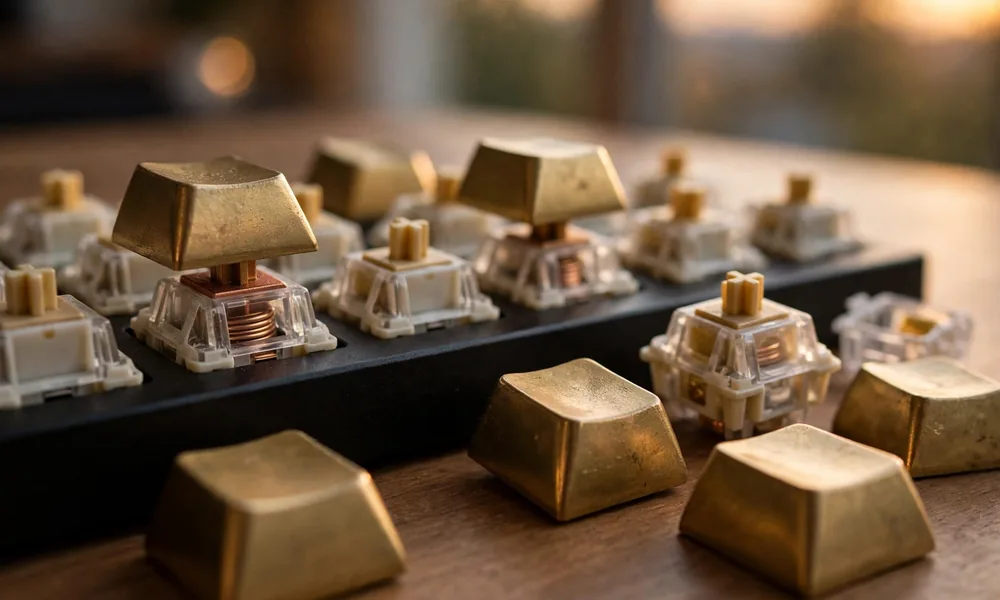
A switch is a small marvel in itself. A spring, a stem and two metal contacts sit inside a tiny plastic housing, and the exact spring weight decides whether the key feels light, firm or deliberately heavy.
Step 3: Lubricating and tuning each switch
Before the switches go in, many luxury makers lubricate them, opening each one and brushing a thin film of grease onto the stem and spring. It is slow, fiddly work, and it is the step that separates a good board from a great one. A lubricated switch glides instead of scraping, and the sound changes from a rattle to a clean, muted thock.
The stabilisers, the small wire bars under the long keys like the space bar, get the same treatment. A badly tuned stabiliser rattles with every press, so makers clip, grease and test them until the long keys sound as even as the short ones. This tuning can take an hour or more on a single board.

Step 4: Wiring the circuit board
Under the plate sits the printed circuit board, the keyboard’s nervous system. Each switch solders or clips onto the board, and copper traces carry the signal from every key to a small controller chip. The board is checked under a magnifier for stray solder, because a single bridge of metal between two traces can make two keys fire at once.
The controller is then programmed with the layout the buyer chose, including any extra layers for symbols or shortcuts. Some boards allow the owner to swap switches later without soldering, using sockets instead of solder joints, which makes the keyboard a thing that can be repaired and changed rather than thrown away.
Step 5: Crafting the keycaps
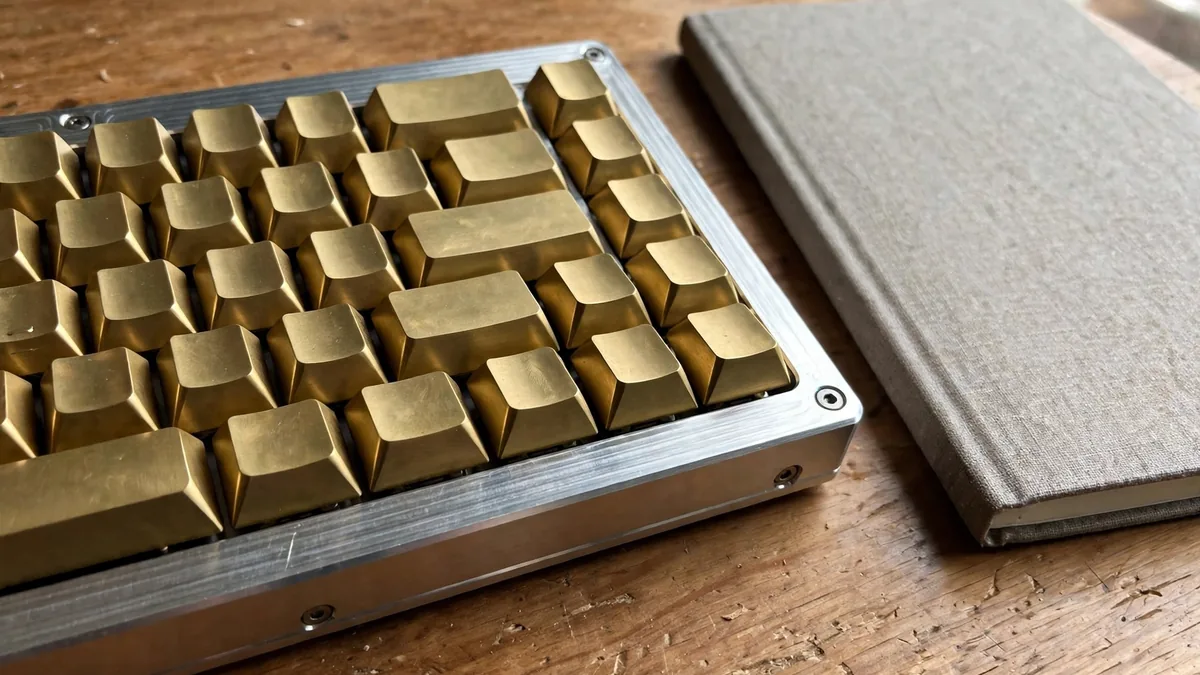
The keycaps are the part your fingers actually touch, so they get the most attention. The best are made by double-shot moulding, where two layers of plastic are moulded one inside the other, so the letter on each key is a solid piece of plastic rather than printed ink that will wear away. Others are machined from brass, ceramic or polished stone.
Each cap is checked for thickness, colour and fit, and sets are matched so that no two keys in a set look different in the light. The luxury mechanical keyboard specifications explain what those cap materials and switch weights mean in practice.
Step 6: Assembling, testing and tuning the sound
With the case, plate, switches and caps ready, the board is assembled in layers: foam or silicone gaskets between the plate and the case to soften the sound, the board screwed down to an exact torque, and the caps pressed on one by one. Then comes the testing, and it is thorough.
Every key is pressed and checked on a computer, the board is listened to in a quiet room, and any key that sounds dull or sharp is opened up and fixed. Only when the whole board sounds even, from the smallest letter key to the long space bar, is it cleaned, packed and sent out. A well-made board can last for decades, and the luxury laptop it sits beside is built to a similar philosophy of parts that can be serviced rather than replaced.
What it is made of
The table below sums up the parts that matter most in a luxury mechanical keyboard, from the case to the caps.
| Part | Typical luxury choice |
|---|---|
| Case | Machined aluminium or brass, anodised finish |
| Plate | Brass or steel, laser-cut to tight tolerance |
| Switches | Hand-lubricated, 45 to 80 gram spring weight |
| Keycaps | Double-shot plastic, brass or ceramic |
| Board | Hot-swap sockets, programmable controller |
| Weight | 1.5 to 3.5 kilograms |
| Build time | Several days per board, mostly hand work |
How much does one cost?
A luxury mechanical keyboard is priced like a piece of precision equipment, and the machining is the main reason why: milling a case from a solid block takes hours of machine time, and the hand lubrication and tuning add many more hours of skilled labour. As an estimate, a finished board from a respected small maker costs roughly 500 to 1,500 dollars, with the case material and the keycap set accounting for much of the difference.
At the very top, boards with titanium cases, ceramic caps or a numbered limited run can be estimated at 3,000 dollars or more, and some sell out in minutes. Owners accept the price because the board is not a disposable accessory: the switches can be swapped, the caps can be changed, and the case will outlast several computers.
A rare fact
Here is something few people know: the deep, satisfying sound that luxury keyboard fans love is not made by the switch alone. Most of it comes from the empty space inside the case, which acts like the body of a guitar, amplifying and colouring the click. Makers tune that space deliberately, adding foam, changing the case thickness or leaving a gap, in the same way a luthier tunes a wooden instrument.
The result is a keyboard that feels less like a gadget and more like a crafted tool. Building one takes days of patient hand work, but the payoff is a board that sounds, feels and lasts like nothing mass-produced ever will.


