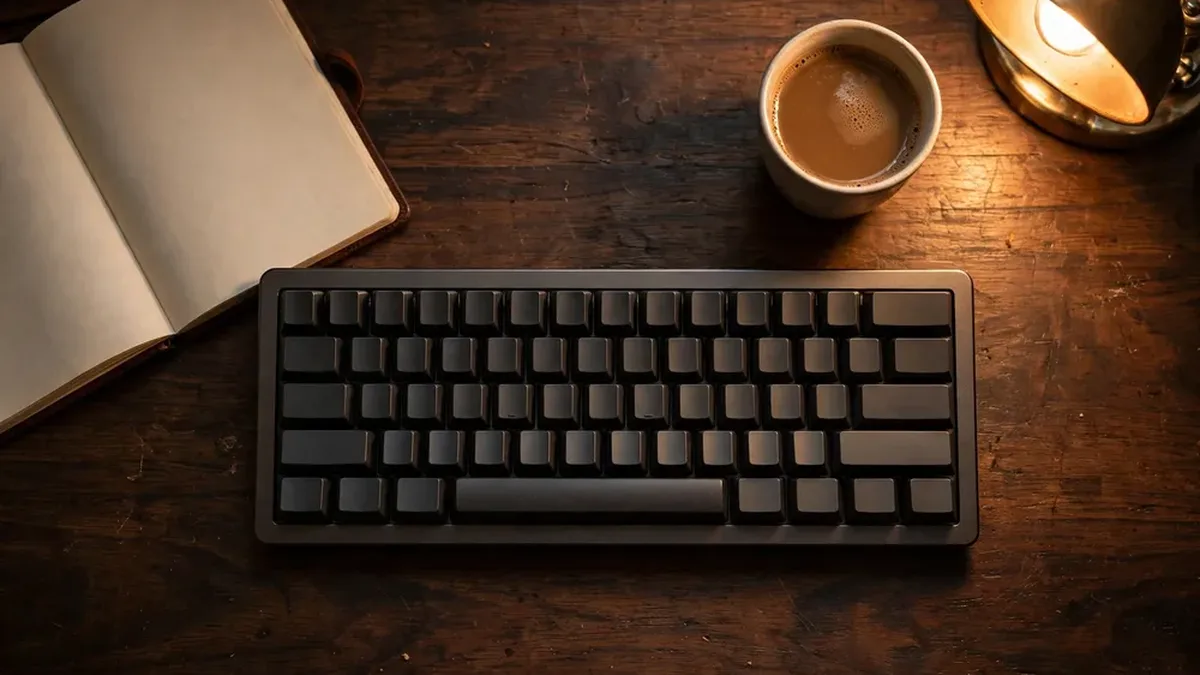
A writer in Berlin keeps a keyboard on his desk that cost more than his first laptop. It is a small, heavy rectangle of dark metal, with blank black keycaps and a sound that his colleagues describe as rain on a wooden roof. He bought it after a decade of wrist pain, and he says it was the first keyboard that ever made typing feel like rest. Visitors pick it up, feel the weight, press a key, and ask the same question: how can a keyboard possibly cost this much?
It is a fair question, because a keyboard does one job, and a ten-dollar keyboard does that job too. A luxury mechanical keyboard does it with a precision, a sound and a build quality that a cheap board cannot match, and it is built in a way that makes it expensive at every step. The price is not a trick. It is the sum of machined metal, hand assembly, tiny production runs and a community that treats a keyboard the way watch collectors treat a watch.
Why a Luxury Mechanical Keyboard Costs So Much
Reason 1: The case is machined from solid metal
The case is the first thing you feel, and on a luxury keyboard it is usually machined from a solid block of aluminium, brass or even titanium. A computer-controlled mill carves the case out of the block over an hour or more, removing most of the metal as shavings, and the result has no mould lines, no flex and no hollow sound. A cheap keyboard case is injection-moulded plastic, made in seconds for pennies. The machined case is heavier, stiffer and far more expensive to produce, and it is the reason a luxury keyboard can weigh two kilograms and feel like a tool rather than a toy.
Reason 2: The switches are tuned, lubed and tested by hand
Every key on a mechanical keyboard sits on its own switch, and on a luxury board those switches are not simply dropped in. They are often lubricated by hand, a slow process in which a tiny amount of grease is applied to each switch to make it move smoothly and sound deeper, and they are tested for consistency so that every key feels the same. A full board has sixty to a hundred switches, and hand-lubing them can take hours. The result is a keyboard that feels the same on every key, every day, for years, and that consistency is what the price is really buying. The numbers behind that feel are explained in our guide to luxury mechanical keyboard specs.
Reason 3: The keycaps are a craft of their own
Keycaps, the plastic tops you touch, are often the most expensive part of a luxury keyboard after the case. The best are made from PBT plastic, which stays textured and resists shine, and their legends are made by double-shot moulding, where two layers of plastic are fused so the letter can never wear off, or by dye sublimation, where the ink is baked into the plastic itself. A single artisan keycap, a small sculpture that replaces one key, can cost $50 or more, and a full set of premium keycaps can cost $200 to $400. The general keyboard picture is covered in our guide to luxury keyboard specs, which compares the materials side by side.
Reason 4: The plate, the gaskets and the sound
Inside a luxury keyboard, between the switches and the case, is a plate that holds everything together, and the way it is mounted decides the sound. The current luxury standard is gasket mounting, where the plate floats on small rubber gaskets instead of being screwed down tight, which softens each keystroke and evens out the sound across the board. The plate itself can be aluminium for a firm, crisp feel, brass for a deeper sound, or polycarbonate for a softer, more muted tone. It is a level of sound engineering that a mass-produced board never receives, because it takes time, and time is the one thing a factory line does not have.

Reason 5: Tiny runs and a community that pays for scarcity
Luxury keyboards are not made by the million. A popular group buy, the usual way a luxury board is sold, might produce a few hundred or a few thousand units, and a boutique run might be fewer than a hundred. Buyers pay in advance, wait months for production, and receive a board that will never be made again in exactly that form. That scarcity is deliberate, and it is also expensive: the cost of design, tooling and testing is spread across a tiny number of buyers, and the makers are small workshops, not factories. The way such a board is put together is shown in our guide to how a luxury mechanical keyboard is made, which follows the case from raw metal to finished board.
Reason 6: It is built to be repaired, not replaced
A cheap keyboard is disposable: when a key fails, the whole board is thrown away. A luxury mechanical keyboard is built to be taken apart, repaired and changed. The switches can be swapped without soldering, the keycaps can be replaced, the case can be opened and the plate changed, and the firmware can be updated. That repairability is not an accident. It is a design choice, and it costs money, because every part must be made to a standard that allows it to be removed and refitted many times.
Luxury Mechanical Keyboard Specs at a Glance
| Specification | Typical range |
|---|---|
| Case material | CNC-machined aluminium, brass or titanium |
| Switch type | Linear, tactile or clicky; hand-lubed |
| Actuation force | About 45 to 65 grams |
| Keycap material | PBT; double-shot or dye-sublimated legends |
| Mounting | Gasket mounted; brass, aluminium or polycarbonate plate |
| Polling rate | 1,000 Hz, up to 8,000 Hz flagship |
| Weight | About 1.5 to 2.5 kg |
| Connection | Wired USB, Bluetooth and 2.4 GHz wireless |
What Does a Luxury Mechanical Keyboard Cost?
A luxury mechanical keyboard is estimated to cost roughly $300 to $700 for a complete board from a respected maker, with fully custom builds estimated at $1,000 to $2,500 or more once a machined case, premium keycaps and hand-lubed switches are added. A premium keycap set is estimated at $100 to $400, and a single artisan keycap at $30 to $80. Prices are estimates only and vary by maker, materials and availability.
A Rare Fact
The most sought-after keyboards in the world are not sold in shops at all. They are sold through group buys, where buyers pay months in advance for a board that does not exist yet, and the run closes when a set number is reached. Some of those boards, made in runs of fewer than a hundred, now change hands for many times their original price, not because they type faster than a modern board, but because they will never be made again, and because the community that wanted them has only grown since.
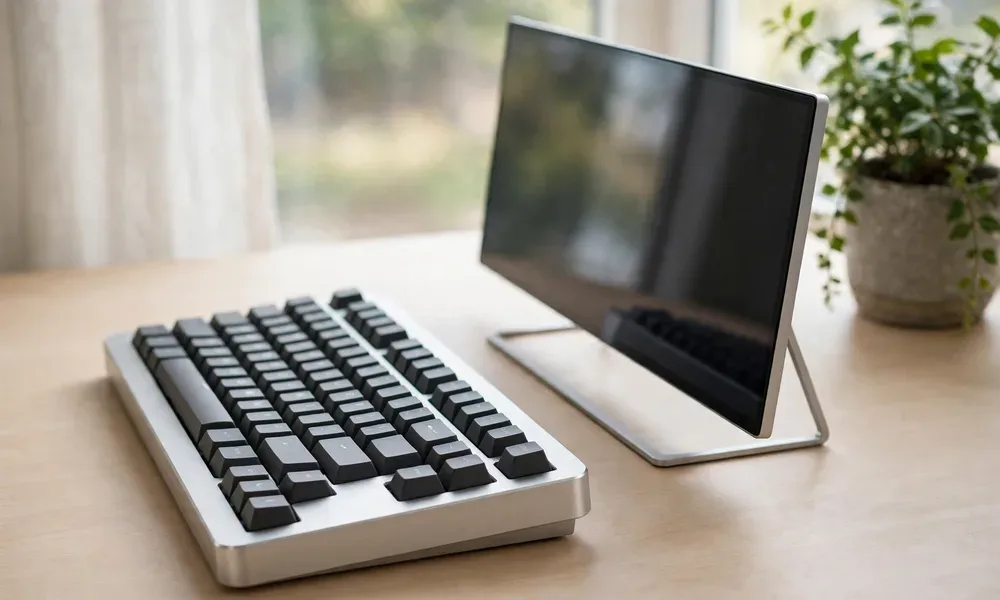
So why is a luxury mechanical keyboard so expensive? Because its case is machined from solid metal, its switches are tuned by hand, its keycaps are a craft of their own, its sound is engineered, it is made in tiny runs, and it is built to be repaired rather than replaced. Try one before you dismiss it. Press a key, listen to the sound, and feel the weight under your hands. The price will still be high, but after five minutes, it will no longer be a mystery.