Nobody in the street notices the car, and that is the first thing it is designed to do. It pulls away from the kerb like any other luxury saloon, quiet, smooth, and unhurried, while the traffic around it has no idea that its doors carry steel, its glass carries layers of plastic and polycarbonate, and its tyres can keep rolling with no air in them at all. A luxury bulletproof car is a contradiction on wheels: a vehicle built to survive an attack, yet built to look as if an attack were the last thing on anyone’s mind.
The protection is not a single feature but a system, and every part of it has to work with every other part. The suspension must carry hundreds of extra kilograms without ruining the ride, the brakes must stop a far heavier car in the same distance, and the engine must pull that weight away from danger without hesitation.
This is not the story of how the car is built. That build, panel by panel, is told in how a luxury bulletproof car is made, and it ends the day the car rolls out of the workshop. This is what happens after that day, every time the car is driven: how a luxury bulletproof car works, from the first layer of armour to the last line of defence.
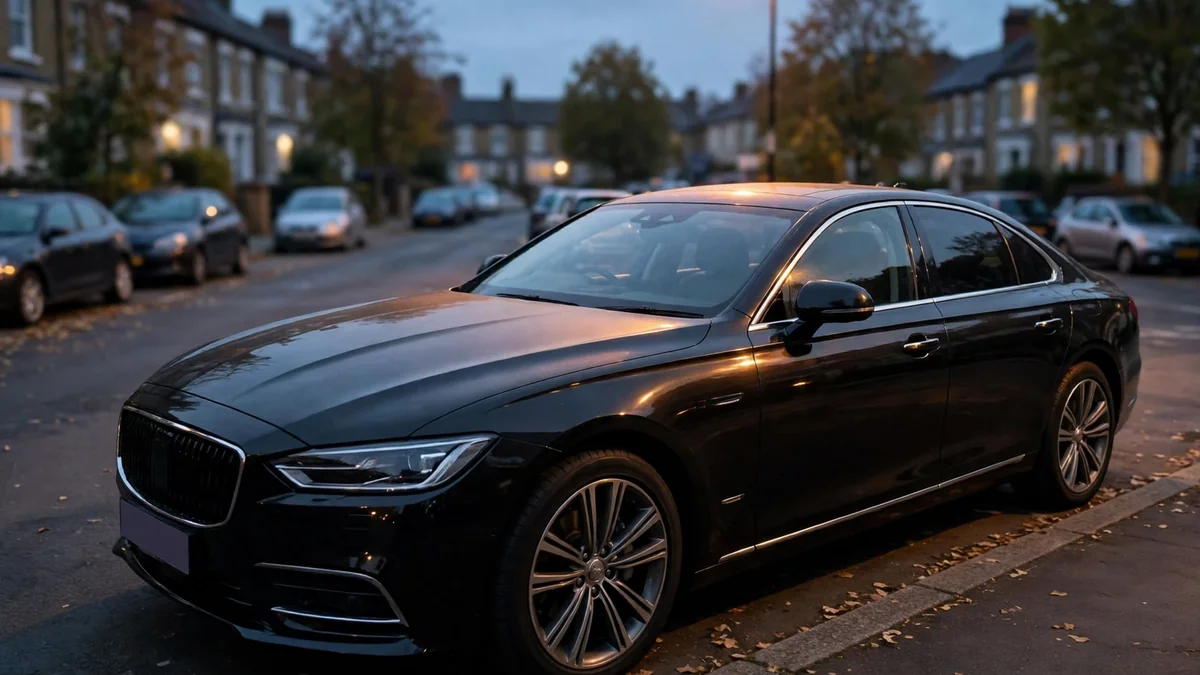
How a luxury bulletproof car works
Step 1: The armour shell spreads the force
The first layer of defence is the armour shell hidden inside the doors, roof, floor, and pillars. It is made of hard, heat-treated steel, or of lighter composite panels, cut to overlap like scales so there is no gap a bullet can slip through. When a bullet strikes, the armour does not simply block it. The hard face of the plate shatters or flattens the bullet, and the layers behind it spread what is left of the force across a wide area, so the energy that reaches the cabin is a dull thud instead of a piercing strike.
Step 2: The ballistic glass stops what the steel cannot
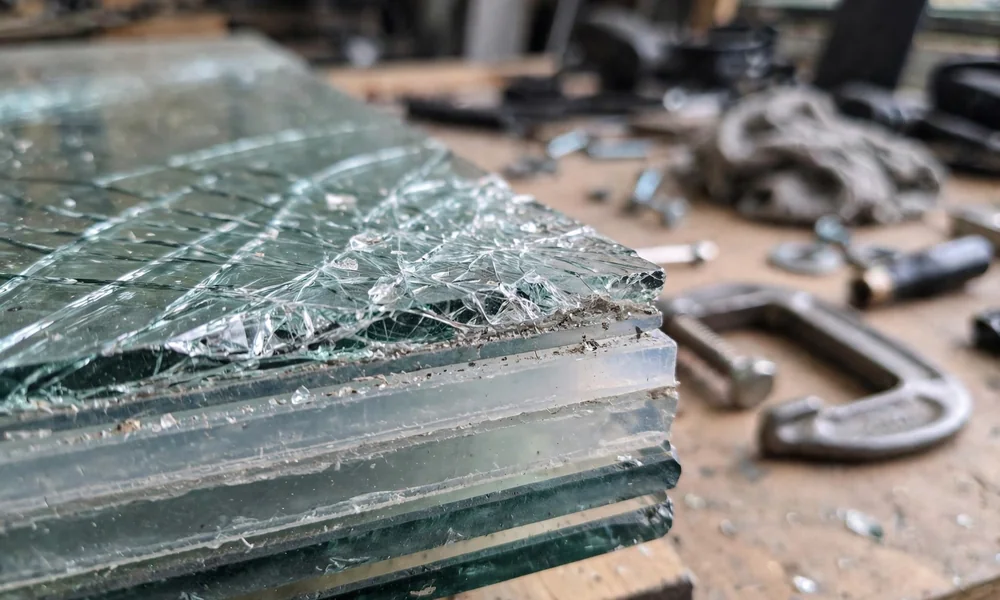
The windows are the hardest part of the whole system, because they must be transparent and bulletproof at the same time. Ballistic glass is not one pane but a sandwich: layers of glass bonded to layers of polycarbonate, a tough plastic that catches fragments and holds the sandwich together even when the outer glass is shattered. A bullet that hits the window cracks the outer layers, loses its energy in the plastic, and stops before it reaches the inside face. The glass is far thicker than ordinary car glass, which is why the windows of an armoured car move slowly and why the doors that carry them feel so heavy.
Step 3: The run-flat tyres keep the car moving
A bulletproof car that cannot move is a trap, so the tyres are built to keep working after they are shot. Run-flat tyres have stiff, reinforced sidewalls that can support the weight of the car even with no air inside them, letting the driver keep going for fifty kilometres or more at reduced speed. The driver does not need to stop, get out, and change a wheel while under threat. The car simply keeps rolling, more slowly, while the driver heads for safety. The same obsession with layered protection shapes the slow, careful build described in how a luxury limousine is made, where every hidden layer has to work with the ones around it.
Step 4: The suspension, brakes, and engine carry the weight
Armour adds six hundred to nine hundred kilograms to a luxury car, and the rest of the machine has to be rebuilt to carry it. The suspension is uprated with stronger springs, dampers, and bushes, tuned so the car still rides like a luxury saloon instead of a truck, and the brakes are enlarged with bigger discs and calipers so the heavier car stops in the same distance as the car it started life as. The engine is usually the largest in the range, chosen for its torque rather than its top speed, because the job that matters is accelerating a heavy car away from trouble.
Step 5: The cabin protects the people inside
Inside, the protection turns from stopping bullets to keeping people alive and calm. The doors overlap their frames with armoured lips so there is no straight line into the cabin, and the hinges and locks are reinforced so a door cannot be forced or torn off. Many cars carry an intercom, so the occupants can speak to someone outside without opening a window, and a fresh-air system with filters, so the cabin can stay sealed against smoke or gas.
Step 6: The driver turns protection into escape
The last layer of defence is not steel or glass but the driver. Armoured car drivers are trained to read a street the way a bodyguard reads a room: to spot a blocked road before they enter it, to keep the car moving, and to use its weight and power to push through an obstacle rather than stop beside it. A bulletproof car is never meant to sit and take punishment. It is meant to absorb the first strike and then leave, and every part of it, from the armour to the engine, exists to make that escape possible. The hydrogen cars of the future face a different version of the same problem, as shown in how a luxury hydrogen car is made, where the fuel itself, not the threat, is what must be contained.
Specifications
| Specification | Typical figure |
|---|---|
| Added weight | 600 to 900 kilograms |
| Armour | Heat-treated steel or composite panels |
| Glass | Multi-layer ballistic glass with polycarbonate |
| Tyres | Run-flat, 50 kilometres or more with no air |
| Fuel tank | Self-sealing, lined |
| Protection levels | Handgun to high-powered rifle, by grade |
| Estimated price | From around $500,000, an estimate |
The price of a luxury bulletproof car is an estimate, because each car is built to the threat its owner faces. A well-equipped luxury bulletproof car typically starts from around $500,000, and a top-grade armoured saloon with the highest protection level, a full cabin system, and a trained driver package can cost $1,000,000 or more. The buyer is not paying for the car. They are paying for the seconds it buys them.
A rare fact
Here is a detail that surprises people who have never sat in one: the windows of a bulletproof car often cannot be opened more than a few centimetres, and on some cars they cannot be opened at all. The glass is so thick and heavy that a normal window mechanism cannot lift it, and a fully openable window would leave a gap in the armour that defeats the whole purpose. The car protects them by keeping the world outside, and the windows are the proof.
A finished bulletproof car is a machine that does its best work by never being noticed, and its luxury is in what it does not do: it does not look armoured, it does not ride like a truck, and it does not remind its passengers of why it exists.


