A private jet begins life as flat sheets of aluminium and a stack of engineering drawings, not as an aeroplane. In a hangar the size of a football stadium, those sheets are cut, curved and riveted into a tube that will one day cruise at 45,000 feet, and the transformation takes months of patient, exacting work. Every rivet is logged, every wire is tested, and nothing is hidden behind a panel until an inspector has signed it off.
The jets that leave these factories are small compared with airliners, usually seating between six and nineteen people, but they are built to a standard that is arguably higher. A private jet flies fewer hours a year than an airliner, yet it is expected to be ready on a few hours’ notice, to land at small airfields, and to keep its cabin quiet enough for conversation at altitude. That combination of readiness and comfort is what the build is really about.
Most jets are built to order. A buyer chooses the model, the cabin layout and the paint scheme months before the first sheet is cut, and the factory slots the build into a production line that may already be booked a year ahead. That waiting list is part of the luxury: the aeroplane is not taken from stock, it is made for one owner, and the factory knows the name of the person it is building for.
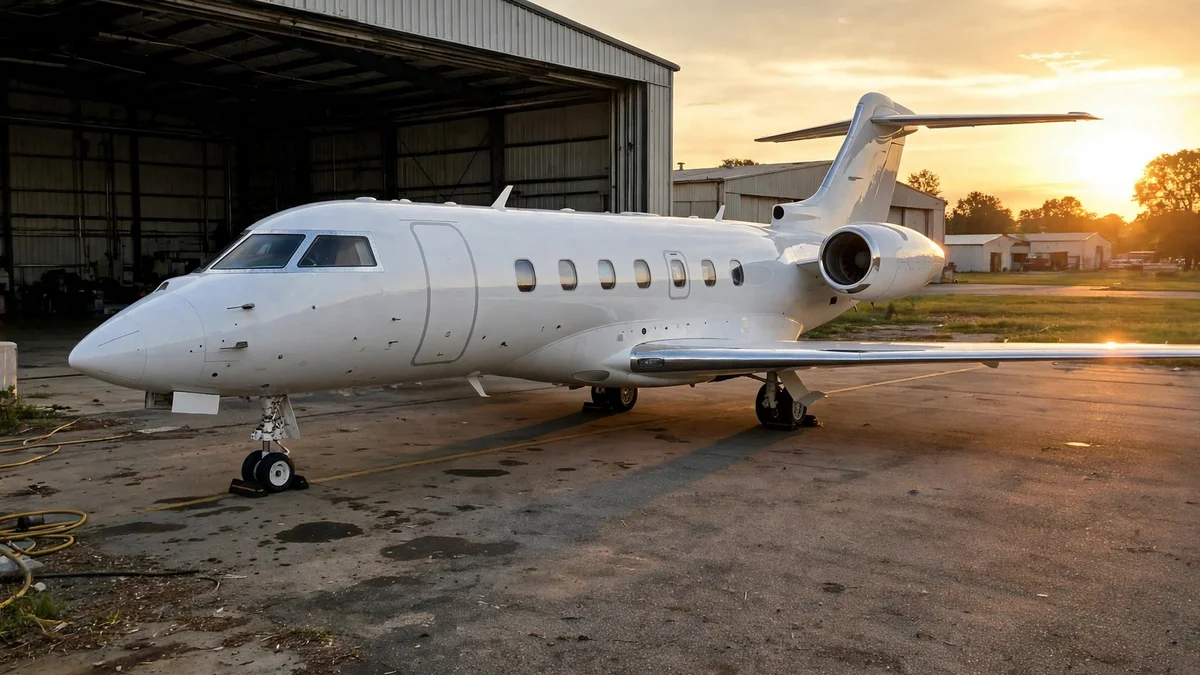
How a Luxury Private Jet Is Made
Step 1: Cutting and forming the skin
The build starts in the sheet-metal shop, where aluminium alloy sheets are cut by computer-guided machines and then shaped on presses and rollers into the curved panels of the fuselage. The alloy is chosen for a mix of lightness and fatigue resistance, because a fuselage inflates and deflates with cabin pressure on every flight. Each panel is checked against its drawing before it moves on, since a skin panel that is a millimetre out of shape will not sit flush against its neighbours.
Step 2: Building the fuselage barrel
Frames, longerons and stringers are assembled into a skeleton, and the skin panels are riveted over them to form barrel sections. Workers drill, deburr and seal every joint, because a pressurised cabin cannot tolerate a leak path. The barrels are then joined end to end, and the whole fuselage is measured with laser trackers to confirm it is straight and round within a fraction of a millimetre. Inspectors walk the barrel with torches and mirrors, checking each rivet line by eye and by touch, because a single loose rivet can whistle at altitude and a missed seal can cost the cabin its pressure.
Step 3: Wings, tail and control surfaces
The wing is built separately, around a central spar that carries the bending load of flight. Fuel tanks are sealed inside the wing structure itself, and the ailerons, flaps and spoilers are fitted and rigged so they move exactly as the flight controls command. The tail is assembled in the same way, with its own spars and control surfaces, and then the wing and tail are mated to the fuselage on a jig that holds everything in alignment.
Step 4: Engines and systems
Two turbofan engines are hung from pylons under the wings or on the rear fuselage, depending on the design, and connected to fuel, hydraulic and electrical systems. Inside the fuselage, technicians run kilometres of wiring looms, hydraulic lines and air-conditioning ducts through the structure. The landing gear, with its brakes and steering, is fitted and tested on jacks before the aeroplane ever moves under its own power.

Step 5: Avionics and the flight deck
The cockpit is installed as a complete unit in many factories, with its displays, flight-management computers and radios already wired and tested on a bench. Pilots fly the aeroplane through glass displays that show navigation, engine data and weather, and the autopilot can take the jet from shortly after take-off to the final approach. Every system is powered up and checked on the ground, and any fault found here is fixed before the engines are started.
Step 6: The cabin
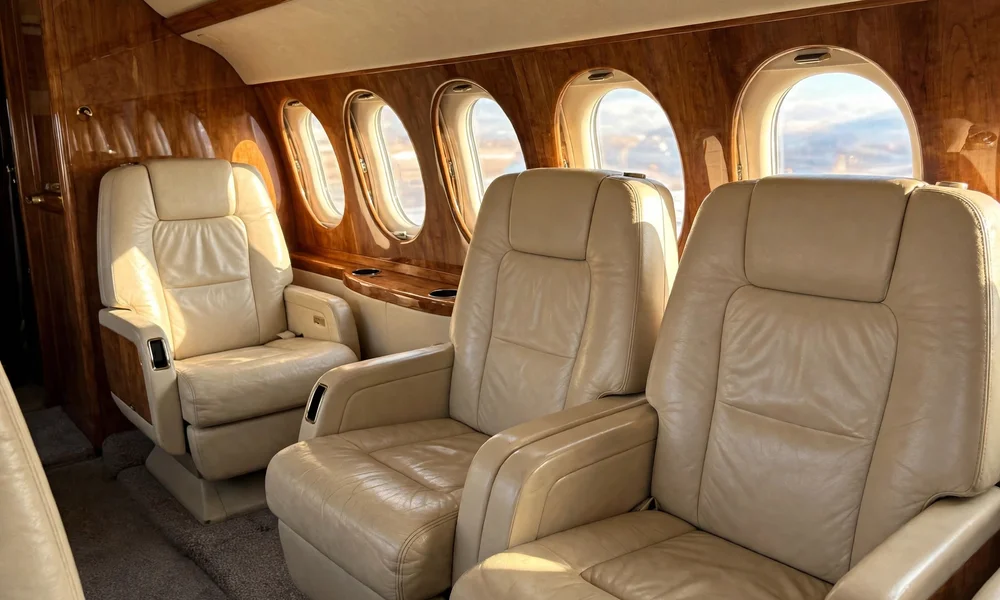
The cabin is where a private jet becomes a luxury product. Craftsmen fit seats that swivel, recline and fold into beds, tables that stow flush, and wood veneer panels matched grain to grain across the cabin. The seats alone can take weeks: leather is cut, stitched and fitted by hand, and each seat is tested for recline, swivel and crash loads before it is bolted to the floor rails. Soundproofing blankets line the fuselage to keep the cabin quiet, and the air system is tuned so the cabin feels like a mountain lodge rather than a metal tube. A galley, a lavatory and sometimes a shower complete the interior, all of it built to survive turbulence and years of use.
Step 7: Painting, testing and first flight
The aeroplane is painted in a sealed booth, often in a scheme the owner chose months earlier, and then it goes through ground tests: engines run at full power while tied down, systems are cycled, and the cabin is pressurised to check for leaks. Finally, a test pilot takes it up for its first flight, working through a long checklist of speeds, handling and system checks. Only when the test flights are clean does the jet receive its certificate and its delivery flight to its owner.
Specifications
| Detail | Typical figure |
|---|---|
| Seating | 6 to 19 passengers |
| Cruise speed | Around 800 to 900 km/h |
| Cruising altitude | Up to about 45,000 feet |
| Range | Roughly 3,000 to 7,000 km, by model |
| Engines | Two turbofans |
| Build time | Several months from first metal cut to delivery |
Delivery day is a quiet ceremony rather than a celebration. The owner walks around the aeroplane with the test pilot, checks the cabin, and signs the acceptance papers, and only then does the jet become theirs. The factory keeps a copy of every inspection record, so the aeroplane’s whole life can be traced back to the day its first sheet was cut.
What It Costs
A new light private jet costs an estimated $3 million to $8 million, a midsize jet an estimated $10 million to $25 million, and a large long-range jet an estimated $30 million to $70 million or more, depending on size, range and cabin finish. Those are estimates, and a bespoke interior can add millions on top. Running one is a separate bill: fuel, crew, hangarage, maintenance and insurance commonly run to an estimated $1 million to $3 million a year for a midsize jet. Owners who fly less often sometimes share a jet or buy hours on one instead, which is why the charter market exists. The economics are simple enough: the aeroplane itself is only the first cheque.
The same obsession with weight, noise and reliability shows up wherever luxury machines are built, from a helicopter pad on a yacht to the jet ski stowed in its garage and the bridge of a luxury submarine. Each one is a small world of engineering fitted into a tight space, and each one is tested until it works every time.
A Rare Fact
Some private jets are painted with a layer of paint so thin, and so carefully weighed, that the paint job itself is measured in kilograms, because every extra kilo costs range. On the lightest jets, engineers have been known to ask for a thinner coat on the underside, where nobody looks, to save a few kilograms for the fuel tanks.


