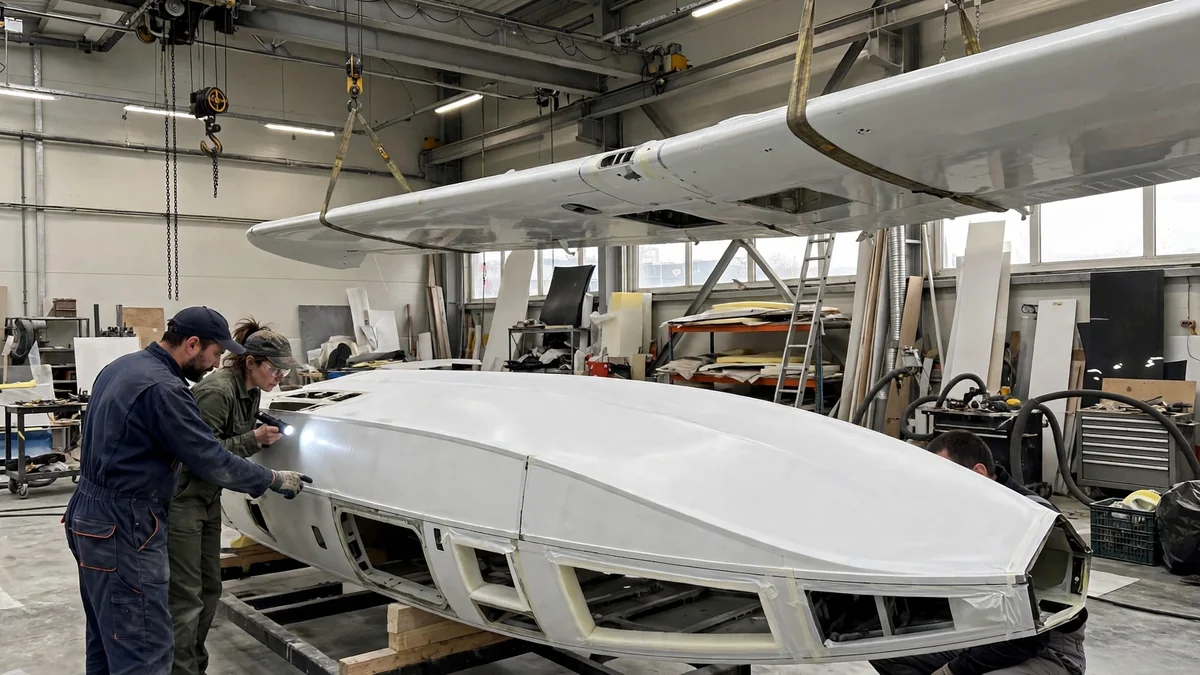
The factory floor is quiet at first light, and the thing taking shape in the middle of it does not look like an aircraft yet. It looks like a boat hull, long and smooth, resting on a cradle while a small team in overalls walks around it with torches and measuring tapes. Above them, a wing hangs from a gantry, waiting to be lowered into place. In a few weeks this hull will have an engine, a propeller, a leather-lined cabin, and two floats bolted to its wings. It will be a machine that can land on a lake and then fly away from it.
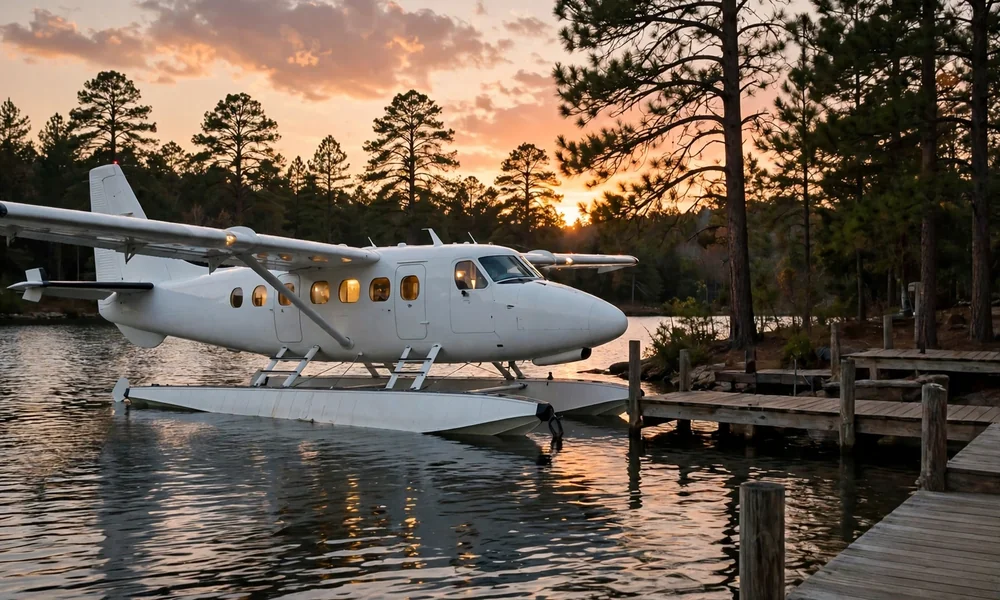
A luxury seaplane is a small aircraft built to take off and land on water, finished to the standard of a private jet. It is made in small numbers, often one at a time, by builders who blend boatbuilding with aircraft engineering. Every seam must be watertight and every rivet must meet aviation rules, which makes it one of the most demanding small aircraft to build.
How a Luxury Seaplane Is Made, Step by Step
Step 1: The hull takes shape
Building begins with the hull, because a seaplane is a boat first and an aircraft second. Sheets of marine-grade aluminium are cut to shape, rolled and pressed into curves, then riveted or bonded onto a frame of ribs and stringers. The underside is shaped into a step, a sharp change in the hull profile that lets the aircraft rise onto the surface of the water and skim along it during take-off. Every joint is sealed against leaks, and the compartments inside the hull are made watertight so that a small leak cannot flood the aircraft.
Step 2: The floats are built and sealed
While the hull is being shaped, a second team builds the floats, the long, narrow pontoons that give the aircraft stability on the water. On a flying-boat design the hull does the floating, and the floats are small stabilisers under the wings. On a floatplane, two large floats carry the whole aircraft, and they are built like small boats in their own right, with watertight compartments, a step on the underside, and a small water rudder at the back for steering while taxiing. Each float is pressure-tested before it is fitted.
Step 3: The wing and the tail are fitted
The wing is mounted high on the fuselage, above the cabin, so it stays clear of spray and does not block the passengers’ view. It is built from aluminium spars and ribs, skinned in sheet metal or composite panels, with fuel tanks inside. Struts connect the wing to the floats, and the whole structure must be strong enough to take the pounding of a water landing, which is harder on an airframe than a landing on a runway. The same care with light, strong structures shows up in other aircraft built in small numbers, as described in the guide to how a luxury airship is made. The tail is fitted last, with the elevator and rudder hinged and rigged so the pilot’s controls move them smoothly.
Step 4: The engine and the propeller go on
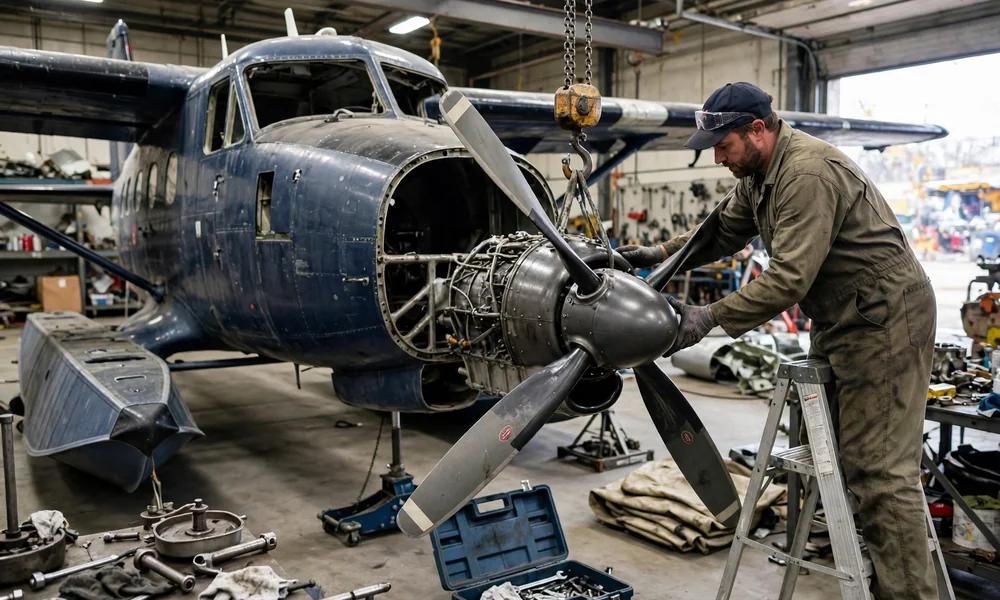
Most luxury seaplanes use a single turboprop engine, a small jet engine that turns a propeller, mounted in the nose and raised high enough to keep the propeller clear of spray. The engine is bolted to a mount on the firewall, plumbed with fuel lines, oil lines and wiring, and fitted with a propeller of three or four blades. The propeller is often reversible, which lets the pilot slow the aircraft on the water and back it into a dock. The engineering behind it overlaps with what the guide to how a luxury seaplane works describes once the aircraft is flying.
Step 5: The cabin is finished in luxury
With the structure complete, the cabin is fitted out. The difference between a working seaplane and a luxury one lives here: leather seats for four to eight passengers, wood veneer on the sidewalls, soft headlining, and large windows so passengers can watch the water below. Sound insulation is layered into the walls and floor, because a turboprop is loud and a quiet cabin is what owners pay for. Heating, air conditioning and a sound system are installed, and every fitting is weighed, because a seaplane carries less than a land aircraft of the same size.
Step 6: Systems, wiring and corrosion protection
Water is the enemy of an aircraft, so the whole machine is protected against it. Wiring runs through sealed conduits, connectors are coated against moisture, and the airframe is treated with corrosion-proofing compounds around the floats, struts and hull. The instruments, navigation and radio equipment are fitted, and the control cables are run from the cockpit to the wings and tail. Then the aircraft is painted, usually white with a coloured stripe, in a marine-grade finish that resists salt water and sun. A good paint job on a seaplane is not decoration, it is armour, and the finish shares its thinking with the hull work on a luxury speedboat.
Step 7: Testing on water and in the air
The finished seaplane is towed to the water and tested like a boat before it is ever flown. It is floated, checked for leaks and taxied across the lake. Then a test pilot opens the throttle, runs it up onto the step, and lifts it into the air for the first time. Flight tests check handling, engine performance and the floats at every speed, and any fault sends the aircraft back to the workshop. Only when the tests are clean is the seaplane handed to its owner.
Specifications at a Glance
| Feature | Typical Luxury Seaplane |
|---|---|
| Passengers | 4 to 8, plus pilot |
| Engine | Single turboprop, 600 to 900 horsepower |
| Cruising speed | 150 to 200 knots |
| Range | 800 to 1,500 kilometres |
| Take-off run | 500 to 1,000 metres of clear water |
| Maximum weight | 3,000 to 5,000 kilograms |
| Floats | Two, watertight compartments, with water rudder |
| Cabin | Leather seats, heating, air conditioning |
What a Luxury Seaplane Costs
As an estimate, a new single-engine turboprop seaplane with a luxury interior might cost roughly $3 million to $5 million. A larger twin-engine seaplane, or a flying boat with a bigger cabin and longer range, could cost an estimated $6 million to $10 million, and a fully custom interior can push the price higher still. Those are estimates, and the running costs are significant too: fuel, insurance, hangarage, maintenance and a qualified seaplane pilot can add up to hundreds of thousands of dollars a year. For an owner who lives on a lake or an island, the value is in the freedom, because the water outside the house is the airport.
A Rare Fact
The first seaplanes were built by boatbuilders, not aircraft builders, and the first successful powered seaplane flight was made in 1910 by French engineer Henri Fabre, who took off from the water near Marseille. His aircraft had floats, a propeller at the back and no landing gear at all, and it flew for just a few hundred metres. Within four years, seaplanes were flying the first scheduled airline service in the world. The boatbuilding roots of the seaplane are still visible in the way one is made today, by people who understand both water and air.
A luxury seaplane is two machines in one, built twice: once as a boat, once as an aircraft. The result is a machine that can leave a lake at dawn and land on another one by lunchtime, with its passengers never once setting foot on a runway.