On a still evening, the airship comes in low over the harbour, moving barely faster than a bicycle, its hull catching the last of the sunset. From the gondola below, passengers watch the city slide past through panoramic windows, close enough to pick out individual streets and boats. There is no engine roar and no hurry. It is the slowest way to travel in luxury, and for the people aboard, that is exactly the point.
A luxury airship is built around a simple idea: lift comes from gas, not wings, so the craft can float, hover and drift for hours on very little power. Building one means sewing an enormous envelope, fitting a gondola that feels like a lounge, and engineering a propulsion and control system that can steer a giant balloon with precision.
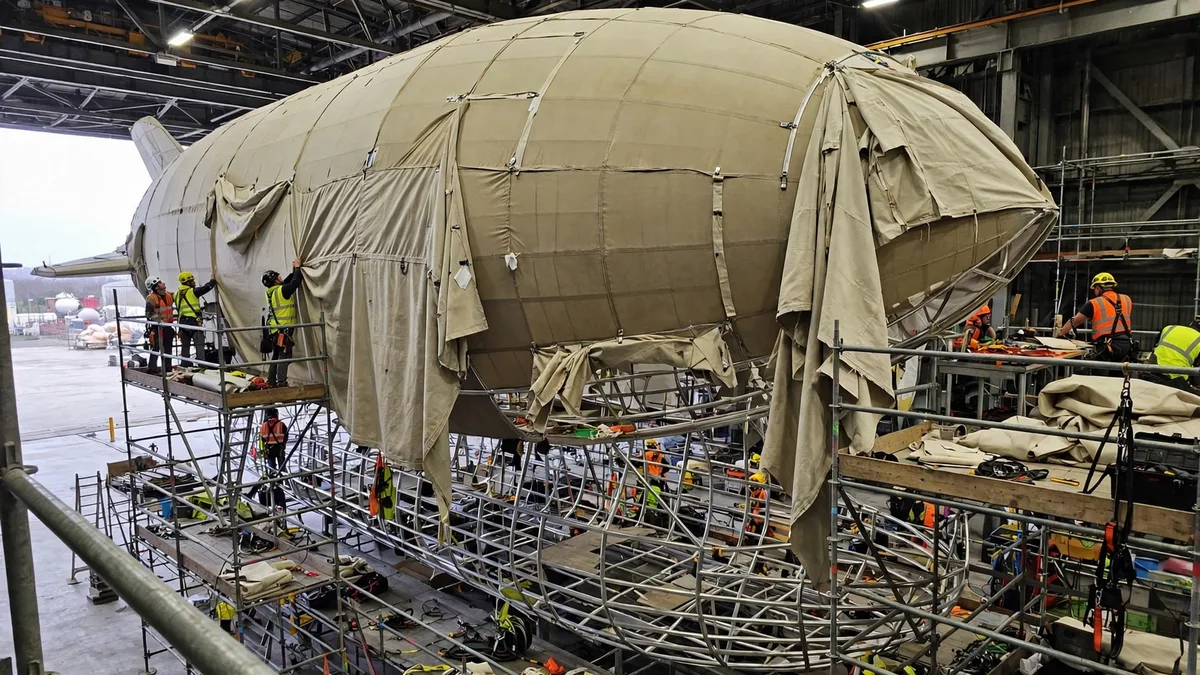
How a Luxury Airship Is Made
The design starts with the envelope, the great gas-filled hull that gives the airship its lift. Modern airships use helium, which is lighter than air and cannot burn, held inside a fabric envelope shaped for low drag. Designers model the shape for lift, speed and stability, then calculate the volume needed for a dozen passengers and crew: tens of thousands of cubic metres. The envelope is divided into separate gas cells, so a leak in one cannot empty the whole craft.
Step 1: Making the Envelope
The envelope is built from panels of laminated fabric, layers of polyester or nylon bonded with polyurethane, which is strong, light and almost airtight. Each panel is cut by computer, then welded or sewn to its neighbours, with seams sealed and tested for leaks. The finished envelope is coated against ultraviolet light and weather, and fitted with internal ballonets, air-filled bags that keep the envelope firm as helium expands and contracts with temperature and altitude. A finished envelope can be more than 70 metres long, yet its fabric weighs only a few tonnes.
Step 2: The Frame and Fins
Modern luxury airships are usually semi-rigid or non-rigid. A semi-rigid design has a keel running along the bottom of the envelope, a lightweight truss of aluminium or carbon fibre that carries the gondola, the engines and the loads of the fins. The tail fins, usually three or four, are built like small wings, with a fabric skin over a frame, and they carry the rudders and elevators that steer the craft. Everything is kept light, because every kilo of structure is a kilo less payload, and the frame is designed to flex gently with the envelope.
Step 3: The Gondola
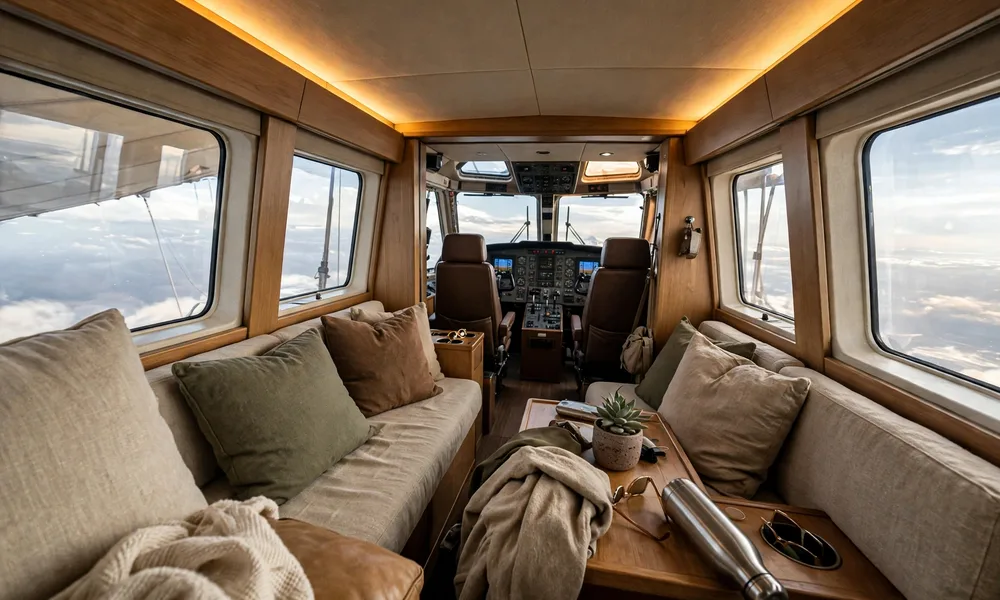
The gondola is where the luxury lives. It hangs beneath the envelope on a structure that spreads the load across the keel, and is built as a single module fitted out on the ground and lifted into place. Inside, a luxury airship carries a lounge with panoramic windows, comfortable seats that swivel to face the view, a small galley and a washroom. The cockpit sits at the front, with the pilots looking out through a wide windscreen, and the gondola is insulated and heated, because the air at altitude is cold even on a warm day. The floor is low and the windows large, so passengers feel connected to the landscape below.
Step 4: Engines and Propulsion
Airships are slow by aeroplane standards, but they need precise control. Power usually comes from two or three engines mounted on the gondola or on outriggers, driving propellers that can swivel. Swivelling propellers are the key to its manners: tilted down, they push the craft up for a vertical takeoff; tilted forward, they drive it ahead; tilted back, they slow it for landing. The engines are usually small piston or turboprop units, chosen for fuel economy and quiet running. Fuel is carried in tanks inside the gondola, and the whole system is sized for flights of many hours at speeds of 50 to 80 kilometres per hour.
Step 5: Ballast, Controls and Safety
An airship is flown by managing weight and lift. Water ballast can be dropped to make the craft lighter, and helium vented in small amounts to make it heavier, while the ballonets keep the envelope firm. The pilots control pitch with the elevators on the fins, direction with the rudders, and height with a mix of ballast, engine tilt and elevator. Safety systems include multiple gas cells, so one leak cannot sink the craft, pressure relief valves, a fire system in the gondola, and a mast for mooring. Ground handling uses a mobile mast and a crew, because an airship on the ground is a very large sail in any wind.
Step 6: Inflation, Testing and First Flights
The final stage is inflation and testing. The envelope is filled with helium through filters that remove moisture, and each gas cell is checked for leaks with sensitive detectors. Then the airship is taken out for tethered tests, where it is held to the mast while the engines and controls are run through their ranges. The first free flights are short and careful, testing climb, turns and landing, with the envelope inspected after every flight for wear or leaks. Only when the craft handles predictably and every system works does it enter service, usually with a demonstration flight for the owner.
Key Specifications
| Feature | Typical Range |
|---|---|
| Length overall | 60 to 85 metres |
| Envelope volume | 15,000 to 35,000 cubic metres |
| Lift gas | Helium, in separate cells |
| Engines | Two or three, 200 to 400 hp each |
| Cruising speed | 50 to 80 km/h |
| Maximum speed | 100 to 130 km/h |
| Passengers | 8 to 14, plus crew of 2 to 3 |
| Flight endurance | 8 to 24 hours |
These are typical ranges, not a single model. A smaller airship will be cheaper to run and easier to handle on the ground, while a larger one carries more passengers and flies further. The way a luxury gyrocopter is made shows a very different approach to slow, low flying, with a rotor instead of a gas envelope.
What a Luxury Airship Costs
As with any custom aircraft, prices vary widely, so treat these as estimates. A small luxury airship with a gondola for eight to ten passengers typically starts at roughly $10 million to $20 million. A larger craft with a bigger envelope, a full luxury interior and long-range tanks can cost an estimated $25 million to $50 million, and a fully bespoke airship with a custom gondola and every option can pass $60 million. Running costs can add an estimated $1 million to $3 million a year for helium, hangarage, insurance and a trained ground crew. The way a luxury seaplane works offers a useful comparison, with a similar love of low, slow sightseeing from a very different machine.
Owners rarely buy an airship for speed. They buy it for the view, the silence and the ability to linger over a landscape for hours, landing gently where a runway would never fit. A well-built one will float for decades if its envelope is cared for.
A Rare Fact
The largest airships ever built were longer than the tallest ocean liners of their day, and one famous early airship carried a piano in its gondola. Modern luxury airships have returned to that idea: some are fitted out as flying lounges with a bar and a viewing deck, and a few operators offer dinner flights where the meal is served as the landscape drifts past below at walking pace.
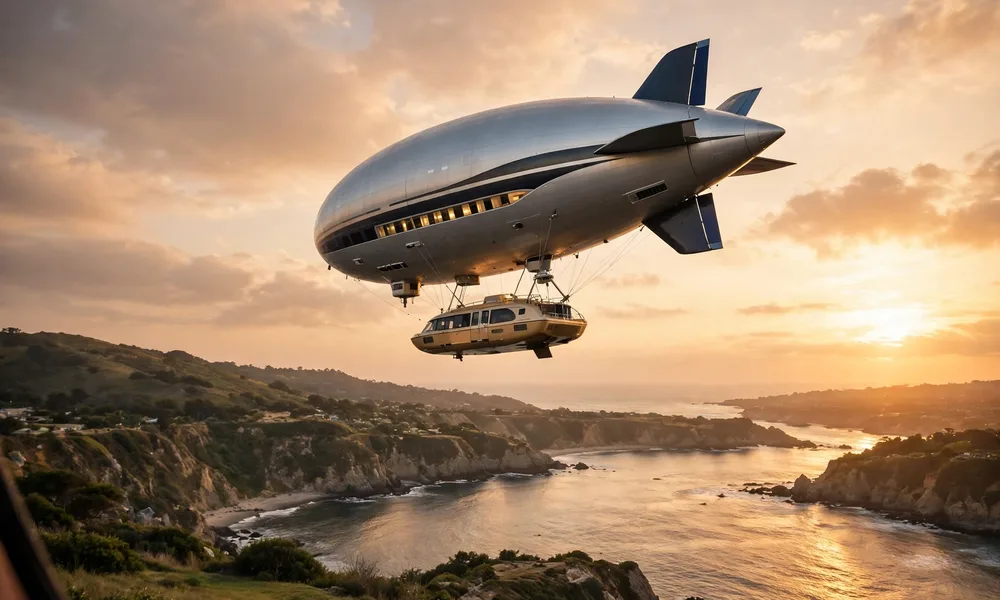
When the build is done, the airship slips into a life of slow, quiet flights over coasts, cities and vineyards. Its envelope and gondola share the scale of engineering found on luxury container ships, where a single structure must carry an enormous load safely for decades.


