Dinner on a cruise ship is usually a quiet affair: white tablecloths, soft music, a waiter who appears at the right moment. A teppanyaki grill is the opposite. The chef throws shrimp across the steel, flames leap from an onion stack, and the whole table laughs. It is dinner and a show at once, and the show runs on a plate of steel hotter than a home oven.
A luxury ship teppanyaki grill is a flat steel cooking plate set into a counter where guests sit and watch the chef cook, built into a cruise ship restaurant with gas or electric burners below, a powerful extractor above, and a grease trap below. It works by holding the steel plate at a steady high temperature, so food sears the moment it touches the surface, while different zones of the plate run at different heats. The chef is the control system, moving food between zones with two spatulas and a lot of practice.

How It Works
The steel plate: the heart of the grill
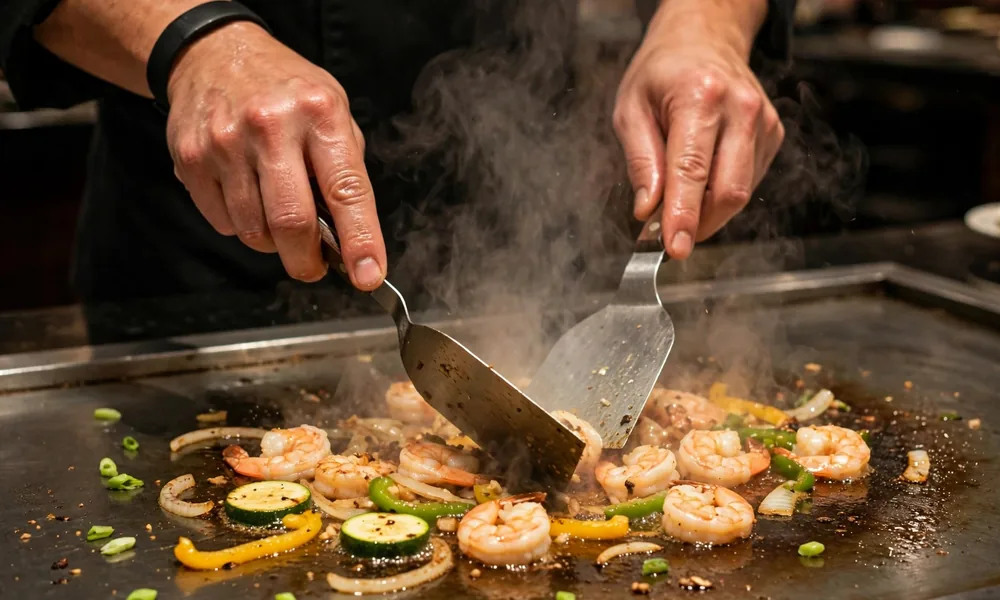
The plate is a slab of food-grade steel, usually 12 to 20 millimetres thick, polished smooth and set into the counter so its top sits flush with the work surface. Its thickness is the secret: a thick plate stores heat, so when a cold piece of fish lands on it, the temperature barely drops. A thin plate would cool down and steam the food instead of searing it. The plate is seasoned like a pan, with a thin layer of oil worked into the steel, and it is scraped clean after every course so the next one starts on a fresh surface.
Burners and heat zones
Under the plate sit the burners, gas or electric, arranged in zones that the chef controls separately. The centre of the plate runs hottest, around 250 degrees Celsius, for searing meat and shrimp, while the edges run cooler, for keeping cooked food warm or resting vegetables. The chef moves food across the zones like pieces on a board: sear in the middle, finish at the edge, rest at the corner. The ship galley behind the counter supplies the fuel and the power, and the plate’s thermostat keeps each zone steady even as the chef works through a full table of eight guests.
The extractor: clearing smoke and steam
A teppanyaki grill makes a lot of smoke, and a ship restaurant cannot let it drift over the other tables. A wide extractor hood hangs above the plate, pulling smoke, steam, and cooking smells up through a duct that runs to the ship’s ventilation system. The hood has grease filters that catch oil before it reaches the duct, and they are cleaned every night. The air over the grill stays clear enough for guests to see the show, and the rest of the restaurant smells of nothing at all, which is exactly what the other diners want.
Grease, drainage and cleaning
Everything that comes off the plate has to go somewhere. A shallow channel runs around the edge of the steel, catching oil and juices and carrying them to a grease trap below the counter, where the fat is held back and the water drains away. After each sitting, the chef scrapes the plate, wipes it with oil, and checks the trap, and at the end of the night the whole grill is cleaned and the plate is left lightly oiled so it cannot rust. On a ship, a blocked grease trap is a fire risk, so the cleaning schedule is strict and it is checked by the galley manager every night.
The show: flames, knives and timing
The show is not decoration; it is the cooking itself, done fast and in the open. The chef tosses shrimp, stacks onion rings into a volcano and lights it with a splash of oil, and flips an egg onto the spatula and back onto the plate. Every trick is a cooking step: the flame burns off alcohol from the sauce, the tossing moves food between heat zones, and the speed keeps the meal hot. The guests sit close enough to feel the heat, and the chef talks through the meal as it happens, so the table knows what is coming next and when to pick up their chopsticks.
Safety at sea: fire, gas and a moving ship
A grill with open flames on a moving ship needs more safety than the same grill on land. Gas lines have automatic shut-off valves, the plate has a flame-failure cut-off, and a fire suppression system sits above the grill, ready to drop a blanket of suppressant if the flames ever get out of hand. The counter is bolted to the deck, the stools are fixed, and the chef’s tools are kept in a rail so nothing slides when the ship rolls. The ship galley works runs the same safety checks for every hot station on board, and the teppanyaki grill is tested more often than most, because it is the one station where the fire is part of the show.
A teppanyaki grill works when the table forgets it is a machine. The plate is hot, the chef is fast, the food is cooked in front of you, and the whole room smells of garlic and butter. Then the plates are cleared, the steel is scraped clean, and the grill is ready for the next table and the next show.
Ship Teppanyaki Grill Specifications
| Feature | Typical Detail |
|---|---|
| Plate | Food-grade steel, 12 to 20 millimetres thick, seasoned surface |
| Plate size | Around 1.2 by 0.8 metres per station, seating for 6 to 8 guests |
| Heat zones | Centre around 250 degrees Celsius, edges cooler for resting |
| Fuel | Gas burners or electric elements, separately controlled zones |
| Extractor | Wide hood with grease filters, ducted to ship ventilation |
| Grease handling | Edge channel to a grease trap below the counter |
| Safety | Gas shut-off valves, flame-failure cut-off, fire suppression above |
How Much Does a Ship Teppanyaki Grill Cost?
Prices are estimates and vary with ship size, materials and yard. A single teppanyaki station fitted into a cruise ship restaurant typically costs an estimated $40,000 to $120,000, including the steel plate, burners, extractor, grease trap and counter. A restaurant with three or four stations, a preparation kitchen and a sake bar can run an estimated $300,000 to $600,000 or more. The grill is one of the most popular restaurants on the ship, and a table that seats eight guests a sitting pays for itself faster than most of the dining rooms on board.
A Rare Fact About Ship Teppanyaki Grills
Here is a detail most guests never notice: the onion volcano is a real cooking tool, not just a trick. The stack of onion rings holds a pool of oil at the top, and when the chef lights it, the flame burns hot enough to heat the steel underneath in seconds, giving the chef a fresh hot spot exactly where it is needed. The ship galley specs lists the grill’s heat zones, and the volcano is the chef’s way of making one more zone on demand. The flames die down, the onions are cooked and eaten, and the hot spot is already searing the next course. It is theatre, but it is also the fastest way to reheat a patch of steel.

The best teppanyaki grills are the ones where the table leaves happy and a little bit amazed. The food was cooked a metre away, the flames were real, and the chef knew every guest’s name by dessert. On a ship full of restaurants, that is the table people book again first.


