In a dust-free hall, a slab of aluminium the size of a magazine is being turned into a computer you can hold in one hand, and the work is quieter than you would expect. There is no hammering and no smoke, just a machine tool humming, a pair of gloved hands setting a sheet of glass into a frame, and a row of finished tablets standing upright like books on a shelf.
This is how a luxury tablet is made, from the milled aluminium body and the bonded glass display to the fitted chip, the slim battery and the final hands-on test, where a real person picks it up, taps the screen and checks that everything answers.

Step 1: The aluminium body is milled from a solid block
A luxury tablet starts as a solid block of aluminium, and the body is cut out of it rather than bent or cast. A computer-controlled mill carves away the inside of the block, leaving thin walls, pockets for the battery and the board, and holes for the cameras, the speakers and the charging port. The outside is then polished or bead-blasted to a soft matte finish, and a thin layer of colour is baked on by anodising, which hardens the surface against scratches. The story of how a foldable tablet is made follows a body that must bend as well as hold its shape.
Step 2: The display stack is bonded to the glass
Next comes the screen, the part the owner will look at most. A high-resolution display panel, often OLED or mini-LED, is bonded to a sheet of hardened cover glass with optical glue, pressed flat under a roller to squeeze out every bubble, and a touch sensor is laminated between them, a nearly invisible grid that senses a fingertip or a stylus. The whole stack is bonded with no air gap, so the picture looks as if it is painted on the surface of the glass rather than sitting behind it. A screen that passes looks like a single piece of glass and metal, with no seam to catch a fingernail.
Step 3: The chip and main board are fitted
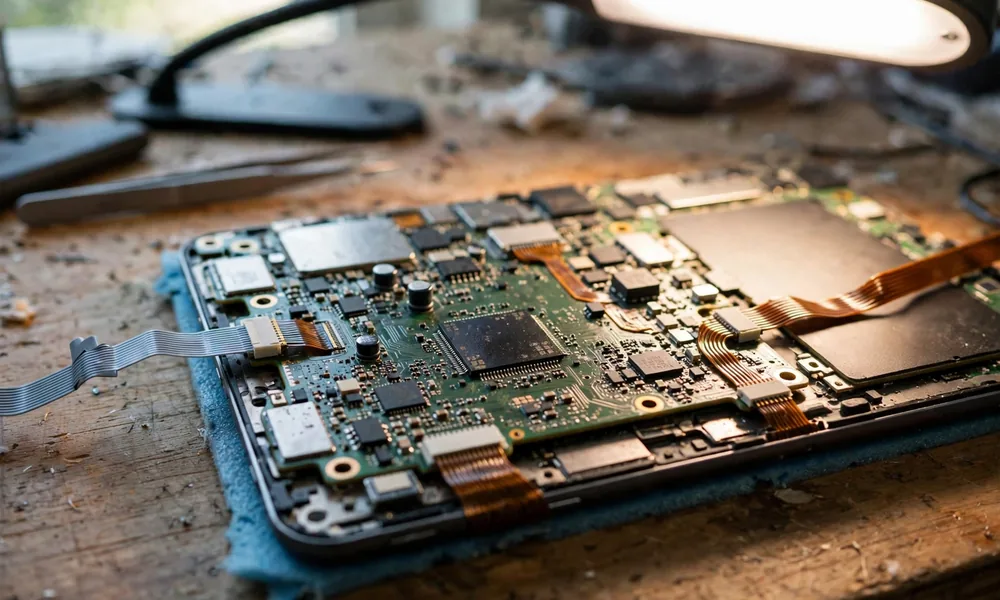
Inside the body, the main board is screwed into place, a small rectangle holding the system on a chip, the memory and the wireless radios. The chip is the most expensive single part of the tablet, a square of silicon holding billions of transistors, and it is fitted with a thin copper heat spreader that carries its warmth out to the aluminium body. How all of this works once it is running is a story of its own, and the guide to how a luxury tablet works follows the chip, the screen and the battery through a day of use.
Step 4: The battery is shaped and glued in
Behind the screen sits the battery, a flat lithium-polymer pack that fills almost the whole back of the tablet. It is shaped to fit around the board and the cameras, with cut-outs and curves that follow the inside of the body, and it is glued in place to save space, which is why the tablet is so thin. The battery is connected to the board with a single plug, and its temperature sensor is wired in too, so the tablet can slow itself down if the battery ever gets warm.
Step 5: The software is loaded and the screen is calibrated
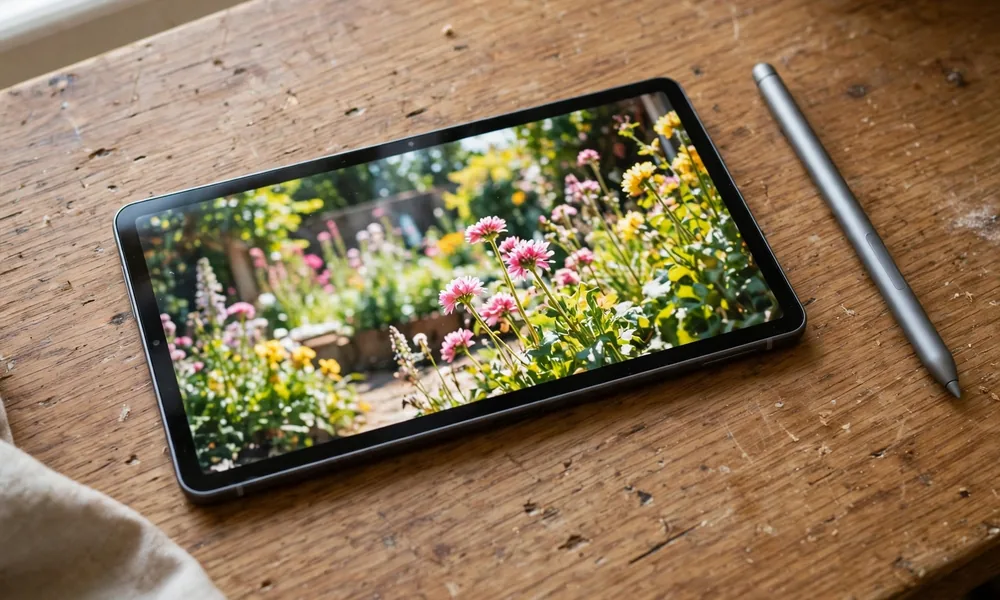
With the hardware assembled, the tablet is switched on for the first time and its software is loaded. The operating system is installed, the display is calibrated so that whites are white and colours stay true at any angle, and the touch layer is tuned so that a fingertip and a stylus are tracked separately, hundreds of times a second. The cameras are tested, the speakers are played, and the wireless radios are checked against a test network. The guide to why a luxury tablet is so expensive sets out where the money actually goes.
Step 6: The hands-on test and final check
Before a luxury tablet leaves the factory, a real person picks it up. The tester taps through the menus, swipes through photographs, draws a line with the stylus and checks that it follows the tip without lag, and holds the tablet up to the light to look for dust under the glass. The tester checks that the buttons click cleanly, that the cameras focus, and that the tablet wakes the moment it is touched. Then the tablet is wiped with a lint-free cloth, slipped into a slim sleeve, and boxed with its charging cable.
The spec sheet at a glance
| Specification | Typical luxury figure | What it tells you |
|---|---|---|
| Display | 11 to 13 inch OLED or mini-LED | How bright and sharp the picture is |
| Body | Milled aluminium, anodised | How rigid and light the tablet feels |
| Chip | Flagship system on a chip | How fast apps, games and drawing run |
| Memory | 8 to 16 GB | How many apps stay open at once |
| Storage | 256 GB to 1 TB | How much it can carry |
| Battery | Up to 10 hours of use | How long it lasts away from a cable |
| Weight | 450 to 650 grams | How it feels held for an hour |
| Thickness | Under 6 mm | How thin the whole computer is |
| Charging | USB-C, fast charging | How quickly it fills back up |
What good build looks like
A well-made luxury tablet gives itself away in small details. The body should feel like a single piece of metal, with no creak when you twist it gently, and the glass should sit perfectly flush with the frame, with no step to catch a fingernail.
What it costs
A luxury tablet typically costs an estimated $1,000 to $2,500, depending on the screen size, the chip, the storage and whether a stylus and keyboard are included. The estimate covers the tablet alone, not accessories or a subscription. The price is mostly in the display and the chip: a bright, high-resolution screen and a flagship processor cost far more to make than the battery, the cameras or the aluminium body put together.
A rare fact
One detail few owners ever learn is that the aluminium body of a luxury tablet is often milled from a block that weighs several times more than the finished tablet. Most of the metal ends up as shavings on the factory floor, swept up, melted down and milled again, so a tablet that weighs half a kilogram may have started life as a block of more than two kilograms. The waste is the price of a body with no seams and no weak joints, and it is why a milled tablet feels so much more solid than one made from bent sheet metal.
From a solid block of aluminium on a milling machine to a finished tablet wiped clean and slipped into its sleeve, a luxury tablet is made in slow, dust-free stages, each one checked before the next begins. The result is a whole computer thinner than a pencil.


