The tour left the hotel car park at dawn, and nobody on board noticed the road at all. Outside the windows the hills slid past in the early light, and inside, the passengers were reading, dozing and drinking coffee from real cups, as if they were in a lounge that happened to be moving.
This is how a luxury tour bus works, from the long-range chassis and the quiet cabin to the kitchen, the luggage bays, the air and the power, and how all of it keeps a group of people comfortable for days on the road, night after night, without ever feeling like a coach.
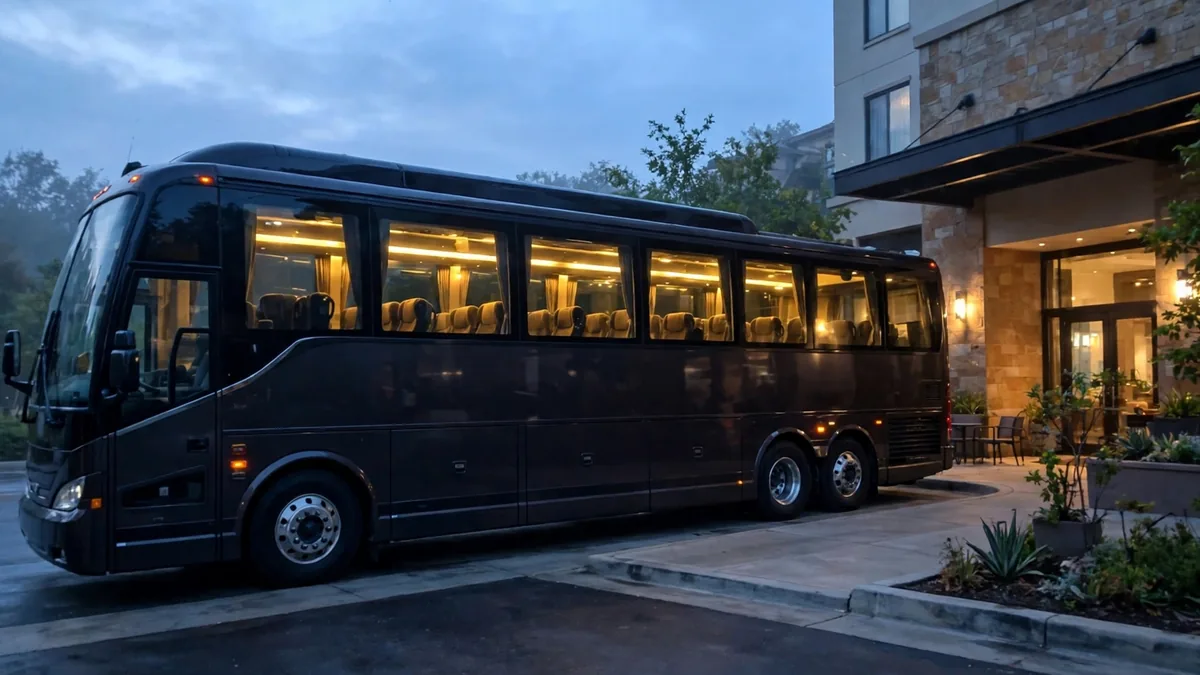
Step 1: The chassis carries the weight for days on end
A luxury tour bus starts with a chassis built for touring, not for a day trip. The frame is a long steel ladder, roughly twelve to fourteen metres, with a heavy suspension and air springs that can lift or lower the body to suit the road, and brakes sized for a fully loaded bus coming down a mountain pass. The engine is a large diesel, tuned for torque rather than speed, so the bus climbs hills in a high gear without straining, and the fuel tank is sized for a thousand kilometres or more, so the bus can run a full day of touring without stopping for fuel. The guide to how a luxury camper van works shows the same idea on a smaller scale, a vehicle built to live in rather than just to travel in.
Step 2: The cabin is built like a lounge, not a coach
Inside, the first thing a luxury tour bus throws away is capacity. A normal coach carries fifty or more people; a luxury tour bus carries twenty or twenty-four, and the space saved becomes legroom, wider seats and a lounge at the back. Each seat is closer to a first-class airline seat than to a bus seat: wide, deeply reclining, with a leg rest, a heater and sometimes a massage function, trimmed in leather cut and stitched by hand.
Step 3: The kitchen and washroom keep the group fed and fresh
A tour bus that is lived in for days needs more than seats, so mid-cabin there is a small kitchen, with a fridge, a coffee machine, a hot water boiler and a worktop where the guide can lay out breakfast or afternoon tea. The washroom is at the back, a compact room with a flushing toilet, a small sink and a mirror, and it is built to be used while the bus is moving, with grab rails and a door that locks solidly. The water tank is sized for a full day, and the waste tank is emptied at the hotel each night. The reasons all of this costs so much are worth knowing too, and the guide to why a luxury tour bus costs so much follows the money through the body, the seats and the systems.
Step 4: The air, the power and the quiet are managed together
Keeping twenty-four people comfortable for hours at a time takes more than seats: it takes air. The bus carries a large air conditioning system, with vents above every seat and a separate heater for cold mornings, and the air is filtered and changed constantly, so the cabin never feels stuffy. The whole body is insulated with thick panels and the windows are double-glazed, so the cabin stays warm in the mountains and cool in the desert, and so quiet that passengers can talk in normal voices at motorway speed.
Step 5: The luggage bays swallow a fortnight of bags
Under the floor, the luggage bays are the unsung part of a luxury tour bus. They are deep, wide and lined with carpet, and they are built to take twenty-four suitcases, plus the guide’s equipment, plus the spares, without the floor sagging. The bays are loaded from both sides, so the driver can reach any bag without unpacking the rest, and they are lit and ventilated, so nothing inside is damaged by heat or damp. The guide to why a luxury coach bus is so expensive shows how the same bays and body are built when the bus is meant for hire rather than for touring.
Step 6: The driver and the guide run the bus as a team
A luxury tour bus is run by two people, and they work as a team. The driver drives, and the guide looks after the passengers, and between them they plan each day around the road, the weather and the group’s energy. The driver knows the bus’s length and weight on every bend, and the guide knows when the group needs a stop, a view or a cup of coffee.

The spec sheet at a glance
| Specification | Typical luxury figure | What it tells you |
|---|---|---|
| Length | Roughly 12 to 14 metres | How long the bus is, and which roads it can use |
| Seats | 20 to 24, leather recliners | How many people it carries, and how much room each has |
| Engine | Large diesel, high torque | How easily it climbs hills fully loaded |
| Fuel range | Roughly 1,000 kilometres or more | How far it can run without stopping for fuel |
| Suspension | Air springs, height adjustable | How smooth the ride feels, and how it kneels at a stop |
| Kitchen | Fridge, coffee machine, boiler | How the group is fed on the road |
| Washroom | Toilet, sink and mirror | How the group stays fresh on long days |
| Luggage | Deep bays for 24 suitcases | How much a fortnight of touring takes with it |
| Air and power | Filtered air, battery bank | How comfortable the cabin stays, engine on or off |
What good design looks like
A well-designed luxury tour bus gives itself away in small details. The seats should recline without touching the knees of the person behind, the cabin should stay quiet at motorway speed, and the luggage bays should open from both sides, because a bus that is lived in for days has to work as smoothly on the fifth morning as it did on the first.

What it costs
A luxury tour bus typically costs an estimated $500,000 to $1.2 million, depending on its length, its seats, its kitchen and the systems fitted inside. The estimate covers the bus alone, not the driver, the guide or the running costs. The price is mostly in the body, the seats and the air and power systems.
A rare fact
One detail few passengers ever learn is that a luxury tour bus can kneel. The air suspension can lower the whole body by several inches at a stop, so the step up from the kerb is no higher than a single stair, and older passengers can board without climbing. The driver raises it again before pulling away, and the bus settles back onto its air springs as smoothly as it lowered.
From a long steel chassis on a dawn road to a quiet cabin full of readers and dozing passengers, a luxury tour bus works by being a hotel that happens to move, and by doing it so smoothly that nobody on board ever notices the road at all.


