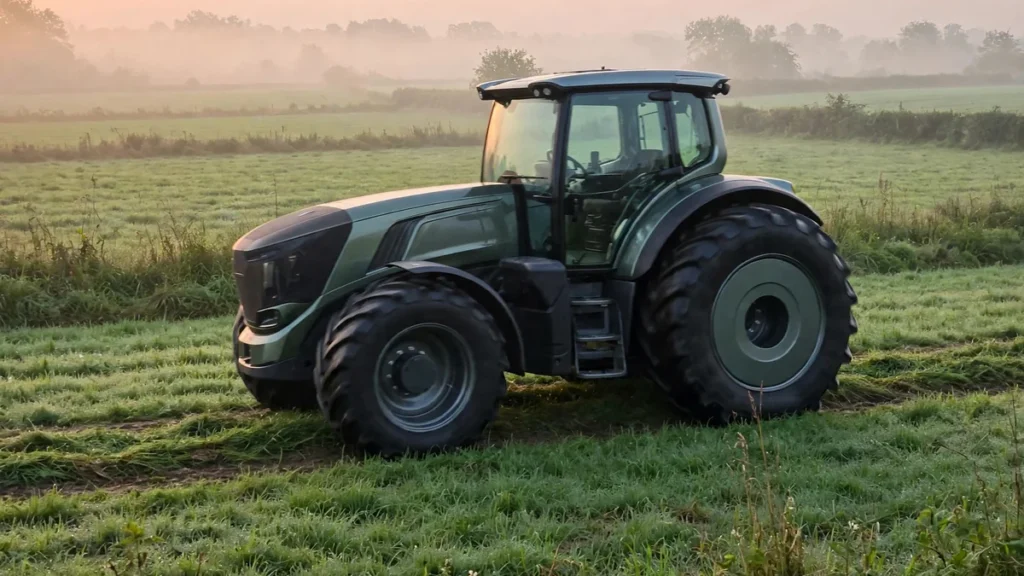
At dawn in a green valley, a farmer climbs into a cab that looks more like the inside of a quiet car than a work machine. The seat is leather, the steering wheel is heated, and the screens in front of him show the field in neat coloured lines. Outside, the tractor waits with its engine idling so softly he can hear the birds. Twenty years ago this job was noise, vibration and dust. Today it is calm, and the machine does most of the thinking.
That is the luxury tractor, a machine built to pull a plough all day and still treat its driver like a guest. It is one of the hardest vehicles to make well, because it must be both a brute and a gentleman. This is how a luxury tractor is made, from its cast frame to its silent cab.
Step 1: The chassis is cast and machined
Everything begins with the chassis, the backbone that carries the engine, the transmission and the weight of whatever the tractor pulls. On a luxury tractor the chassis starts as molten iron poured into a mould, cooled slowly and then machined flat on surfaces the size of a dining table. The casting is heavy on purpose, because weight is what lets a tractor grip soft ground instead of spinning its wheels.
Once the casting cools, it is drilled, tapped and checked with measuring tools that read to a fraction of a millimetre. The engine and the gearbox bolt directly to this frame, so there is no separate body to hide mistakes. If a mounting face is not perfectly flat, the whole machine will vibrate for the rest of its life, and the builder knows it.
Step 2: The engine is built for torque, not speed
A tractor engine is a different animal from a car engine. It does not chase high revs or top speed; it is built to pull hard at low revs, hour after hour, in dust and heat. The cylinders are large, the pistons are heavy, and the turbocharger is sized to give full pulling power from barely above idle.
Each engine is assembled in a clean bay, with the crankshaft, the pistons and the cylinder head fitted and torqued to exact figures. The engine is then run on a test bench for hours, under load, to prove it can hold its power without overheating.
Step 3: The transmission and hydraulics are fitted
Behind the engine sits the transmission, and on a luxury tractor it is usually a continuously variable unit that lets the driver set a ground speed and forget about gears entirely. The transmission is a maze of gears, clutches and oil passages, assembled in a dust-free room because a single speck of grit inside can wear a valve and ruin the shifting.
The hydraulics are the tractor’s muscles. Pumps driven by the engine send oil at high pressure to the three-point hitch at the back, to the steering and to the loader at the front, and the dual-clutch gearbox idea of smooth, uninterrupted power has shaped how these systems hand over from one ratio to the next without a jolt.
Step 4: The cab is built like a car interior
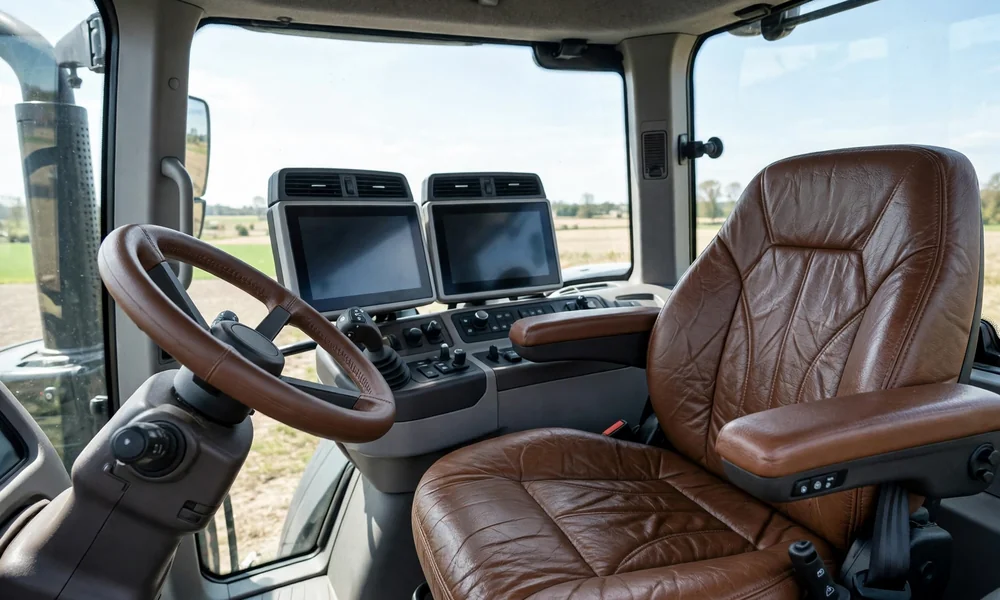
The cab is where the luxury lives, and it is built on its own line before it meets the chassis. The frame is welded from steel and fitted with curved glass that is bonded in place, then the whole cab is suspended on rubber mounts and dampers so the bumps of the field never reach the driver. Sound insulation is layered into the walls and floor until the cab is quieter than many family cars.
Inside, the seat is air-suspended and heated, the controls fall to hand like a car’s, and the screens show speed, fuel, field maps and guidance lines. The steering column adjusts, the air conditioning keeps the dust out, and a small fridge keeps a drink cold. It is a workplace, but it is built to the standard of a car interior, because the driver may sit in it for twelve hours a day.
Step 5: The bodywork, axles and wheels are assembled
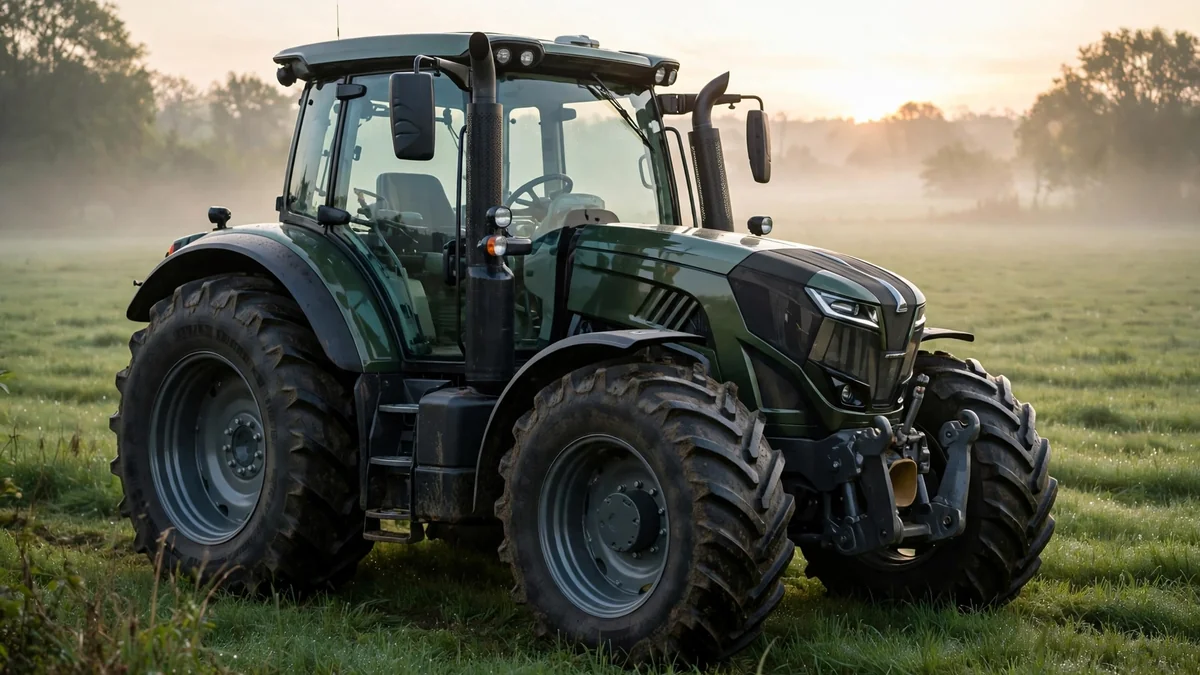
With the cab in place, the bodywork goes on. The bonnet is pressed from steel and painted in the maker’s colours, baked in an oven until the finish is hard enough to survive branches, dust and years of sun. The lights are bright LED units, because a tractor that works after dark needs to see the field as clearly as it does at noon.
The axles are as important as the engine. The front axle steers and carries the weight of the loader, the rear axle carries the pull of the plough, and both are fitted with brakes that can stop a machine weighing eight tonnes. The wheels are the largest part of the whole tractor, and the tyres are chosen for the ground they will work: wide and soft for wet fields, or narrow for row crops. Forged parts such as the axle housings begin life the same way as aluminium forging does, shaped under huge pressure so the metal is dense, strong and free of hidden flaws.
Step 6: Testing in the field
No luxury tractor leaves the factory on trust alone. Each machine is driven on a test track and then in a real field, pulling a load, lifting the hitch and steering through turns while engineers watch the temperatures, the pressures and the noise. The guidance system is checked against marked lines in the field, because a tractor that steers itself must be accurate to a few centimetres.
The final inspection covers every weld, every hose and every bolt. The cab is cleaned, the paint is checked under bright light, and the machine is washed before it is loaded for delivery.
The spec sheet at a glance
| Specification | Typical luxury figure |
|---|---|
| Engine | 6.7 litre diesel, six cylinders, turbocharged |
| Power | 250 to 350 horsepower |
| Torque | 1,200 to 1,500 Nm at low revs |
| Transmission | Continuously variable, 0 to 50 km/h |
| Hitch lift | Up to 9 tonnes at the rear |
| Weight | 8 to 11 tonnes |
| Fuel tank | 400 to 500 litres |
| Cab | Air-suspended, heated leather seat, low noise |
| Guidance | GPS steering accurate to a few centimetres |
| Tyres | Large rear tyres, up to 2 metres tall |
| Hydraulics | High-flow pumps, up to 200 litres per minute |
| Build time | Several days on the line, plus testing |

What it costs, and a rare fact
A luxury tractor costs an estimated $250,000 to $500,000, depending on the power, the cab and the guidance equipment, with the largest fully equipped models costing more. The price reflects a machine that is expected to work for decades, and the maker knows the buyer will measure it in harvests rather than in years.
Here is the rare fact the spec sheet never mentions. The steel in a tractor chassis is joined by welds that are checked with ultrasound, the same technique doctors use to look inside the body, because a hidden flaw in a weld can crack open after years of pulling. The craft of steel welding is what lets a machine this heavy be trusted to pull a plough through rock-hard ground without breaking.