There is a moment, just after the tow plane lets go, when the noise stops. The engine drone falls away, the rope drops, and the glider is alone in the air with nothing but the wind over its wings. A luxury glider is that silence, refined to an extreme: wings so long they look impossible, a cockpit lined like a sports car, and a price that makes first-time buyers blink. It has no engine, no fuel system, and no avionics rack the size of a wardrobe, so where does all the money go?
What a luxury glider actually is
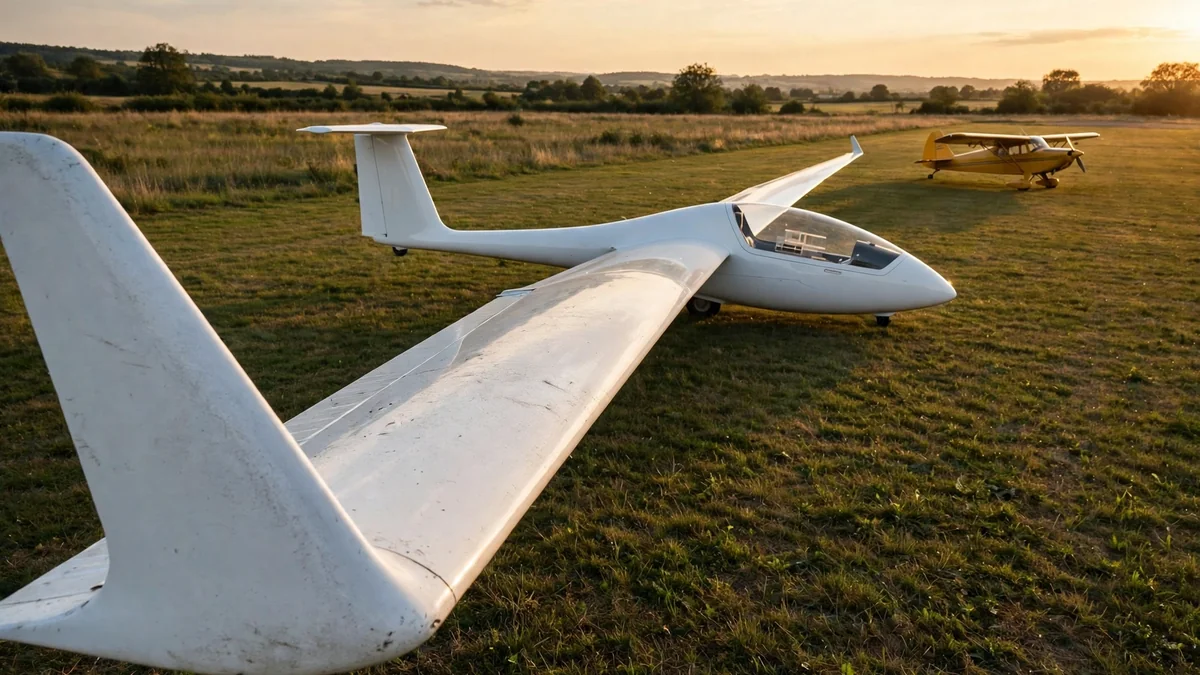
A glider, or sailplane, stays airborne without an engine, using rising air to climb and to travel. A luxury glider is the top end of that world: a high-performance two-seater or a competition-class single-seater built from carbon fibre, with a glide ratio that lets it travel fifty or sixty kilometres for every kilometre of height it loses.
The confusion to clear up first is the difference between a glider and a powered aircraft. A glider spends its money on the wing. The wing is everything: its shape, its surface finish, its stiffness and its weight decide whether the aircraft soars or sinks. A luxury glider’s wing is a carbon fibre structure built to tolerances measured in fractions of a millimetre, and it is the single most expensive thing on the aircraft. The electric aircraft world shows the same logic from the other side, where removing the engine does not remove the cost. Why electric aircraft are so expensive explains how batteries, certification and small production runs keep prices high even when the machine looks simple.
Where the money goes
A luxury glider’s price is not one big number. It is a stack of smaller numbers, each hard to shrink, and the stack is the story.
Cost driver 1: The carbon fibre wing
The wing is built from carbon fibre laid up by hand, layer by layer, in a mould, then cured under heat and pressure. The surface must be perfectly smooth, because a rough wing creates drag that eats the glide performance the buyer is paying for. A wing that long and that light, stiff enough not to bend out of shape and smooth enough to slip through the air, is the most expensive structure in the aircraft.
Cost driver 2: Tiny production runs
A popular car spreads its development cost across hundreds of thousands of units. A luxury glider spreads its development cost across dozens.
Cost driver 3: Certification and safety
A glider is certified like any other aircraft, and the process is slow and expensive. Every structural part must be tested to failure, every flight characteristic documented, and every change approved. The safety equipment adds more: a ballistic parachute system for the whole aircraft, a reinforced cockpit cell designed to protect the pilot in a crash, and harnesses and seats built to racing standards.
Cost driver 4: The cockpit and instruments
The cockpit of a luxury glider is a small, precise workspace. The seats are moulded to the pilot, the canopy is optically perfect, and the instrument panel carries a flight computer, a variometer that reads the rising air, a navigation system, a radio, a transponder and an anti-collision system. The flying-car world faces the same problem of packing aircraft-grade systems into a small machine, and why the flying car is so expensive is a useful parallel for how certification and small volumes push prices up.
Cost driver 5: The trailer, the tow and the crew
Buying the glider is only the start. A luxury glider lives in a purpose-built trailer that is itself a precision product, with fittings that hold the long wings safely and a suspension that protects them on the road.
The spec sheet, decoded
The numbers that matter on a glider are glide, weight and wing. The table below uses a typical modern two-seat luxury glider.
| Specification | Typical figure | What it tells you |
|---|---|---|
| Wingspan | 20 to 26 metres | Long wings mean a flat, efficient glide |
| Glide ratio | 50:1 to 60:1 | Kilometres travelled per kilometre lost |
| Empty weight | 450 to 600 kilograms | Light, but heavier than a basic glider |
| Maximum take-off weight | 750 to 850 kilograms | Two pilots, water ballast and kit |
| Best glide speed | 100 to 120 km per hour | Where the wing is most efficient |
| Maximum speed | 250 to 280 km per hour | Structural limit, rarely approached |
| Structure | Carbon fibre, foam core wings | Stiff, light and very expensive |
| Seats | Two, side by side or tandem | Training, touring or sharing the flight |
Glide ratio is the headline number: a ratio of 55:1 means the glider travels fifty-five kilometres for every kilometre of height it loses in still air. Water ballast is the other number to notice: it makes the glider heavier so it flies faster between thermals, and it is dumped before landing. The same obsession with a smooth, precise surface drives the propeller world, and how an electric aircraft propeller is made shows how much hand work goes into a part that must be both light and perfect.

What a luxury glider costs
Prices here are estimates, because luxury gliders are built to order and the price depends on the instruments, the finish and the options. A new high-performance two-seat luxury glider is estimated at roughly 250,000 to 450,000 dollars, with a single-seat competition machine estimated at roughly 200,000 to 350,000 dollars. A well-kept used example is estimated at roughly 120,000 to 250,000 dollars. Annual running costs, including insurance, inspections, hangarage, towing and the trailer, are estimated at roughly 10,000 to 25,000 dollars a year. A luxury glider costs about the same as a high-end sports car, but it is built by hand in dozens rather than by robots in thousands, and it is certified to fly rather than to drive. The money did not disappear. It went into the wing, the certification and the tiny production run.
A rare fact worth knowing
The longest glider flights in history were not made by the most expensive gliders, and they were not made in summer. The record flights of over three thousand kilometres were made in the Andes, in mountain wave lift, where the air rises in standing waves downwind of the peaks and a skilled pilot can climb to altitudes where oxygen is essential. The flight itself was won by reading the sky, not by spending money. The luxury glider buys the ability to use the sky well. It does not buy the sky itself.
The verdict
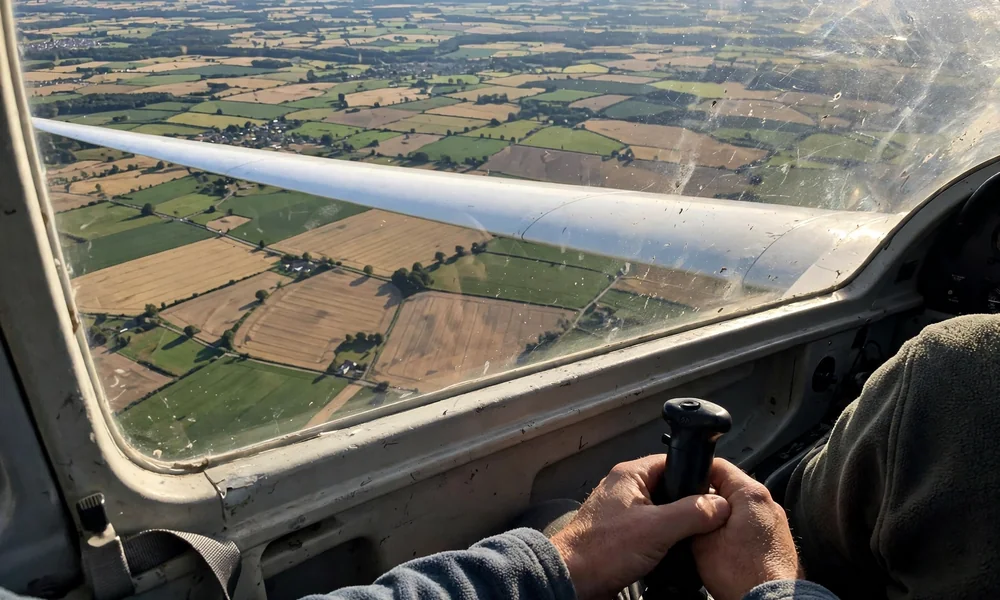
A luxury glider is expensive because it is a hand-built, certified, carbon fibre aircraft produced in dozens, and every part of it is optimised for a single number: how far it can go on nothing. The wing is the cost, the production run is the cost, and the certification is the cost, and none of them can be wished away. What the buyer gets in return is the purest form of flying there is: no engine, no noise, no fuel, just a long wing and a rising column of air. For a pilot who has flown a basic glider and felt the difference a better wing makes, the price stops looking strange. It looks like the cost of going further, quieter, and higher, on air alone.


