The shed smells of sawdust, linseed oil, and salt. Morning light comes in sideways through high windows, catching dust in the air above a wooden hull that has been afloat since before most of the people working on her were born. She is eighty feet of teak and mahogany, her varnish dulled by decades of sun, her brass fittings green at the edges, and yet the curve of her bow still stops visitors at the door. A shipwright runs a hand along the planking, feeling for the soft spots the eye cannot see, and nods to his apprentice. The work begins.
Restoring a luxury vintage yacht is not like building a new one. A new yacht starts with a clean sheet and a computer model. A vintage yacht starts with a mystery: what the original builders did, what later owners changed, and what the sea has done in between. Every plank removed is a question, and every answer has to be found in the wood itself, in old photographs, or in the memory of a craftsman who worked on a sister ship forty years ago. The owners who commission this work are not buying a boat. They are buying back a piece of history, and they expect it to sail as beautifully as it looks.
How It’s Made
A full restoration follows the same broad sequence in almost every yard, although the details change with each boat. The hull is surveyed, stripped, and taken apart in a careful order, and then rebuilt with a mix of salvaged original timber and new wood cut to match. The work is slow because the boat herself sets the pace: wood must dry, glue must cure, and varnish must be applied in thin coats over many weeks. Here is how the transformation happens, step by step.
1. Survey and documentation. Before a single screw is turned, the yacht is measured from every angle. The owner receives a report that sorts the work into three piles: keep, repair, and replace. This stage alone can take two months, and it decides the budget for everything that follows. A good survey is the difference between a restoration and a very expensive surprise.
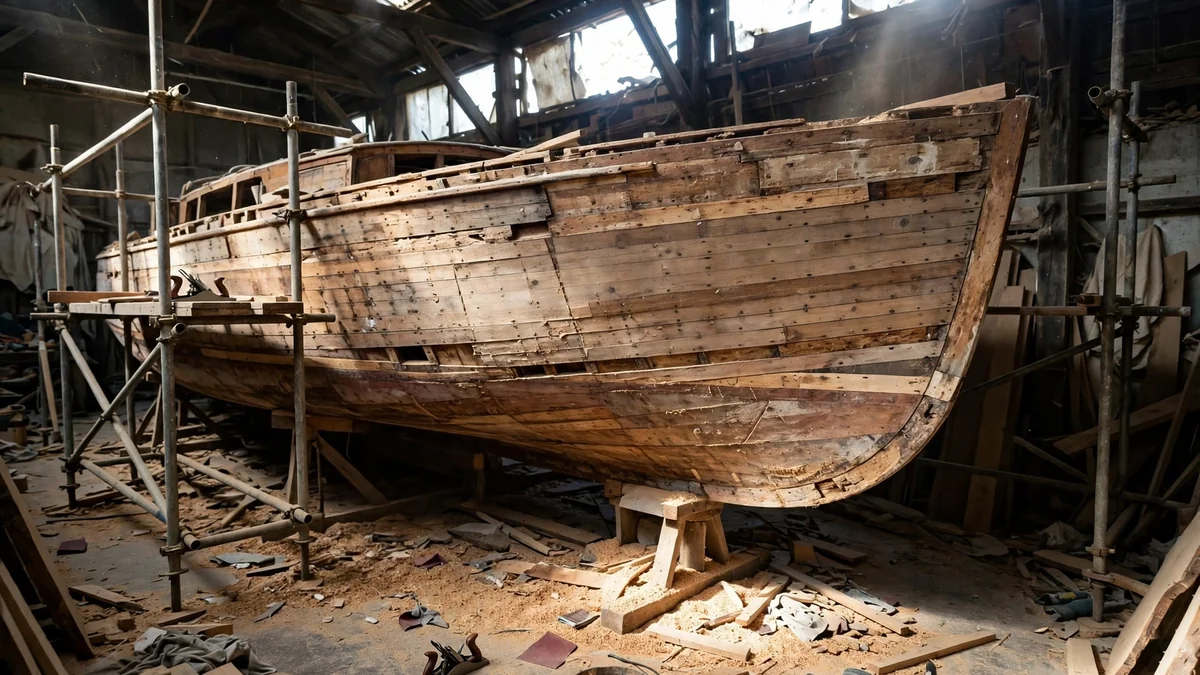
2. Stripping the yacht down. The interior comes out first: cabins, bunks, galley, and panelling, each piece numbered and stored so it can go back in exactly the same place. Then the deck fittings, the mast, and the rigging are removed and catalogued. Finally the paint and varnish are stripped from the hull, revealing the wood beneath. Planks that looked sound under paint may be soft underneath, and frames hidden for decades may be cracked. The team marks every damaged section with chalk, and the owner is called to the yard to see the real state of the boat before the rebuilding begins.
3. Rebuilding the hull. Damaged planks are removed one at a time so the hull never loses its shape, and new planks are cut from matching timber. New frames are steamed and bent into place. Each plank is fastened with bronze screws, the metal the original builders used, because bronze does not rust in salt water. The hull is then faired, sanded and shaped until its curves are perfectly smooth, a job done largely by eye and by hand. The way a steel superyacht hull takes shape is a useful contrast: steel can be welded and ground, while wood must be coaxed.
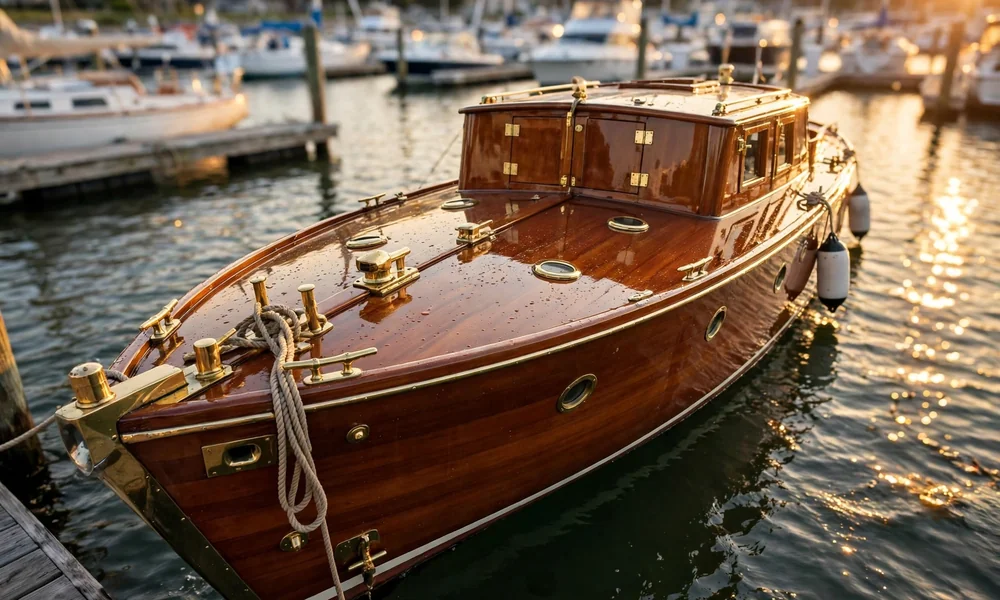
4. Decks, superstructure, and joinery. With the hull sound, the team rebuilds the deck, laying new planking over the beams and sealing every seam with caulking cotton and marine compound, the traditional method that lets a wooden deck flex without leaking. The deckhouse and cockpit are restored or remade, and the interior joinery returns: mahogany panelling polished to a deep glow, brass hardware cleaned or recast, and the original layout preserved wherever possible. Modern systems are hidden inside this period shell. Wiring, plumbing, and air conditioning run behind panels and under floors, so the cabin looks like 1935 but works like today.
5. Rigging, sails, and machinery. The mast is inspected, repaired, or replaced in matching timber, then stepped back into the boat. Standing rigging is renewed in stainless steel or traditional galvanised wire, depending on how faithful the owner wants the restoration to be. Sails are cut to the original plan, often by a sailmaker who has the old measurements on file. The craft of fairing a yacht hull matters here too, since a smooth hull is what lets the rig and engine do their work.
6. Varnish, paint, and sea trials. The final stage is also the longest. The hull below the waterline is painted with antifouling, and the topsides are finished in the yacht’s original colours. Small faults are found and fixed, the varnish is touched up, and the yacht is handed over. A restoration is only finished when the boat sails as well as she looks, and the best yards will not sign her off until she does.
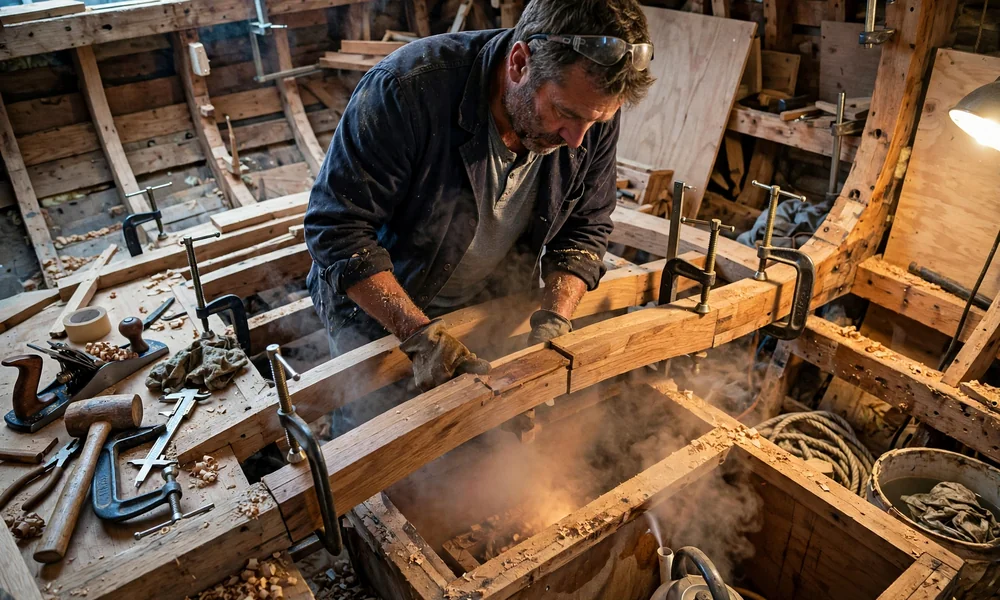
The timber itself deserves a word, because it is the hardest part of the job to get right. Original vintage yachts were built from old-growth teak, mahogany, and oak that had grown slowly for centuries, and that wood is now scarce, expensive, and tightly regulated. Yards keep stocks of reclaimed timber from demolished boats and old buildings, and they buy new timber years ahead of a project so it can dry slowly in the shed. Owners who understand this choose their yard by the timber store as much as by the price, and the best sailing yacht builders have always been judged on the quality of the wood they keep.
Specifications
| Detail | Typical figure |
|---|---|
| Length overall | 60 to 120 feet |
| Hull material | Teak and mahogany planking on oak frames |
| Original build era | 1920s to 1960s |
| Restoration time | 18 months to 3 years |
| Crew needed | 8 to 15 craftspeople |
| Engine | Modern diesel, 150 to 500 horsepower |
| Varnish coats | 8 to 12 coats on brightwork |
| Top speed under power | 9 to 12 knots |
Price
A full restoration of a luxury vintage yacht is estimated at roughly $3 million to $15 million, depending on the size of the boat, the condition of the hull, and how much original material can be saved. These are estimates, not quotes, and every yard prices the work after its own survey, because no two old boats are in the same condition.
The running costs are part of the decision too. Annual upkeep is estimated at roughly 10 percent of the yacht’s value, covering haul-outs, varnish, rigging checks, and engine servicing. Wooden yachts demand more attention than fibreglass ones, and a vintage yacht that sits unused deteriorates faster than one that sails regularly. Owners who restore these boats usually accept that the money will never come back. The return is measured in something else: the sight of a hull built by hand a century ago cutting through the water as if the years had never happened.
A Rare Fact
Some vintage yachts still sail with their original hand-forged bronze fastenings, and shipwrights can date a boat by the shape of its screws. Before the 1950s, many yards used screws with a slightly domed head and a slot cut by hand, each one a fraction different from the next. When restorers remove those screws, they keep them, clean them, and often put them back in the same holes, because a modern screw in an old plank can split wood that has survived for ninety years.


