Your smartwatch knows your heart rate before you do. It notices when your pulse climbs on a staircase, when your blood oxygen dips overnight, and when your stress level spikes in a meeting you thought you were handling calmly. That sensor is one of the most intimate pieces of engineering ever mass-produced, and making it means building optics, electronics and medical-grade precision into something that must survive sweat, rain and a knock against a door frame.
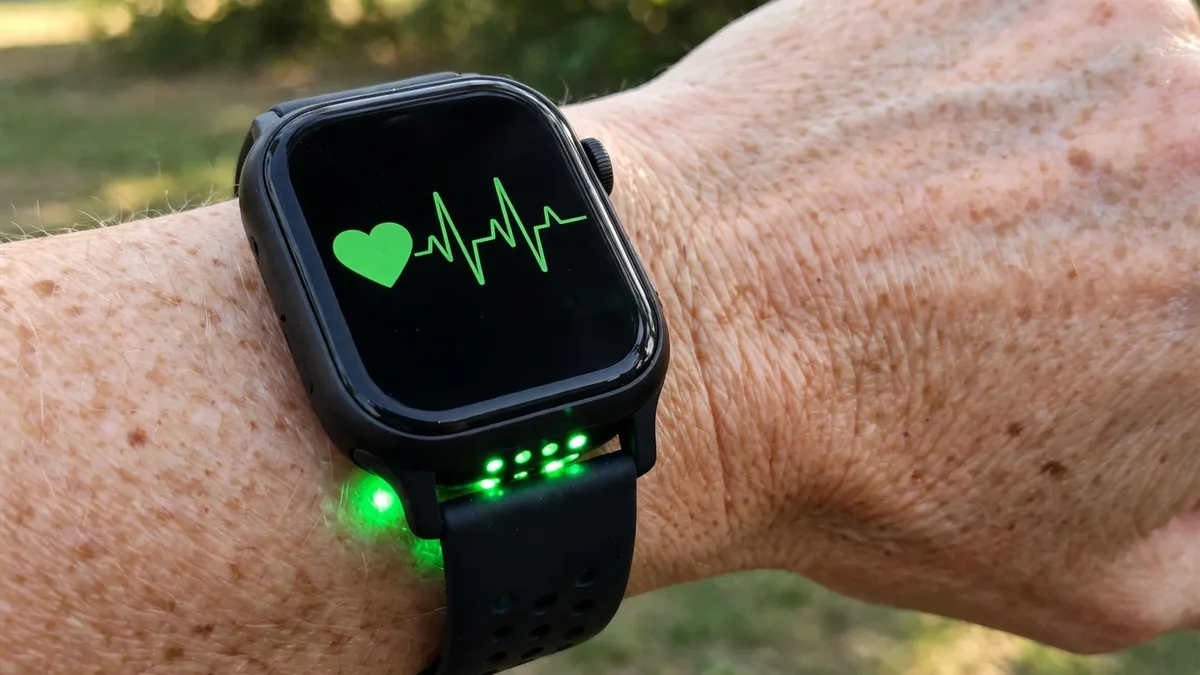
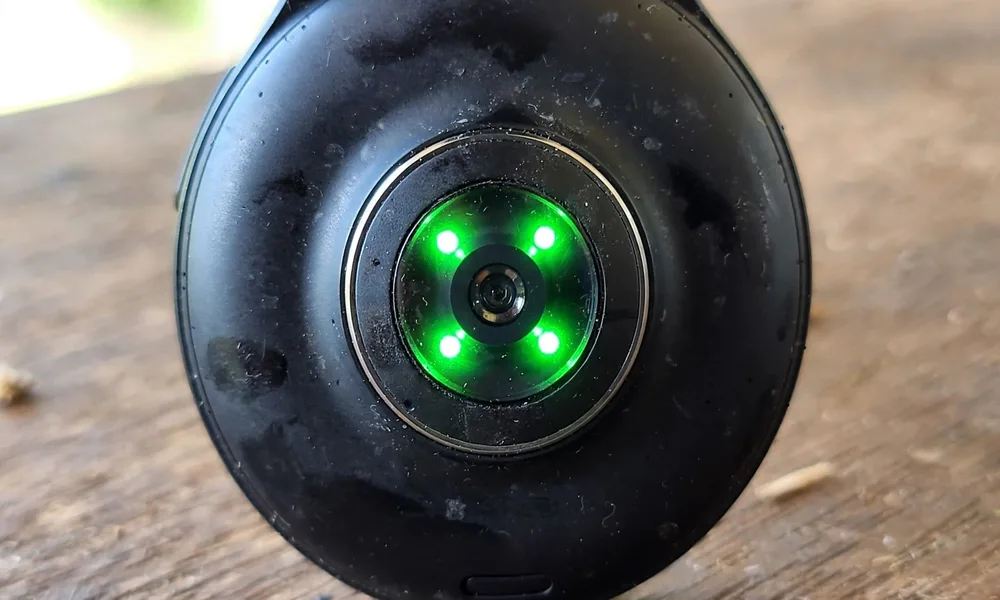
A smartwatch health sensor is a cluster of light emitters and light detectors mounted behind a glass or ceramic window on the back of the watch. Green, red and infrared LEDs shine into the wrist, and photodiodes measure the light that bounces back from the blood beneath the skin. As the heart beats, the volume of blood changes, and the reflected light changes with it. Software turns those tiny changes into a heart rate, an oxygen reading, and more. This is how a smartwatch health sensor is made.
How It’s Made
Step 1: Designing the optical window
Everything starts with the window, the part of the watch that touches your skin. It is usually made from sapphire crystal or a hardened ceramic, chosen because it must let light through cleanly, resist scratches from daily wear, and sit comfortably against the wrist for hours at a time. The window is cut and polished to a precise curvature, slightly domed so it keeps contact with the skin even as the wrist moves. The glass is inspected under magnification for bubbles, scratches and uneven thickness, because any flaw bends the light and corrupts the reading.
Step 2: Making the LEDs and photodiodes
Behind the window sit the light emitters and detectors. The LEDs are semiconductor chips that produce green light for heart rate, and red and infrared light for blood oxygen. The photodiodes are equally precise: they must detect changes in reflected light so small that a flicker of movement can drown them out. A chip that drifts even slightly in brightness or sensitivity is rejected, because the sensor’s accuracy depends on every emitter and detector behaving identically.
Step 3: Assembling the sensor module
The chips are mounted onto a tiny circuit board, no larger than a thumbnail, in a clean room. The LEDs and photodiodes are placed in a precise pattern, with light-blocking walls between them so that light from an LED cannot leak straight into a neighbouring detector without passing through the skin first. The board also carries the electrodes for the electrical heart sensor, small metal contacts that measure the heart’s electrical signal when you touch the watch crown. The module is then sealed and tested for light leakage in a dark chamber, a test that catches even a hairline gap in the shielding. The display that shows you the result has its own precision manufacturing, as how a micro-LED display is made explains, but the sensor must be right before the screen ever matters.
Step 4: Adding the motion sensors
A health sensor that cannot tell movement from a heartbeat is useless, so the module is paired with an accelerometer and a gyroscope that track the motion of your wrist thousands of times a second. When you swing your arm while running, the motion sensors record the swing, and the software subtracts that motion from the optical signal, leaving the heartbeat behind. The accelerometers are microscopic mechanical devices, tiny silicon structures that flex under acceleration, made with the same techniques used for computer chips. The combination of light and motion is what lets a watch read your pulse while you run, swim or climb stairs.
Step 5: Calibrating against real bodies
Before the sensor is trusted, it is calibrated against real people. Test subjects wear the watch while a medical-grade reference device records their heart rate and blood oxygen at the same time, and the watch’s readings are compared second by second. This is done across different skin tones, wrist sizes, ages and activity levels, because light behaves differently in different skin, and a sensor tuned for one group of people can misread another.
Step 6: Sealing the watch against water and sweat
The sensor module is fitted into the watch case, and the whole assembly is sealed against water, sweat and dust. Gaskets are fitted around the window and the case back, and the watch is pressure-tested in a chamber that simulates swimming depths. A watch rated for swimming must survive not just a splash but repeated immersion, and the seal around the sensor window is the most vulnerable point, because it sits directly against the skin and is exposed to sweat every day.
Step 7: Final testing on the wrist
The finished watch goes through a final round of testing on real wrists. Testers wear it through workouts, sleep and daily life while its readings are checked against reference devices, and any watch whose sensor drifts or drops out is pulled from the line. The software is also checked: the watch must know when a reading is unreliable, for example when the watch is loose, and refuse to report a number rather than guess. The fingerprint reader on a phone solves a similar problem of reading the body through a tiny window, as fingerprint sensor materials engineering describes, but the health sensor must keep reading for hours at a time, through sweat and motion. The companion article how a smartwatch health sensor works explains what the finished sensor does once it is on your wrist.
Specs
| Specification | Typical figure |
|---|---|
| Optical window | Sapphire crystal or ceramic, slightly domed |
| LEDs | Green for heart rate, red and infrared for blood oxygen |
| Detectors | Photodiodes measuring reflected light |
| Electrical heart sensor | Metal electrodes on the case back and crown |
| Motion sensors | Accelerometer and gyroscope, sampled thousands of times per second |
| Sampling | Optical readings many times per second during activity |
| Water resistance | Sealed and pressure-tested for swimming depths |
| Calibration | Tested against medical-grade reference devices on real people |
| Size | Sensor module roughly the size of a coin |
Price
A health sensor is a module inside a smartwatch, not a product sold on its own, so there is no retail price for one. As an estimate, the optical health sensor module, including its LEDs, photodiodes, window and motion sensors, generally costs the manufacturer in the region of $10 to $30, depending on the number of wavelengths and the quality of the window — these are estimates, and the true figures are commercial secrets. The watches that carry them typically sell for roughly $200 to $800, also an estimate.
A Rare Fact
The technique behind the sensor, photoplethysmography, was first described in the 1930s, when researchers noticed that light passing through living tissue changed with each heartbeat. For decades it was used only in hospitals, with a clip on a fingertip. It took miniaturised LEDs, sensitive photodiodes and powerful motion-cancelling software to shrink the same idea onto a wrist, turning a hospital instrument into something you wear to bed.
From polished sapphire to LEDs smaller than a grain of rice, the smartwatch health sensor is made by turning hospital science into a part that survives sweat, rain and daily knocks.


